


Published 1 August 2026
Our methodology focuses on accuracy first.
All information is researched using manufacturer data, official industry guidance, and trusted automotive sources. Where relevant, content is cross-checked against real-world vehicle maintenance practices and common customer enquiries to ensure it is both practical and accurate. Our content is reviewed regularly and updated to reflect changes in regulations, industry standards, and best practices.
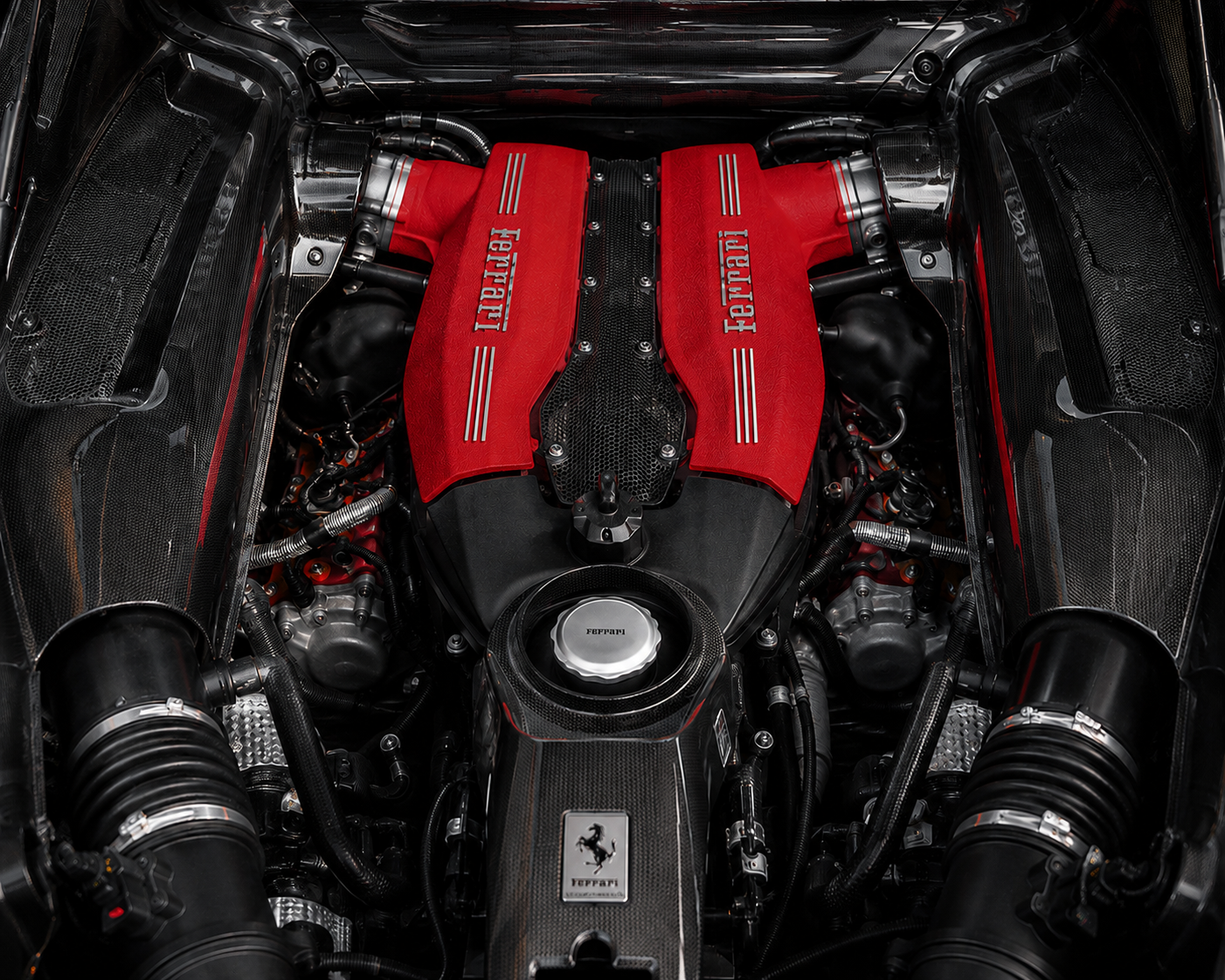
You've seen the daily rates. £1,000 for a Lamborghini. £1,500 for a Ferrari F8. A weekend in a McLaren 720S Spider that costs more than a flight to New York, business class, both ways. And the natural reaction — even for people who genuinely want to hire one — is to wonder: is this actually justified? What, exactly, is happening between the car sitting in a garage somewhere and a daily rate that would make most car owners wince?
The honest answer is: quite a lot. Supercar hire isn't expensive because the industry is extracting maximum margin from enthusiasts who have no alternative. It's expensive because the genuine cost base of running, insuring, and maintaining exotic cars at hire-company standards is exceptional — and because several structural features of the market push prices further still.
Understanding these factors doesn't just satisfy curiosity. It makes you a smarter hirer: better at comparing quotes, better at identifying genuine value vs inflated margin, and better positioned to find legitimate savings without sacrificing what matters.
Factor 1: The Cars Themselves Are Extraordinarily Expensive Assets
This is the starting point that everything else flows from.
A Lamborghini Huracán costs approximately £175,000–£220,000 new. A Ferrari F8 Tributo starts at around £235,000. A McLaren 720S is in the £240,000 region. These are not high-value assets in the way that a Mercedes S-Class is a high-value asset — they're in a different category entirely.
A hire company that owns a Lamborghini Huracán needs that asset to generate sufficient revenue across its hire life to justify the capital deployed. Factor in that most specialist supercars have a relatively low annual mileage ceiling before residual values are affected, that the depreciation curve on even desirable supercars is meaningful, and that the car needs to be replaced after a certain period — and the daily rate begins to make more sense.
Rough maths: a car costing £200,000 that depreciates at £25,000–£40,000 per year, is available for perhaps 150 hire days annually (accounting for prep, servicing, gaps between bookings, and seasonal patterns), needs to cover its depreciation alone at £170–£270 per available hire day before a single pound of insurance, maintenance, or overhead is counted.
That's before the hire company has paid anyone, maintained anything, or turned a profit.
Factor 2: Insurance Is Genuinely Difficult and Expensive to Obtain

This is the factor most people underestimate, and it has significant knock-on effects across the whole market.
Self-drive supercar insurance in the UK is offered by a very small number of specialist underwriters. It is explicitly not mainstream motor insurance — standard personal policies don't cover you to drive a hire car worth £200,000 that isn't yours. The specialist policies that do cover this are expensive, they have conditions attached, and after a period of high claims activity, several underwriters withdrew from the market entirely.
The practical result: hire companies are paying premiums that have, at various points in the last decade, been described as running to thousands of pounds per vehicle per year — before any claims. Those premiums are distributed across a relatively small number of hires. The insurance cost alone can represent a meaningful component of a daily rate.
The high deposits and excesses you see in supercar hire contracts are also directly related to the insurance structure. In a market where the insurance is difficult and expensive to obtain, the excess — your personal liability in a claim — is one of the mechanisms by which risk is shared between hirer and insurer. Very low deposit offers with very high small-print excesses are not a deal; they're a risk transfer that you haven't fully read.
The broker problem amplifies this. By some estimates, up to 85% of supercar hire companies online at peak periods are brokers rather than direct fleet operators. A broker does not own the cars. They add margin between the customer and the actual supplier while having less control over vehicles, condition, and insurance terms. Broker prices are almost always higher than going direct to the fleet owner — and the terms, particularly around insurance and excess, are sometimes less clear. This is one of the more compelling arguments for finding and dealing with actual fleet operators directly.
Factor 3: Running Costs Are Genuinely Exceptional
A Ferrari doesn't service like a Ford. A McLaren doesn't eat tyres like a Mazda. And a hire company's maintenance obligations go well beyond what a private owner would typically spend, because the car needs to be presented in showroom condition for every hire.
Servicing and maintenance: Supercar servicing intervals are shorter in mileage terms than standard cars, and the cost per service is dramatically higher. A minor service on a Ferrari or Lamborghini can run to several thousand pounds at a specialist workshop. Major services are correspondingly more.
Tyres: High-performance tyres are among the most significant consumables in supercar hire. A set of front tyres on a Lamborghini Huracán, worn through a combination of enthusiastic driving and normal use, costs £600–£1,200 to replace. A full set of four costs correspondingly more. Hire companies replace tyres regularly to maintain safety and grip standards — that cost is embedded in the daily rate.
Valeting and presentation: A supercar hire company presents every vehicle in perfect condition for every hire. Professional valets, detailers, and interior cleaning between each booking are significant operational costs that standard car hire doesn't involve to the same degree.
Storage: Many specialist hire companies store their high-value vehicles in secure, climate-controlled facilities. This is not cheap, particularly in major cities.
Factor 4: Mileage Limits Reflect Real Economic Logic

The mileage limits on supercar hire — sometimes as low as 50–100 miles per day — feel restrictive. They're not arbitrary.
Every mile driven on a supercar at hire level represents:
- Accelerated tyre wear
- Engine and drivetrain wear at higher-than-average intensity (because hired cars are typically driven enthusiastically)
- Reduced residual value
- Higher probability of incident
From the hire company's perspective, a tightly controlled mileage allowance protects the asset, protects the insurance position, and keeps the headline price lower. The excess mileage charge is the mechanism for compensating when usage goes beyond the protected range.
Understanding this doesn't mean you shouldn't pre-purchase additional miles — in most cases, doing so in advance is meaningfully cheaper than paying the per-mile excess on return. It does mean that the mileage limits aren't punitive; they reflect genuine economic logic about managing the vehicle.
Factor 5: Seasonal Demand and Market-Wide Pricing Pressures
The UK car hire market experienced significant disruption during and after the pandemic. Fleet sell-offs during low-demand periods created supply shortages when demand recovered. Strong post-pandemic demand for premium and luxury experiences pushed rates higher across the market.
Supercar hire operates on top of this — with its own additional seasonal dynamics. Summer weekends (April–October) are consistently the highest-demand period, and rates reflect this. A car that's available at £900/day in January will typically command £1,100–£1,200/day in July. Peak dates — bank holidays, summer Saturdays, Christmas/New Year — push this further.
This is simple supply and demand. Fleet sizes are finite. Weekend slots are finite. When demand significantly exceeds supply for premium hire, prices reflect it.
The inverse is also true: off-peak pricing genuinely exists, and for hirers with date flexibility, the savings are real. A midweek hire in January or February for the same car can be 15–20% below peak summer weekend rates. This isn't a concession by the hire company — it's market pricing working correctly.
Factor 6: The Weekend Minimum Adds to the Apparent Cost
In peak season, most specialist supercar hire companies operate on a minimum three-day Friday-to-Monday package. Single-day hires are typically only available midweek during peak months.
This creates what can look like a pricing quirk: a "day rate" that's quoted, but a minimum spend of three days' worth. The reason is practical — delivery, preparation, valeting, paperwork and administration for a single 24-hour hire generate costs that a single day rate barely covers. A three-day minimum spreads those fixed costs across enough hire days to make the economics work.
For hirers who genuinely want a single day, the path is midweek booking in peak season, or a weekend booking during off-peak months when providers have more flexibility.
What This Means for Hiring Smarter
Understanding why supercar hire costs what it does enables genuinely better decisions:
Go direct to fleet operators, not brokers — The saving on a £1,500/day hire can be meaningful when you eliminate broker margin. If a provider's website doesn't show any cars on their actual premises, they may be a broker. Call and ask directly.
Hire off-peak when flexibility exists — January and February are significantly cheaper than July. If the occasion can flex, the saving is real.
Look at total package value, not just daily rate — A provider with slightly higher daily rates that includes delivery, fully comprehensive insurance with a reasonable excess, and same-day deposit return may represent better overall value than a lower headline rate with delivery charges, high excess, and delayed deposit processing.
Pre-purchase mileage if you know your route — Excess mileage charges are always higher per mile than pre-purchased miles. If you know you'll do 300 miles in a day with a 150-mile allowance, pre-buying the extra 150 miles is consistently cheaper.
Understand the excess before you sign — The deposit and the excess are separate concepts. A low deposit that hides a £50,000 excess in the fine print is not a good deal. A higher deposit with a reasonable excess (£2,000–£5,000 on a £200,000 car) is fair and transparent.
Is It Worth It?
The honest answer: relative to its alternatives, yes.
Owning a Lamborghini Huracán costs approximately £180,000 to buy, £8,000–£12,000 per year in insurance and servicing, £20,000–£35,000 per year in depreciation, and a meaningful amount in tyres, storage, and management. Most owners drive them 3,000–5,000 miles per year. The cost per mile is extraordinary.
A hirer who books the same car four times a year for a weekend each time spends approximately £7,000–£9,000 annually, drives it roughly 1,500–2,000 miles, and experiences the car at its absolute best — freshly prepared, maintained to showroom standard, insured comprehensively, and returned without the ongoing cost burden.
The daily rate is high. The cost per exceptional experience is not.
Ready to compare supercar hire prices across the UK — and find transparent providers with no hidden extras? Autofusion lets you browse and compare luxury and exotic car hire from hundreds of rental partners nationwide. Find the best value supercar hire in the UK with Autofusion today.