


Published 13 July 2026
Our methodology focuses on accuracy first.
All information is researched using manufacturer data, official industry guidance, and trusted automotive sources. Where relevant, content is cross-checked against real-world vehicle maintenance practices and common customer enquiries to ensure it is both practical and accurate. Our content is reviewed regularly and updated to reflect changes in regulations, industry standards, and best practices.
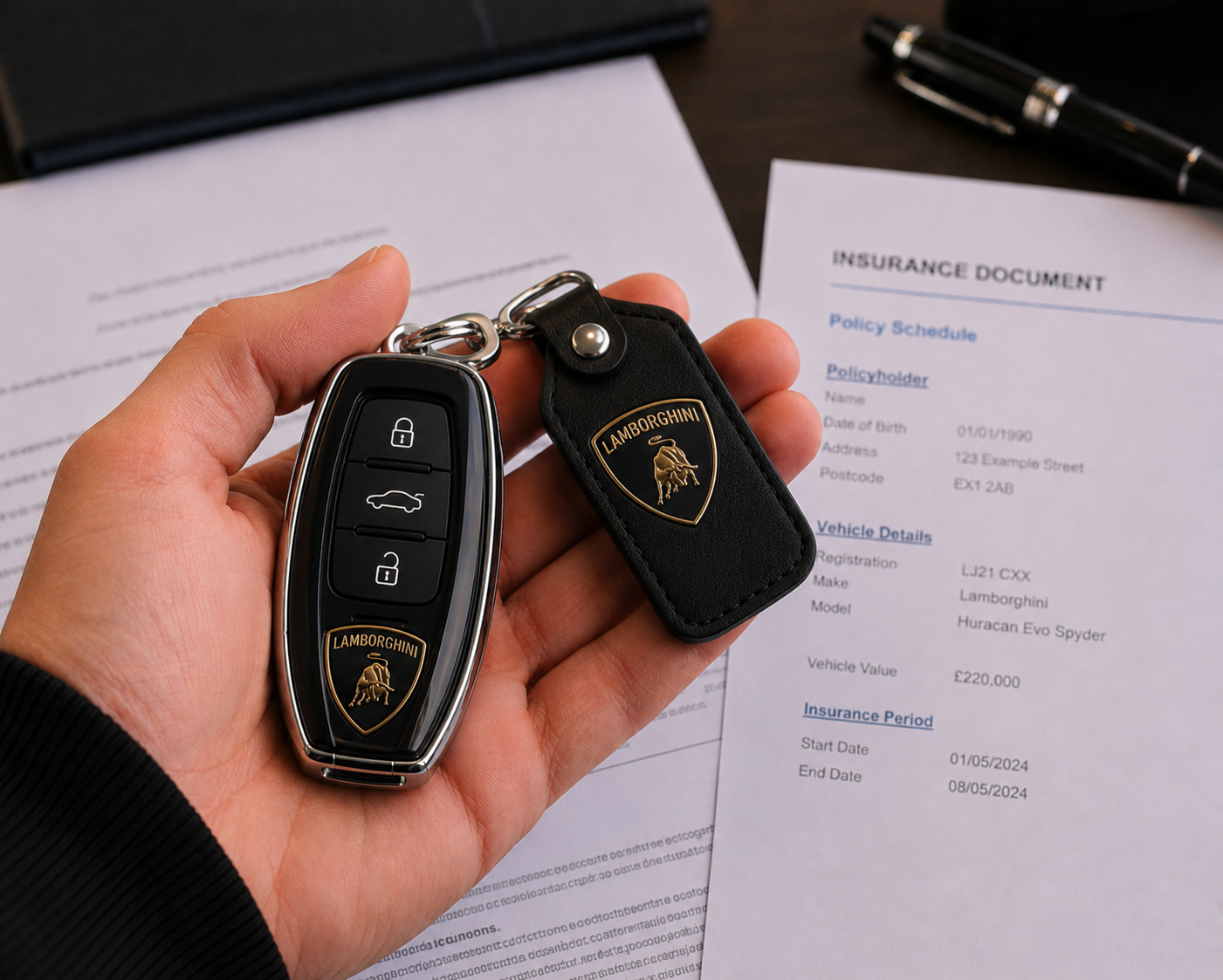
Here's the part of the supercar hire conversation that nobody finds glamorous but absolutely everyone needs to understand. You've found the car. You've checked the price. You've mentally placed yourself behind the wheel of a Lamborghini Huracán on the Snake Pass at 7am on a clear morning. All of that is great. Now let's talk insurance.
Not because insurance is interesting. It isn't. But because the financial exposure of hiring a £200,000 car without understanding your liability is the kind of thing that turns a brilliant day into a very expensive lesson. And the good news — once you actually understand how supercar hire insurance works in the UK, it's not nearly as complicated as the paperwork makes it seem.
This is the guide I wish existed before the first time I sat in something with more horsepower than good judgement.
Is Insurance Included When You Hire a Supercar in the UK?
Yes — and this is the reassuring starting point. Comprehensive motor insurance is included as standard with all legitimate UK supercar hire packages. You do not need to arrange your own policy to drive the car legally.
What's typically covered:
- Third-party liability — damage to other vehicles, property, or injury to third parties
- Fire and theft — the vehicle is protected against theft and fire damage
- Own-damage cover — accidental damage to the hired vehicle itself is covered
So the car is insured. The question — the one that matters — is: to what extent are you personally liable if something goes wrong?
The answer to that question is the insurance excess. And this is where supercar hire gets meaningfully different from hiring a standard car.
What Is the Insurance Excess on a Supercar Hire?
The insurance excess is the amount of money you're personally responsible for in the event of an at-fault accident, damage to the vehicle, or theft. It's not a deposit — it's your financial liability. The insurance covers everything above the excess. You're on the hook for everything up to it.
On a standard hire car, the excess might be £500 to £1,500. On a supercar, the numbers are fundamentally different.
Here's a realistic picture of excess levels across the UK supercar hire market:
| Vehicle Type | Typical Insurance Excess Range |
|---|---|
| Sports car (Porsche 911, Audi R8) | £2,000–£5,000 |
| Mid-range supercar (Ferrari 488, Lamborghini Huracán) | £5,000–£10,000 |
| Flagship exotic (Lamborghini Aventador, McLaren 720S) | £8,000–£15,000 |
| Ultra-high-value vehicles | £15,000–£25,000+ |
These are indicative figures — always confirm the exact excess with your specific operator before booking.
That's not a typo. Some supercar hire contracts carry excesses in excess of £25,000. This is the number you need to know — not the daily hire rate.
How the Security Deposit Is Different From the Excess
This distinction trips up more first-time hirers than any other aspect of supercar hire. The deposit and the excess are two separate things, and confusing them is an expensive mistake.
Security deposit: A sum held (typically blocked on your credit card) at the start of the hire as security against any potential damage, excess mileage, or outstanding charges. It is not deducted — it's just frozen. If you return the car undamaged and within the mileage limit, it's released in full. Think of it as a good-faith gesture to the operator.
Insurance excess: Your actual financial liability in the event of damage or loss. If you have an at-fault accident and the repair costs £12,000, and your excess is £8,000, you pay £8,000. The insurance covers the remaining £4,000.
In practice, a hire operator will use the security deposit to cover up to its value in the event of damage — but if your excess exceeds the deposit amount, you're liable for the difference beyond what was held.
| Security Deposit | Insurance Excess | |
|---|---|---|
| What it is | A blocked hold on your credit card | Your financial liability for damage |
| When it's taken | At the start of the hire | Only if damage or loss occurs |
| When it's returned | On safe return of the vehicle | It isn't returned — it's what you owe |
| Typical amount | £1,000–£5,000 | £2,000–£25,000+ |
Can You Reduce the Excess? Yes — Here's How
The excess waiver (sometimes called a Collision Damage Waiver, or CDW) is the mechanism that reduces or eliminates your personal excess liability in exchange for an additional daily fee. This is, in my view, almost always worth buying for supercar hire. The peace of mind is worth considerably more than the cost.
You typically have two options:
Option 1: Excess Waiver Direct From the Hire Company
Most UK supercar hire operators offer their own excess waiver product, purchased at the time of booking. This reduces your liability — sometimes to zero, sometimes to a lower residual amount — for an additional daily fee that typically ranges from £30 to £100+ per day depending on the vehicle and the waiver terms.
Advantages: simple, everything handled in one place, no claim reimbursement process. Watch out for: make sure you're clear on whether it covers all damage (including exclusions — see below) and what the residual liability is if it's a partial waiver rather than a full one.
Option 2: Third-Party Hire Excess Insurance
Specialist car hire excess insurance policies are available separately, purchased before your hire. These work differently: you pay the excess to the hire company if damage occurs, then claim that amount back from the excess insurer.
For supercar hire specifically, you need a high-value excess insurance policy — standard car hire excess policies often have vehicle value limits (typically capping out at £75,000–£100,000) that may not cover the most exotic vehicles in a UK hire fleet. Check the policy limits carefully:
- Excess limit: The maximum excess the policy will reimburse — must be at or above your hire excess
- Vehicle value limit: The maximum value of vehicle the policy covers — must exceed the car's stated value
The reimbursement model (pay first, claim back later) is the main drawback compared to a direct waiver. If your excess is £10,000 and the damage claim is £10,000, you need £10,000 available immediately before you can begin the recovery process.
The Exclusions: What Isn't Covered
This is the section that most hire documents bury in small print and most guides skip over. Pay attention.
Even with comprehensive insurance and an excess waiver, certain types of damage are commonly excluded from standard supercar hire policies. The most frequent exclusions are:
- Tyres — damage to tyres is often excluded entirely. A blowout or kerbed tyre is your cost.
- Wheels and alloys — cosmetic or structural wheel damage is frequently excluded.
- Windscreen and glass — sometimes covered separately, sometimes not at all.
- Underbody and ground clearance damage — low-slung supercars are particularly vulnerable to scrapes, speed bumps, and steep ramps. This damage is often excluded.
- Interior damage — burns, stains, tears to seats, carpets, or trim.
- Antenna, mirrors, and loose panels — often treated separately to structural body damage.
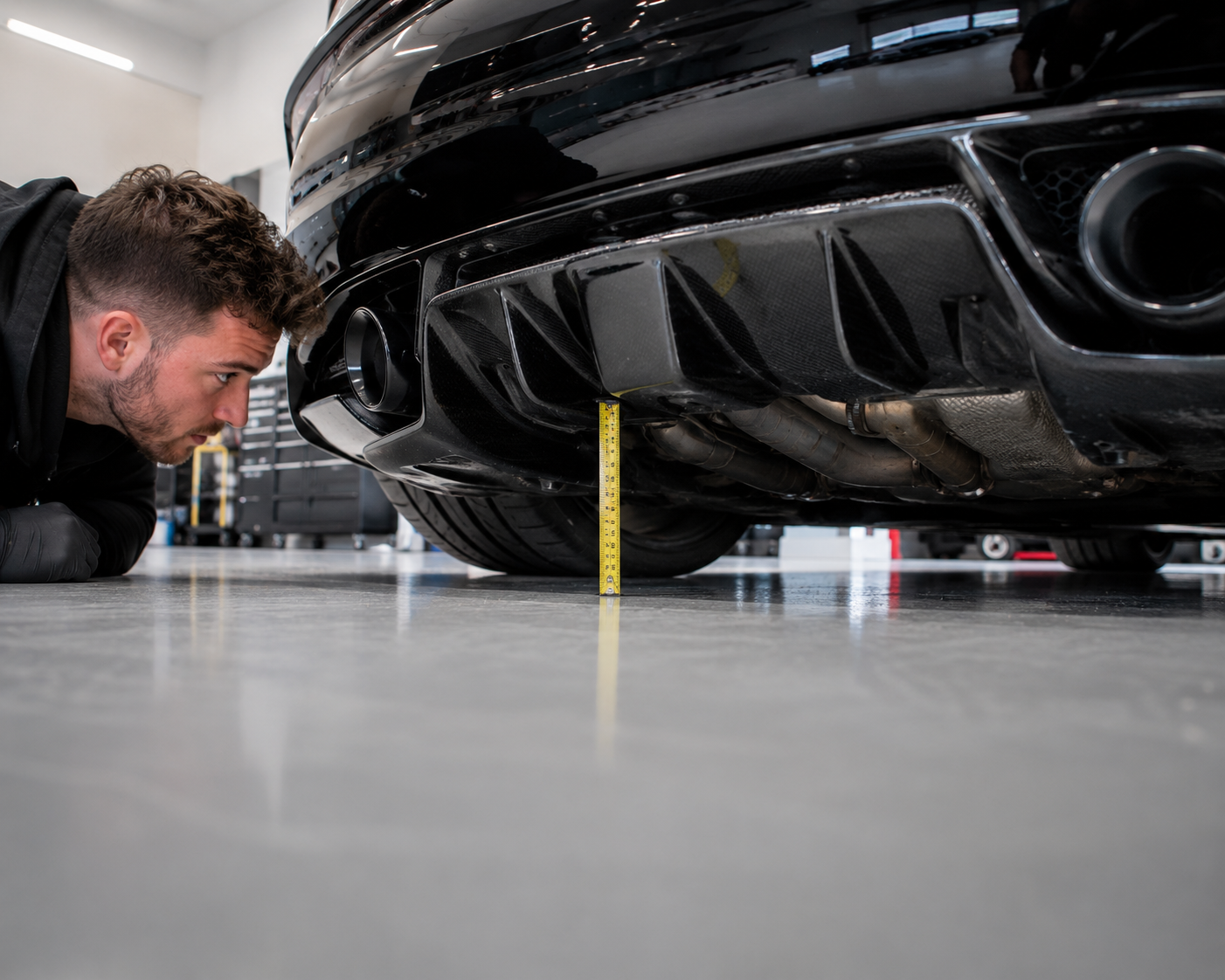
The practical implication: even with a full excess waiver, you may still face charges for tyre, wheel, or underbody damage. Read the exclusions list before you book — and read it again when you collect the car.
Some operators offer premium packages that include tyre and wheel cover for an additional fee. For anyone driving an unfamiliar supercar on UK roads for the first time, this is worth considering.
Does Your Travel Insurance Cover Supercar Hire Excess?
Almost certainly not.
Standard travel insurance policies typically include a car hire excess section — but they are designed for standard rental cars. Most have vehicle value limits and excess limits that fall well short of what you'll encounter in supercar hire. A travel policy that covers a hire car excess up to £1,500 is useless when your Lamborghini excess is £8,000.
If you're relying on travel insurance to cover your supercar hire excess, check the policy terms explicitly before booking. Specifically look for:
- Maximum excess covered — must equal or exceed your hire excess
- Maximum vehicle value — must equal or exceed the supercar's stated value
- Exclusions — some travel policies exclude performance or high-value vehicles entirely
The default answer for almost every traveller is: your travel insurance will not be adequate. Arrange specific cover.
Age and Licence Requirements for Insured Supercar Hire
Insurance cover for supercar hire is connected to the driver's eligibility — and operators won't insure you on the vehicle if you don't meet their requirements. Standard criteria for insured supercar hire in the UK:
| Requirement | Typical Standard |
|---|---|
| Minimum age | 25 (some vehicles: 28–30) |
| Driving licence | Full UK licence (or equivalent IDP for overseas drivers) |
| Licence held for | Minimum 2–5 years (varies by operator) |
| Recent endorsements | Serious offences (DD, DR codes) typically disqualify |
| Minor endorsements | Usually accepted; 3+ points sometimes triggers surcharge |
Some operators apply additional criteria for the most powerful vehicles — if you're under 30 booking a McLaren 720S or Lamborghini Aventador, expect a more detailed assessment.
Additional Drivers: Are They Insured?
Additional drivers can be added to most supercar hire policies, but they must be named on the hire agreement and must meet the same eligibility criteria as the primary driver. An additional driver who doesn't meet the age or licence requirements won't be covered — and any damage caused while they're driving would likely invalidate the insurance entirely.
Named additional drivers typically incur an additional daily fee. Always add them at the time of booking rather than assuming it can be sorted at collection.
Unnamed drivers are never covered. If someone not on the hire agreement drives the car, you are personally liable for any damage regardless of your excess waiver or insurance package.
Can You Drive a Hired Supercar Abroad?
This requires explicit permission from the hire company — and it's not automatically included.
Most UK supercar hire contracts restrict the vehicle to mainland UK only unless international use is specifically agreed in writing. Taking a hired Lamborghini to France or Germany without prior authorisation from the operator typically voids the insurance cover entirely. The fact that you didn't know is not a defence.
If you're planning an overseas drive — an Alpine road trip, a track day in Europe — raise this at the enquiry stage. Some operators will accommodate it with additional paperwork and an extended insurance certificate. Others won't permit it at all. Know before you go.
What Is Self-Drive Hire Insurance?
Self-drive hire insurance is a different product — relevant primarily if you're on the business side of the equation, i.e. if you're running or considering running a vehicle hire operation.
For supercar hire businesses, self-drive hire insurance is the road-risk policy that covers vehicles being hired to third parties. It's distinct from standard car insurance in that it specifically covers the vehicle during hire periods when the owner is not driving. This is notoriously difficult and expensive cover to arrange for high-value supercars — something worth knowing if you're considering the business model.
For hirers rather than operators, self-drive hire insurance simply refers to the insurance included in a self-drive hire package (as opposed to chauffeur hire where the operator's driver is covered separately).
Can You Use Your Own Supercar Insurance Instead?
In theory, some specialist supercar insurance policies do permit occasional hire use. In practice, for UK supercar hire, the operator's insurance is almost always the mechanism — and it's rare for a reputable operator to accept a hirer's personal policy in lieu of their own.
If you own a supercar and have a specialist policy through a broker that includes "drive other cars" cover or a hire extension, it's worth calling your insurer before booking to confirm whether it applies. But don't assume. Most personal supercar policies are written for owner-drivers and don't extend to third-party hire arrangements.
A Practical Checklist: Insurance Before You Book
Run through these before you confirm any supercar hire:
- ✅ Confirm the exact insurance excess for your specific vehicle — not the category, the actual car
- ✅ Understand the security deposit — how much, blocked or deducted, release timeline
- ✅ Check what's excluded — tyres, wheels, glass, underbody, interior
- ✅ Decide on excess cover — hire company waiver, or separate high-value excess policy
- ✅ Verify additional driver eligibility if anyone else will be behind the wheel
- ✅ Confirm geographic restrictions — UK only, or international permitted?
- ✅ Check your travel insurance won't do the job — it almost certainly won't, but verify
- ✅ Get everything confirmed in writing — verbal assurances are not insurance
Final Thoughts: Insurance Is the Part That Makes the Rest Possible
I know — nobody woke up this morning excited to read about insurance excesses. But here's the reframe: understanding your cover is what allows you to fully enjoy the experience without a background hum of anxiety about what happens if something goes wrong.
The UK supercar hire market is professional and well-run. The operators know their vehicles, they know the risks, and they have structured their insurance and excess arrangements accordingly. Your job is simply to understand those arrangements before you sign, make an informed decision about excess cover, and then drive away confident that you know exactly where you stand.
After that, the road is yours. Enjoy every second of it.
Ready to find a supercar hire package that's transparent about insurance, deposits, and everything else? Compare vehicles and full pricing from hundreds of hire partners across the UK with Autofusion — and book with complete confidence.