


Published 20 July 2026
Our methodology focuses on accuracy first.
All information is researched using manufacturer data, official industry guidance, and trusted automotive sources. Where relevant, content is cross-checked against real-world vehicle maintenance practices and common customer enquiries to ensure it is both practical and accurate. Our content is reviewed regularly and updated to reflect changes in regulations, industry standards, and best practices.
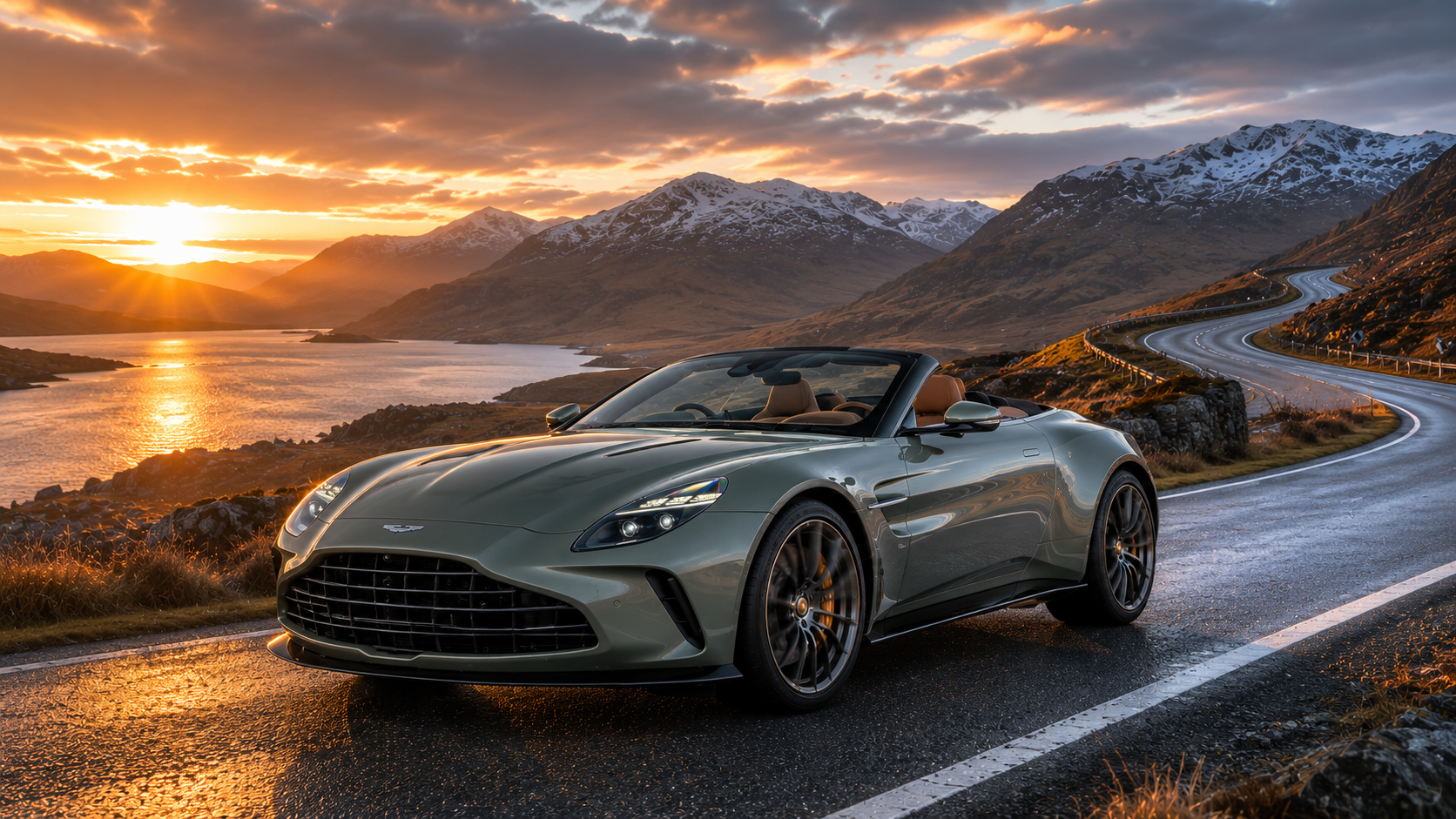
People talk about Britain's roads as though the motorway network is the whole story. It isn't. Beyond the A roads and the commuter corridors and the A34 on a Friday afternoon, there's a network of driving routes that would make most European countries genuinely envious. Mountain passes in Wales that feel designed specifically to test a car's chassis. Coastal roads in Cornwall that seem painted rather than built. Five hundred miles of Scottish Highland that, at the right hour of the morning, in the right car, feel like the world belongs to you and no one else.
This guide is about those roads. It's for anyone who has sat in a hired supercar and thought, I wish I had a week and a route. We've built you the route — several of them. Choose your starting point.
Can You Hire a Supercar for a Multi-Day UK Road Trip?
Yes — and it's more straightforward than most people assume. Multi-day self-drive supercar hire is a standard offering across the UK hire market, typically with:
- 2–7 day hire packages available from most operators
- Per-day rate discounts for longer bookings (typically 10–25% per day cheaper than single-day hire)
- Delivery to your starting point — most operators deliver to your home, hotel, or preferred starting location
- Collection from a different point — many operators will collect from a location different to the delivery address, which enables a true point-to-point route rather than an out-and-back
For route planning, the most important consideration is mileage: standard packages include 100–150 miles per day. A five-day North Coast 500 adds up to over 500 miles (just for the route, before any diversions) — you'll need a bespoke mileage agreement. Discuss your planned mileage with the operator at the time of booking.
Best Time of Year for a UK Supercar Road Trip
The British Isles are genuinely four-season road-trip destinations, but the experience varies considerably by season.
| Season | Pros | Cons |
|---|---|---|
| Spring (April–May) | Clear light, moderate traffic, dramatic skies, roads in good repair after winter, heather not yet bloomed | Weather unpredictable; some highland roads still wet |
| Summer (June–August) | Long daylight hours, warm weather, best for convertibles | Tourist traffic on popular routes (NC500, Cotswolds); roads can be busy on weekends |
| Autumn (September–October) | Extraordinary light, colour in the landscape, significantly less tourist traffic | Shorter days; early frost risk in Scotland from October |
| Winter (November–March) | Roads almost empty; dramatic, moody conditions | Ice, darkness, and low-slung supercars have limited ground clearance on gritted roads |
The verdict: For the NC500 and Scottish Highlands, late April through June offers the best combination of conditions — long days, manageable tourist numbers, and roads that haven't yet been found by the summer wave. For the Cotswolds and Welsh passes, September and October are exceptional.
Route 1: The North Coast 500 — Scotland's Ultimate Drive
Distance: 516 miles (loop from Inverness) Recommended duration: 5–7 days Best car: Porsche 911 Turbo S, Aston Martin DB11, Bentley Continental GT (comfort over distance matters)
The North Coast 500 is Britain's answer to Route 66 — a loop that starts and ends in Inverness, taking in some of the most dramatic landscape in Europe. Castle ruins at Dunrobin. The white sand beaches of Durness. The cliffs at Balnakeil Bay. The approach to Torridon. Every turn reveals something that makes you forget to think about the engine you're inside.
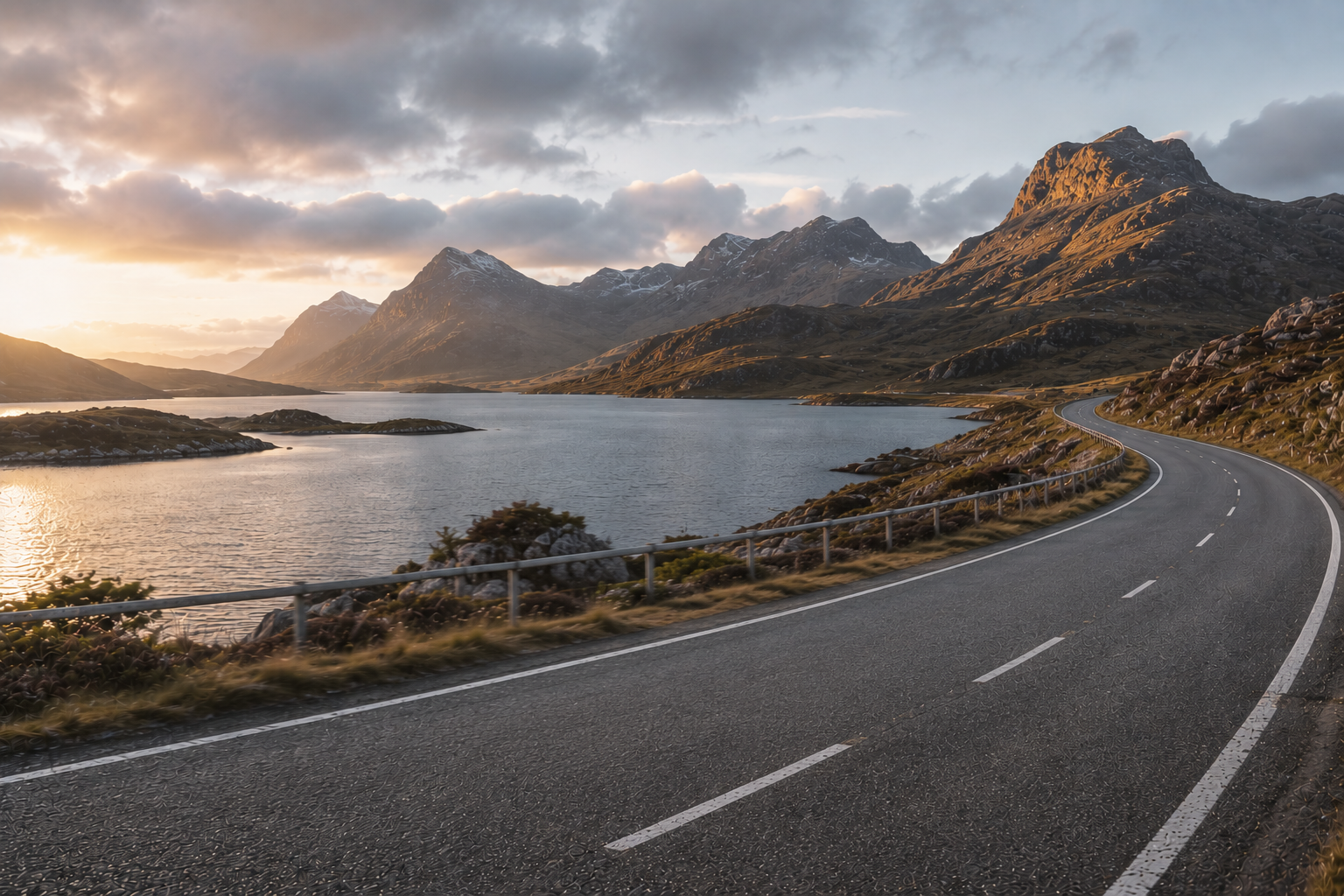
Suggested 5-Day Itinerary:
| Day | Route | Highlights |
|---|---|---|
| Day 1 | Inverness → Dornoch → Brora → Helmsdale | The east coast opener; gentler roads, good warm-up |
| Day 2 | Helmsdale → Wick → John o'Groats → Durness | The far north; dramatic coastal approach to Durness |
| Day 3 | Durness → Kinlochbervie → Ullapool | The north-west; the finest driving on the route, coastal cliffs and mountain passes |
| Day 4 | Ullapool → Torridon → Applecross Pass | The Bealach na Bà — the highest road pass in the UK. Take it carefully. The views are worth every switchback |
| Day 5 | Applecross → Kyle of Lochalsh → Inverness | The final run; road through Glen Shiel, past Eilean Donan Castle |
Planning notes:
- Fuel stations are limited after Ullapool — fill the tank whenever you see one
- The Bealach na Bà (Applecross Pass) has sections with a 1:5 gradient and multiple hairpin bends; it is extraordinary and must be treated with appropriate respect in a low-slung car
- Book accommodation at least 3–4 months ahead for summer dates; the NC500 has become genuinely popular and villages fill up
Route 2: The Welsh Mountain Passes
Distance: Approximately 180–250 miles depending on configuration Recommended duration: 2–3 days Best car: Porsche 911, Lamborghini Huracán, Ferrari 488 (roads reward a driver's car)
Wales offers the densest concentration of genuinely excellent driving roads in the UK per square mile. Two passes stand above the rest.
The Black Mountain Pass (A4069): Running south through the Brecon Beacons, the A4069 is a sequence of sweeping bends, open moorland, and long sightlines that feel like they were specifically designed to test a performance chassis. The surface is good, the traffic is light outside summer weekends, and the views over the reservoir at the top justify stopping.
The Evo Triangle: The B4391/A458/B4393 loop between Bala and Lake Vyrnwy — nicknamed the Evo Triangle after the car magazine that championed it — is a compact but extraordinary circuit of B-roads through Mid-Wales. It's tight in places, technically demanding, and deeply satisfying. It's also the road that professional supercar testers use when they want an honest assessment of a car's dynamics.
Snowdonia roads: The A5 through the Ogwen Valley and the roads south of Beddgelert offer mountain passes with a different character — more rugged, more dramatic, and better suited to a car with genuine ground clearance. Low supercars are manageable but need care on approach routes.
Route 3: The Peak District Circuit
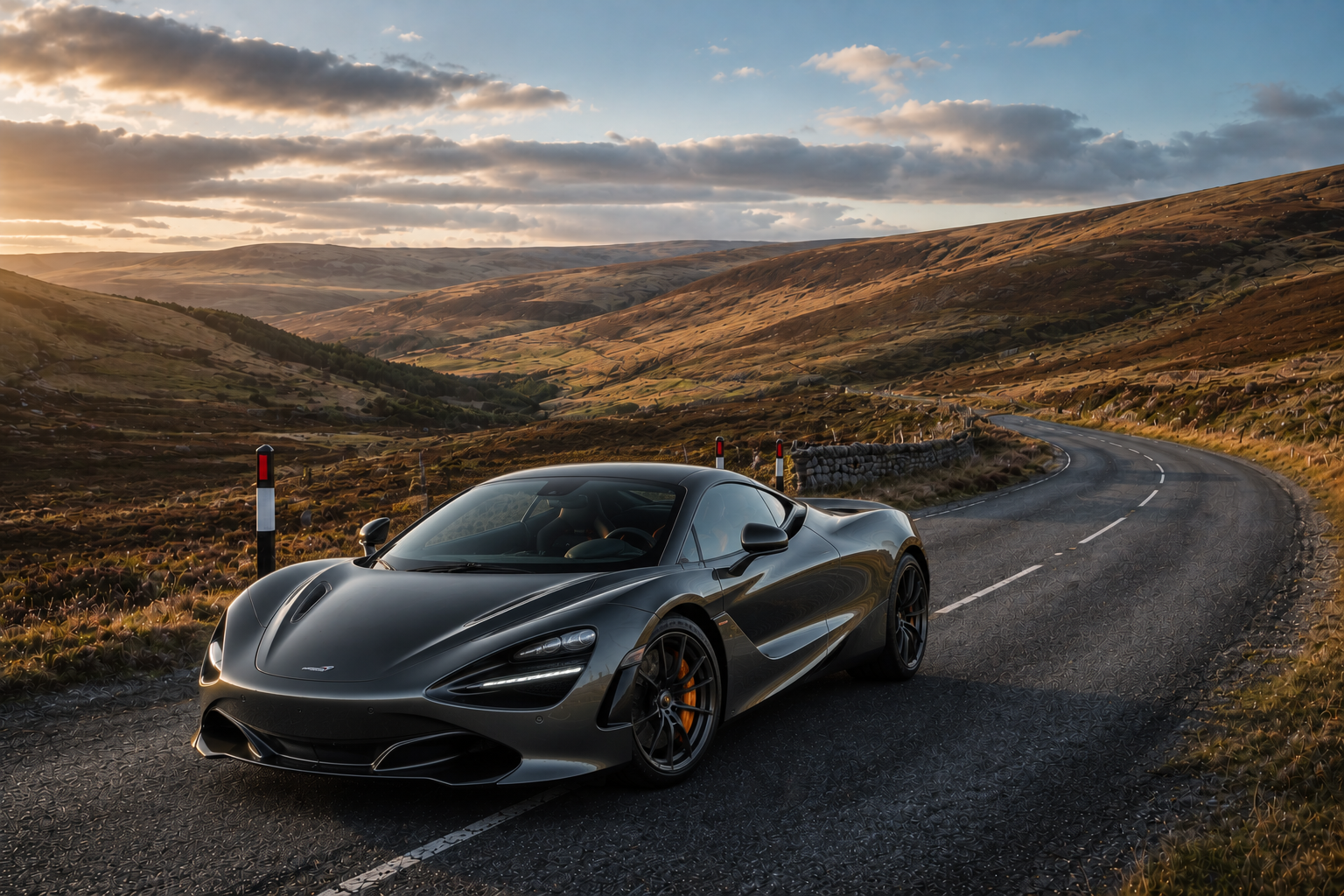
Distance: 80–120 miles depending on configuration Recommended duration: 1–2 days (weekend from Manchester, Sheffield, or Midlands) Best car: Porsche 911, Audi R8, McLaren (roads are precise and technical)
The Peak District is the most accessible great driving region in England — within an hour of Manchester, Sheffield, and the East Midlands, it offers a range of roads that make it the country's most popular destination for car clubs and enthusiast drives.
The Snake Pass (A57): Manchester to Sheffield over the moors. The road climbs out of Glossop through open moorland before descending through Snake Woodland into the Hope Valley. Fast, sweeping sections alternate with tighter stretches. At 7am on a clear Wednesday in September, it's close to perfect.
The Cat and Fiddle Road (A537): Macclesfield to Buxton via the Cat and Fiddle pub — historically one of England's most notorious speed trap roads, and now well-enforced with average speed cameras. Drive for the experience, not the speedometer. The elevation change and views over Macclesfield Forest reward a properly unhurried approach.
Combined circuit: Snake Pass east from Manchester → Castleton → Hope Valley → Monsal Head → A515 south → A537 Cat and Fiddle → return to Manchester. Approximately 90 miles. Achievable in a day.
Route 4: The Atlantic Highway — Cornwall and Devon
Distance: Approximately 150–200 miles (Bude to Land's End or reverse) Recommended duration: 3–4 days Best car: Ferrari Roma, Bentley Continental GTC, Aston Martin — the GT character suits this route
The Atlantic Highway (A39 and A386) runs down the north coast of Cornwall and Devon, with the Atlantic Ocean visible on the left for much of the journey. This isn't a driver's road in the purist sense — it rewards pace and composure rather than technical precision. The sea views are extraordinary. The villages are extraordinary. And the combination of a Ferrari Roma or Bentley Continental at the right speed on these roads, with the windows down and the coast ahead, is a specific kind of British road-trip perfection.
The route: Bude → Tintagel → Port Isaac → Padstow → Wadebridge → St Ives → Land's End.
Accommodation at this end of Britain is exceptional for the price compared with the south-east, and the coastal hotels around Rock, Padstow, and St Ives are well-adapted to the supercar visitor — secure parking is more available than in most rural areas.
Route 5: The Cotswolds Grand Tour
Distance: 70–120 miles Recommended duration: Weekend (Friday evening arrival, Sunday afternoon return) Best car: Bentley Continental GT, Aston Martin DB11, Rolls-Royce Ghost — this is GT country
The Cotswolds is often dismissed as "gentle" driving. This is fair and slightly misses the point. The Cotswolds isn't about driving drama — it's about driving pleasure. The honey-stone villages, the beech woodland, the country house hotels, the unhurried pace of the whole thing. A Bentley or an Aston in the Cotswolds isn't seeking a thrill — it's seeking context. The car and the landscape are simply right together.
Suggested loop: Cirencester → Burford → Chipping Norton → Moreton-in-Marsh → Broadway → Chipping Campden → Stow-on-the-Wold → Bourton-on-the-Water → back to Cirencester.
Accommodation: Buckland Manor, Barnsley House, or the Lygon Arms at Broadway are all exceptional, all welcome interesting cars, and all provide the kind of setting that makes a supercar weekend feel properly curated.
Route 6: Surrey Hills and Box Hill — The London Escape
Distance: 40–60 miles Recommended duration: Half-day or day trip from London Best car: Any — this is the accessible option for London-based hirers
For those based in or near London who want a morning's driving without committing to a two-day road trip, the Surrey Hills loop is the standard. Box Hill, Leith Hill, the roads around Guildford and Dorking, and the approach to Hindhead — none of it is dramatic in the NC500 sense, but all of it is genuinely enjoyable and accessible before lunchtime.
The caution: The Surrey Hills are popular with cyclists, walkers, and Sunday drivers. The roads are narrow in places. This is not a route for pushing the car — it's a route for enjoying it, and the distinction matters.
Practical Planning: Roads to Avoid in a Supercar
Low-slung supercars — Lamborghinis, Ferraris, McLarens — have limited ground clearance and require awareness:
Avoid or approach carefully:
- Very rural single-track roads in Wales and Scotland (passing places can require significant steering lock at very low speeds)
- Urban centres with aggressive traffic calming (speed bumps can ground low supercars — particularly problematic in many market towns)
- Farm tracks and unmade surfaces (not covered by hire insurance)
- Multi-storey car parks with steep internal ramps
Generally fine:
- A-roads and B-roads in good condition
- Motorways (obviously)
- Most coastal roads
- Mountain passes with tarmac surfaces (the Bealach na Bà requires care but is manageable)
Combining a Road Trip with Track Time
Several UK circuits offer combinations of track experience and surrounding road trip. Goodwood, Silverstone, and Knockhill (Scotland) all have track day programmes that can bookend or interrupt a road trip beautifully. Arriving at a track on day two of a road trip, spending a morning doing instructed laps, and then departing on open roads is genuinely one of the best ways to spend a UK supercar weekend.
Road Etiquette on Enthusiast Routes
The UK's famous driving roads attract enthusiasts, walkers, cyclists, and local residents. A brief note on shared etiquette:
- Pull over for oncoming traffic on narrow sections — the etiquette is always to use passing places generously
- Don't tail-gate slower drivers on winding roads — wait for a safe opportunity
- The NC500 and other popular routes are patrolled; average speed cameras exist on several sections
- A supercar in a village at 7am sounds different from a supercar at 60mph on an open pass — use appropriate discretion around residential areas
The roads are there because of history and geography, not for exclusive use by people in Ferraris. They're shared spaces, and the people who use them most graciously are the ones who get waved through quickest.
What to Pack for a Supercar Road Trip
For a multi-day supercar hire road trip:
- Soft luggage — hard suitcases are often too large for supercar boot space; soft bags pack into irregular spaces far more effectively
- Car cover (check if operator provides one) — for overnight hotel stops where you can't park in a covered space
- Credit card with sufficient limit — for fuel, accommodation, and the deposit if required
- Your hire documents — rental agreement and insurance certificate, easily accessible
- DVLA share code if not already used at collection
- Phone mount — for navigation without the screen eating your attention
- Headphones or AUX cable — supercar exhaust notes are the soundtrack on driving roads, but motorway sections benefit from music
Final Thoughts: The Road Is Waiting
The UK is one of the world's great road-trip destinations for enthusiasts who know where to look. The motorways are fine and efficient and entirely forgettable. The roads beyond them — the passes, the coastal routes, the Highland roads — are genuinely, irreplaceably extraordinary.
You don't need to own the car to experience them. You just need a good week, a multi-day hire, and a route that does justice to both.
The NC500 is still there. The Black Mountain Pass is still there. The A537 at dawn on a clear October morning is still one of the finest things you can do in a car in this country.
Book the car. Plan the miles. Go.
Ready to plan your UK supercar road trip? Compare multi-day hire options, models, and prices from hundreds of hire partners across the UK with Autofusion — and find the right car for the road ahead.