



Published 6 July 2026
Our methodology focuses on accuracy first.
All information is researched using manufacturer data, official industry guidance, and trusted automotive sources. Where relevant, content is cross-checked against real-world vehicle maintenance practices and common customer enquiries to ensure it is both practical and accurate. Our content is reviewed regularly and updated to reflect changes in regulations, industry standards, and best practices.

So you've found the car. You've checked the daily rate, it fits the budget, the calendar is clear, and you're ready to commit. Then you scroll to the terms and conditions — specifically the security deposit section — and the number staring back at you is somewhere between four and five figures. For a car you don't even own. For a day.
I understand the initial reaction. What I can also tell you is that once you understand exactly how supercar hire deposits work in the UK — what they are, why they exist, what actually happens to your money, and how to manage the process — the number becomes far less alarming and the booking becomes far more straightforward.
This guide answers every question worth asking about supercar hire deposits, so you can go into the booking process with complete clarity and zero unpleasant surprises.
Do You Actually Need a Deposit to Hire a Supercar in the UK?
Yes — essentially always. A supercar is a vehicle worth anywhere from £80,000 to well over £300,000. No legitimate operator is going to hand one over without a meaningful financial commitment from the driver. The deposit is how they protect that asset.
What varies significantly is the type of deposit, the amount, and the conditions attached to it. And — this is the part most people miss — there isn't just one deposit. There are typically two separate deposits involved in a supercar hire, each serving a different purpose.
The Two Types of Supercar Hire Deposit
This distinction is the single most important thing to understand before booking.
Type 1: The Booking Deposit
This is what you pay at the time of booking to secure your chosen vehicle and date. Think of it as your seat reservation. Without it, the car remains available for someone else.
Key features of the booking deposit:
- Typically ranges from £100 to 50% of the total hire cost
- Usually non-refundable in the event of cancellation — though some operators offer partial refunds for cancellations made far enough in advance
- Paid upfront via bank transfer or credit/debit card
- Does not protect against vehicle damage — that's the security deposit's job
Type 2: The Security Deposit (Damage Deposit)
This is the significant one. The security deposit is held against potential damage, mechanical misuse, or excess mileage. It is separate from the hire cost and separate from the booking deposit.
Key features of the security deposit:
- Typically held as a pre-authorisation on a credit card at the time of vehicle collection (not necessarily deducted — more on that shortly)
- Can range from £1,000 for lower-value prestige cars to £25,000 or more for flagship exotics
- Returned after the vehicle is inspected and returned in good condition
- This deposit often equals — or forms part of — your insurance excess
| Deposit Type | When Paid | Amount | Refundable? |
|---|---|---|---|
| Booking deposit | At time of booking | £100–50% of hire cost | Usually no (or partially) |
| Security deposit | At vehicle collection | £1,000–£25,000+ | Yes, if no damage |
How Much Is the Security Deposit for Supercar Hire in the UK?
The honest answer: it varies considerably. The deposit amount is driven primarily by the value of the vehicle and the operator's excess structure. Here are typical ranges for the UK market in 2026:
| Vehicle Class | Typical Security Deposit Range |
|---|---|
| Entry-level exotic (e.g. Audi R8, Porsche 911) | £1,000–£3,000 |
| Sports supercar (e.g. Ferrari 488, Lamborghini Huracán) | £3,000–£8,000 |
| Mid-range exotic (e.g. McLaren 720S, Ferrari SF90) | £5,000–£12,000 |
| Flagship exotic (e.g. Lamborghini Aventador) | £10,000–£15,000 |
| Ultra-high-value vehicles | £15,000–£25,000+ |
Figures are approximate. Always confirm the exact deposit requirement with your specific operator before booking.
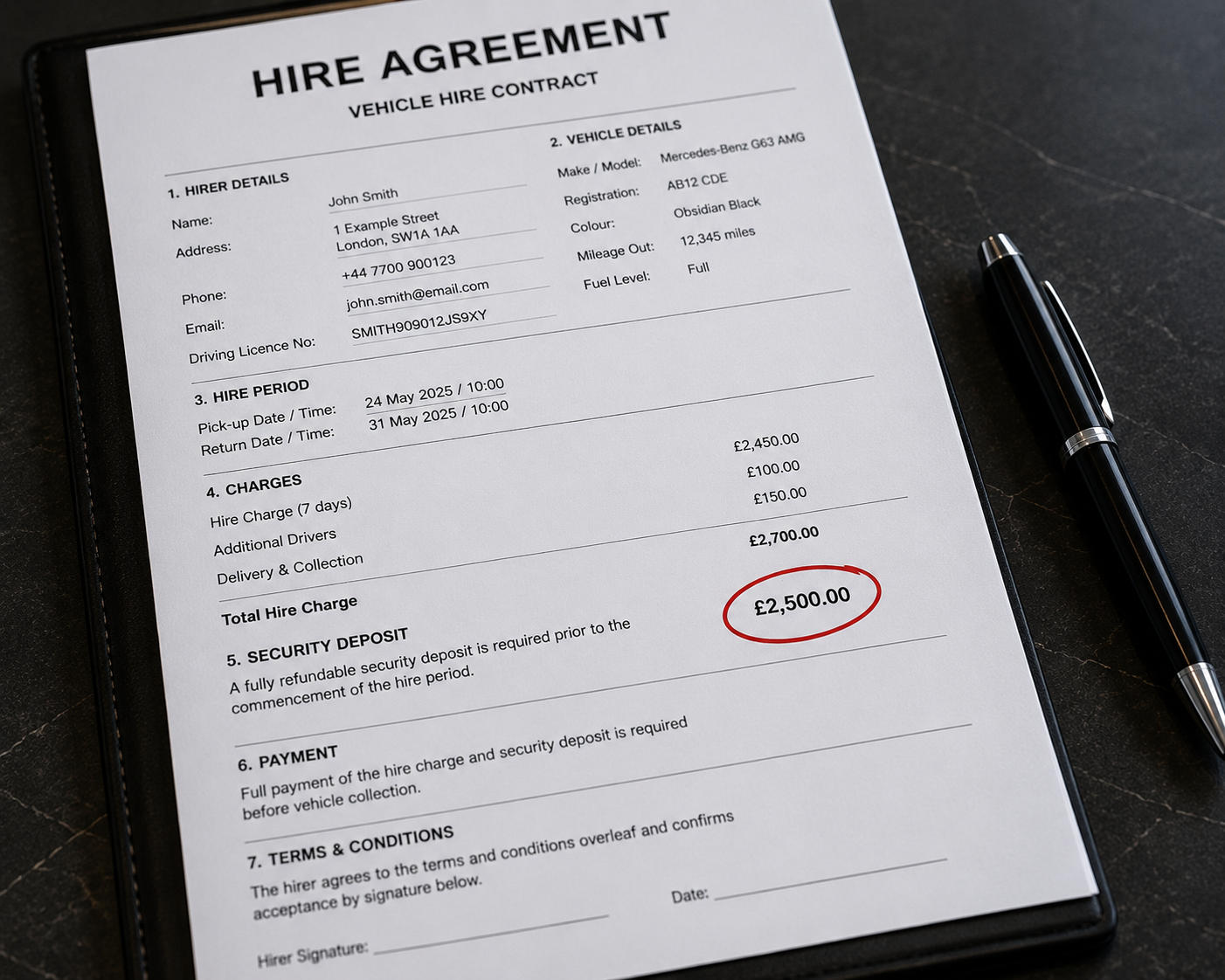
If these numbers look alarming, remember what they represent: the operator holding security against a vehicle that might cost £250,000 to replace. In that context, a £10,000 security deposit is actually quite conservative.
Is the Security Deposit the Same as the Insurance Excess?
Often — but not always. This is a nuance that matters.
In many UK supercar hire contracts, the security deposit and the insurance excess are the same figure. The deposit is held as your maximum liability for damage. If you have an at-fault accident and the repair costs £7,000, and your deposit/excess is £8,000, the operator retains £7,000 from your deposit and returns the remaining £1,000.
In other arrangements, the deposit and the excess are separate:
- The deposit is held against all potential charges (damage, mileage, fuel, etc.)
- The excess is specifically your liability for insurance-related damage claims
When reviewing hire terms, look for the clause that explicitly states what the deposit covers and what your maximum liability is. If in doubt, ask the operator directly before booking.
Pre-Authorisation vs Full Charge: An Important Distinction
One of the most misunderstood aspects of supercar hire deposits — and one worth understanding clearly.
Pre-authorisation (also called a card block or security hold) means the operator asks your card issuer to temporarily reserve the deposit amount against your available credit. The money is not actually taken from your account — it's simply ring-fenced. If you return the car in good condition, the pre-auth is released and no transaction appears on your statement.
Full charge means the deposit is actually deducted from your account at the time of collection and then returned as a separate payment after the vehicle is inspected.
Most reputable UK supercar hire operators use pre-authorisation for the security deposit — it's cleaner, costs you no money if everything goes smoothly, and avoids the delay of waiting for a refund. However, pre-authorisation does reduce your available credit limit for the duration of the hire, so you need enough headroom on your credit card to accommodate the full deposit amount.
Important: Most operators require a credit card specifically for the security deposit. Debit cards are often not accepted for this element of the transaction, even if the hire fee itself can be paid by other means.
When Do You Get Your Deposit Back?
This is the question I get asked most consistently — and the answer depends on two things: the inspection result and the operator's processing timeline.
The sequence typically works like this:
- You return the car at the agreed time
- The operator conducts a condition inspection, comparing the vehicle's state against the pre-hire walkthrough documentation
- If no damage is found, the security deposit is released
- Release timings vary by operator — anywhere from immediate (for pre-authorisations on the day) to up to 14 days for full charge deposits being processed as a bank transfer
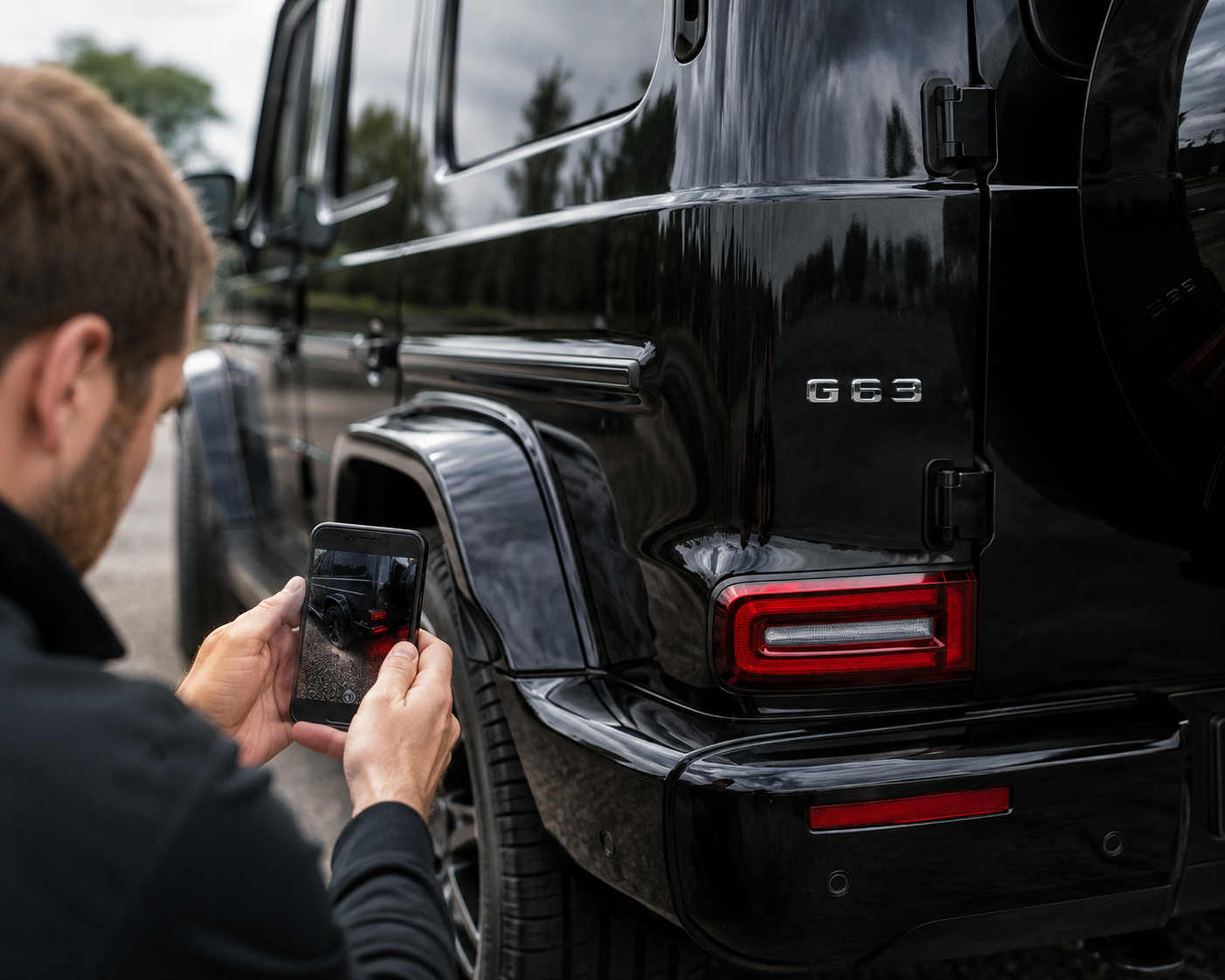
The practical advice: take your own timestamped photographs of the entire vehicle — every panel, wheel, and the interior — at both collection and return. This protects you from any ambiguity about when a mark occurred and ensures the operator's inspection has a clear reference point.
Is the Booking Deposit Refundable If You Cancel?
This varies by operator, and the terms are usually tiered based on how far in advance you cancel.
Common cancellation structures in the UK supercar hire market:
| Cancellation Timing | Typical Outcome |
|---|---|
| More than 4–8 weeks before hire date | Partial refund (typically 50% of booking deposit) |
| 2–4 weeks before hire date | Deposit retained in full |
| Less than 2 weeks | Deposit retained; potential additional cancellation fee |
| No-show / same-day cancellation | Full hire cost may be retained |
Always read the cancellation policy before paying any booking deposit — policies vary significantly between operators.
Some operators distinguish between cancellation (you cancel) and rescheduling (moving to a different date). Rescheduling is often treated more generously — many operators will allow one date change without penalty, especially with reasonable notice.
What Happens If There's Minor Damage?
This is the scenario that creates the most anxiety for hirers — and the one where the operator's definition of "damage" versus "wear and tear" matters enormously.
The general framework across the UK supercar hire market:
Wear and tear (not deducted from your deposit):
- Small stone chips to the paintwork
- Light surface marks consistent with normal driving
- Minor interior wear from regular use
Chargeable damage (will consume part or all of your deposit):
- Significant dents, deep scratches, or paint damage
- Kerbed or damaged alloy wheels
- Tyre damage
- Windscreen chips or cracks (beyond stone chip tolerance)
- Interior burns, tears, or staining
- Mechanical damage arising from misuse (clutch, gearbox)
The key distinction is significance and cause. A stone chip on the motorway is generally accepted as an unavoidable risk of driving. A deep scrape on the front bumper is not.
To protect yourself:
- Do the pre-hire walkaround thoroughly and note every existing mark on the condition report
- Take your own photographs before you drive away
- Drive carefully — low-slung supercars are vulnerable to speed bumps, raised driveways, and steep car park ramps
- Return the car clean so the inspection can be conducted accurately
Can You Reduce the Deposit? Yes — Here's How
The deposit reduction scheme (also called a bond reduction or excess waiver) is the mechanism most operators offer to reduce your financial exposure in exchange for an additional fee.
How it typically works:
- You pay an additional fee (typically £100–£500 depending on the car and hire length)
- Your security deposit is reduced to a lower amount — for example, from £10,000 to £3,000
- In the event of damage, your liability is capped at the reduced amount
This is worth doing the maths on. If reducing a £10,000 deposit to £3,000 costs £300, you're paying £300 to reduce your maximum liability by £7,000. For most people, that's money extremely well spent.
Alternatively, a third-party excess insurance policy from a specialist high-value car hire insurer can cover your deposit liability in exchange for a premium — though the process involves paying first and claiming back later, which requires you to have the cash available.
Why Are Supercar Hire Deposits So Much Higher Than Normal Car Hire?
The maths is straightforward, even if the number isn't comfortable.
When a standard hire car is damaged, a repair might cost £500–£2,000. When a Lamborghini Aventador is damaged, a single panel replacement can cost £8,000–£15,000. Specialist parts, specialist paint matching, specialist bodywork technicians — everything costs more on a vehicle engineered to these standards.
Beyond repair costs, there's also:
- Downtime cost: Every day the car can't be hired is lost revenue for the operator
- Parts availability: Exotic vehicles often have longer lead times for parts
- Reputational condition: High-end customers expect immaculate vehicles; cosmetic issues can't be ignored
The deposit isn't the operator being greedy. It's the operator running a sustainable business with vehicles that cost more to repair than most people's annual salary.
Do Different Cars Have Different Deposit Amounts?
Yes — consistently. The security deposit scales with the value and complexity of the vehicle. An Audi R8 and a Lamborghini Aventador are both extraordinary cars, but the Aventador's repair costs, parts prices, and replacement value are in a fundamentally different category.
Some operators use fixed deposit tiers based on vehicle category; others quote individual deposits for each vehicle. For very high-value exotics, the deposit may be quoted on enquiry rather than listed publicly — always ask before you commit.
Also worth noting: the same car may carry different deposit requirements depending on the driver's age, driving history, or the hire duration. Younger drivers, those with recent endorsements, or those booking longer hires may be assessed differently.
Pre-Booking Deposit Checklist
Before confirming any supercar hire, run through these:
- ✅ Ask for the exact booking deposit amount and confirm whether it's refundable or non-refundable
- ✅ Confirm the security deposit amount for your specific vehicle
- ✅ Check whether it's a pre-authorisation or a full deduction — and confirm your credit card has sufficient available credit
- ✅ Read the cancellation policy in full before paying the booking deposit
- ✅ Understand the damage vs wear and tear definition in the operator's terms
- ✅ Ask about deposit reduction options and decide whether the fee represents good value
- ✅ Know the refund timeline — when will your deposit be released after the hire?
- ✅ Photograph the car thoroughly at collection and return
Final Thoughts: Deposits Are a Feature, Not a Bug
Here's the reframe that makes supercar hire deposits feel completely reasonable: the deposit is what makes the whole experience possible. Without the security of knowing their fleet is protected, operators couldn't offer self-drive hire at all. The deposit is the mechanism that allows you to get behind the wheel of a £200,000 supercar without owning one.
Understand the structure, choose the right reduction option for your peace of mind, photograph everything, and then enjoy the experience you've planned and paid for. The deposit is returned. The memory isn't.
Ready to find a supercar hire that's fully transparent about deposits, excess, and all the terms that matter? Compare vehicles and pricing from hundreds of hire partners across the UK with Autofusion — and book knowing exactly what you're signing up for.