



Published 9 June 2026
Our methodology focuses on accuracy first.
All information is researched using manufacturer data, official industry guidance, and trusted automotive sources. Where relevant, content is cross-checked against real-world vehicle maintenance practices and common customer enquiries to ensure it is both practical and accurate. Our content is reviewed regularly and updated to reflect changes in regulations, industry standards, and best practices.

Nobody reads the insurance terms until something goes wrong. It's one of those universal human experiences, like discovering that you needed to register a warranty two weeks after the warranty expired, or checking the terms and conditions only after the situation they describe has already occurred.
For luxury car hire, the insurance excess is the number worth understanding before you take the car, not after. This guide explains what the excess is, why it's so high for prestige and supercar hire, how to protect yourself against it, and the specific differences between the protection products available in the UK market.
No surprises after the fact. Only clear information before.
What Is an Insurance Excess on Luxury Car Hire?
The insurance excess is your personal financial liability in the event of an at-fault accident, vehicle damage, or theft during your hire period.
Here's how it works: Comprehensive insurance is included as standard with all legitimate UK luxury and supercar hire bookings. That insurance covers the vehicle. But it doesn't cover everything — specifically, it doesn't cover the first portion of any damage claim. That first portion is the excess, and it's what you pay.
A simple illustration:
- Your insurance excess is £6,000
- An accident causes £4,000 of damage
- You pay £4,000 (the full damage cost, because it's under your excess)
And:
- Your insurance excess is £6,000
- An accident causes £15,000 of damage
- You pay £6,000 (your excess), the insurance covers the remaining £9,000
The excess is your ceiling of liability — but it's also your floor in any incident of meaningful damage. Every repair bill up to the excess amount comes out of your pocket.
Why Is the Excess So High for Luxury and Supercar Hire?
This is the question that makes the number feel less outrageous once you understand the answer.
A standard hire car might cost £15,000–£25,000 to replace. The excess on a standard hire car is typically £500–£1,500 — proportionate to the repair costs the insurer is underwriting.
A Lamborghini Huracán costs approximately £180,000–£220,000 new. A single panel replacement can cost £8,000–£15,000. A front-end repair after a low-speed collision might cost £20,000–£40,000. The insurer underwriting this vehicle against those costs applies correspondingly higher excess levels — and the hire operator passes that excess structure to the hirer.
The excess isn't arbitrary. It's the operator and insurer's mechanism for sharing the risk with someone who is driving a vehicle they don't own, on roads they may not know well, for a limited and high-stakes period.
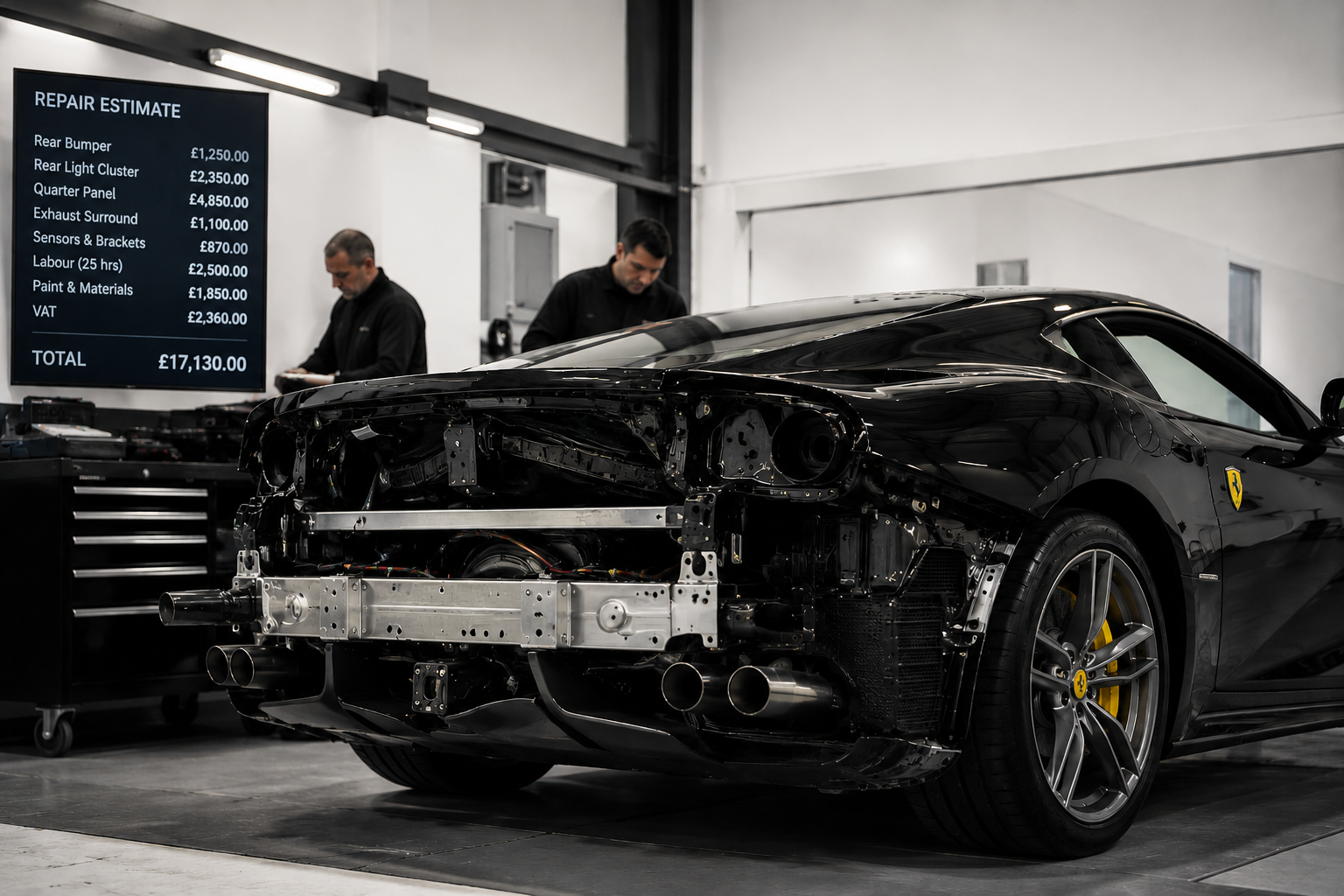
Typical Excess Levels for UK Luxury and Supercar Hire
Here's a realistic picture of what to expect in 2026:
| Vehicle Category | Typical Insurance Excess Range |
|---|---|
| Premium executive (Mercedes S-Class, BMW 7 Series) | £1,000–£3,000 |
| Luxury SUV (Range Rover Autobiography, Bentley Bentayga) | £2,000–£5,000 |
| Prestige GT (Porsche 911 Turbo, Audi R8 V10) | £3,000–£6,000 |
| Supercar (Ferrari 488, Lamborghini Huracán) | £5,000–£10,000 |
| Flagship exotic (Lamborghini Aventador, McLaren 720S) | £8,000–£15,000 |
| Ultra-high-value (Ferrari SF90, Bugatti-tier hypercars) | £15,000–£25,000+ |
These are indicative figures. Always confirm the exact excess for your specific vehicle with the operator before booking.
The excess and the security deposit are often the same figure — the deposit is held on your credit card as collateral against the excess liability. If no damage occurs, the deposit is released. If damage occurs up to the excess amount, the deposit covers it.
Does Luxury Car Hire Include Comprehensive Insurance?
Yes — this is the baseline that's easy to confirm. All reputable UK luxury and supercar hire operators include comprehensive motor insurance as standard within the hire price. This covers:
- Third-party liability — damage to other vehicles, property, and injury to third parties
- Fire and theft — the vehicle is protected against theft and fire damage
- Own-damage — accidental damage to the hired vehicle, within the excess limit
What the standard insurance does not automatically cover in most hire contracts:
- Tyres — damage to tyres is often explicitly excluded
- Wheels and alloys — cosmetic or structural wheel damage may be excluded
- Windscreen and glass — sometimes excluded or covered separately
- Underbody / ground clearance damage — particularly relevant for low-slung supercars
- Keys — lost or damaged keys are often treated separately
- Misfuelling — putting the wrong fuel in the car (diesel in a petrol engine)
These exclusions are not standard across all operators, but they're common enough to check for specifically. The exclusions list in the hire contract is the section that matters most — read it carefully.
The Three Ways to Manage Your Excess
When it comes to your excess liability, you have three broad options:
Option 1: Accept the Full Excess
You drive with the full excess liability unchanged. If damage occurs, you pay up to the excess amount. This is the default position if you do nothing — and for some hirers who are very confident drivers with appropriate financial reserves, it's a rational choice.
The psychological dimension is real, though. Driving a £200,000 Lamborghini with £8,000 of personal liability creates a specific kind of background tension for most people. Whether that tension affects your enjoyment of the experience is worth honestly considering.
Option 2: Buy the Hire Company's Excess Waiver
Most UK luxury hire operators offer their own excess reduction or waiver product — sometimes called SuperCover, a Collision Damage Waiver (CDW), or simply an excess waiver. This reduces or eliminates your excess liability in exchange for an additional daily fee.
| Excess Waiver Type | What It Does | Typical Daily Cost |
|---|---|---|
| Partial waiver | Reduces excess to a lower figure (e.g. £8,000 → £2,000) | £30–£80/day |
| Full waiver (zero excess) | Eliminates excess liability entirely | £60–£150/day |
Advantage: Simple, included in the same booking, no separate claim process if damage occurs.
Consideration: The hire company's product is often more expensive than a standalone third-party policy, and its terms (particularly around the exclusions discussed above) may not be any more generous.
Option 3: Buy Standalone Excess Insurance
Specialist car hire excess insurance is available from independent providers in the UK, and can be purchased separately before your hire day. These policies work by reimbursing any excess you pay — meaning you pay the hire company first if damage occurs, then claim back from the excess insurer.
This reimbursement model is the key difference from the hire company's direct waiver: you need to have the cash or credit available to pay the excess before you can recover it. For excesses of £5,000–£10,000, this requires meaningful available credit at the time of any claim.
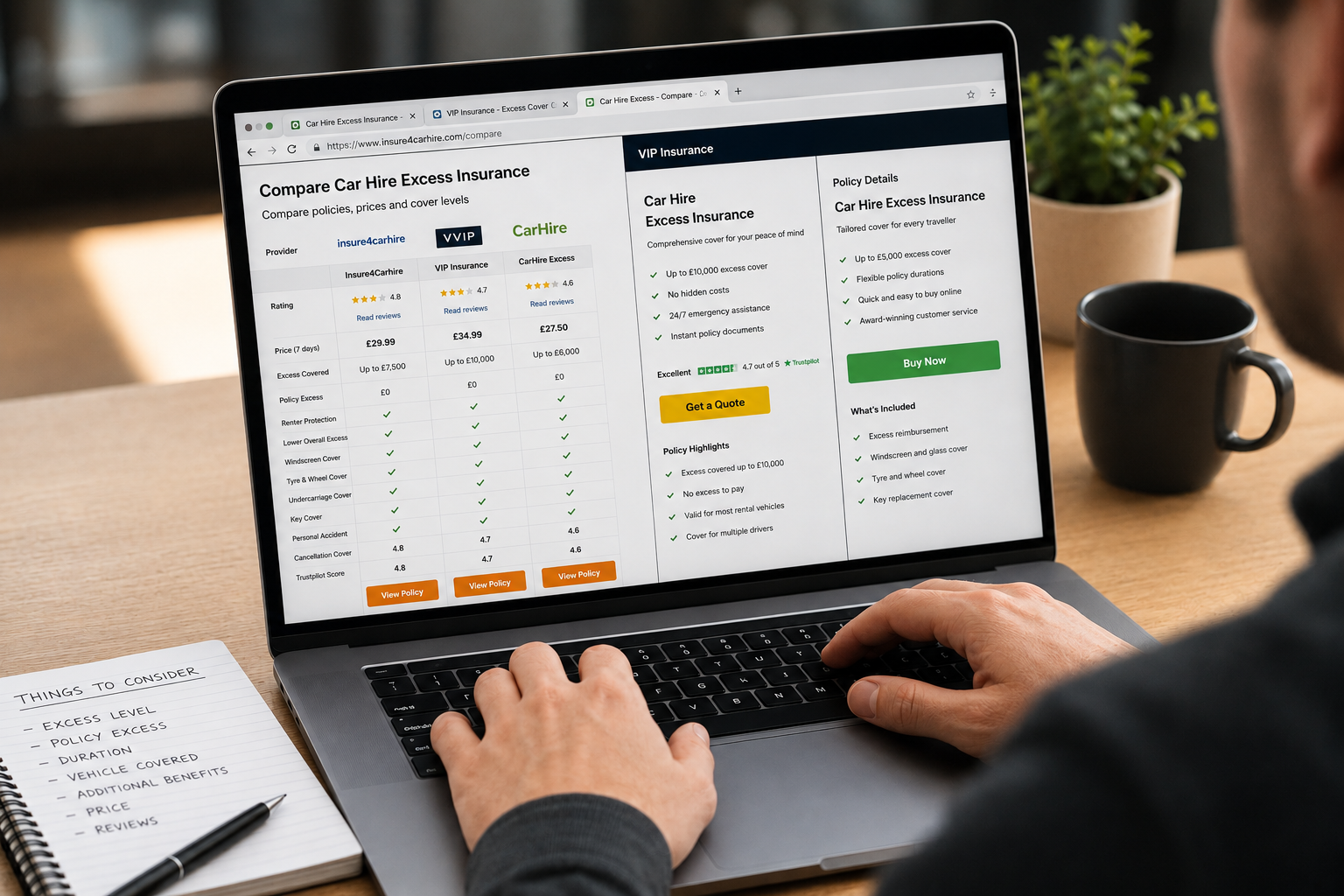
Standalone Excess Insurance: Policy Limits That Matter
If you're buying a standalone excess insurance policy for luxury car hire, the most important numbers are:
Maximum excess covered: The maximum amount the policy will reimburse if you pay an excess. For standard car hire excess policies, this is often £2,000–£5,000 — which is inadequate for supercar hire excesses of £8,000–£15,000.
Maximum vehicle value: The maximum value of vehicle the policy covers. Many standard policies cap at £25,000–£35,000 vehicle value, which excludes virtually every vehicle in a luxury or supercar hire fleet.
For luxury and supercar hire specifically, you need policies with:
- Excess limit: At or above your hire excess (£6,000–£10,000+ minimum for most supercars)
- Vehicle value limit: At or above the hire vehicle's value (£65,000–£120,000 for most premium hires)
Here's how the UK specialist excess insurance market breaks down for high-value hire:
| Policy Level | Max Excess Covered | Max Vehicle Value | Best For |
|---|---|---|---|
| Standard car hire excess | £2,000–£5,000 | Up to £35,000 | Standard hire only — inadequate for supercars |
| Premium excess policy | £6,500–£7,500 | Up to £65,000–£75,000 | Prestige saloons, luxury SUVs, some entry sports cars |
| High-value specialist | £8,000–£10,000 | Up to £100,000–£120,000 | Most supercars, Ferraris, Lamborghinis, Bentleys |
Critically: Even the highest-value specialist policies may not cover extreme hypercars (SF90, Chiron-tier vehicles worth £400,000+). For these vehicles, the hire company's own waiver product may be the only protection option available.
What Exclusions Do Excess Insurance Policies Cover That Standard Hire Doesn't?
This is where standalone excess insurance often provides genuine added value over the hire contract's standard coverage:
| Exclusion in Most Hire Contracts | Covered by Specialist Excess Policy? |
|---|---|
| Tyre damage | ✓ Yes (most specialist policies) |
| Windscreen and glass | ✓ Yes (most specialist policies) |
| Alloy wheel damage | ✓ Yes (most specialist policies) |
| Underbody / ground clearance damage | ✓ Yes (most specialist policies) |
| Key replacement | ✓ Yes (most specialist policies) |
| Misfuelling | ✓ Yes (most specialist policies) |
| Admin/handling fees | ✓ Yes (many specialist policies) |
| Personal possessions stolen from vehicle | ✓ Some policies |
For low-slung supercars specifically, the tyre, alloy, and underbody coverage is genuinely significant — these are among the most commonly claimed items on supercar hire returns, and their exclusion from the standard hire insurance is where the most unexpected bills arise.
The Reimbursement Process: How It Actually Works
If damage occurs and you've bought standalone excess insurance, here's the exact sequence:
- Damage is identified at vehicle return or reported during the hire
- The hire operator charges your credit card up to the excess amount
- You receive documentation from the operator — damage report, repair invoice or estimate
- You submit a claim to your excess insurer with the supporting documents
- The insurer reimburses you — typically within 7–28 days
The critical implication: you need to have the full excess amount available on your credit card at the time of the incident. The insurance reimburses it — it doesn't prevent it being charged in the first place.
For an excess of £8,000 on a Lamborghini hire, that means having at least £8,000 of available credit. If your card limit is maxed or close to it, the reimbursement model creates a practical problem.
This is why some hirers prefer the hire company's direct waiver product despite its higher cost — it prevents the charge rather than recovering it after the fact.
Annual vs Single-Trip Excess Insurance
If you hire luxury or prestige cars more than once a year, an annual multi-trip policy is almost always better value than separate single-hire policies.
| Policy Type | Best For | Typical Cost |
|---|---|---|
| Single-hire policy | One-off special occasion hire | £15–£50 per hire |
| Annual multi-trip (UK) | 2+ hires per year within the UK | £60–£120 per year |
| Annual multi-trip (Europe) | UK + European hire | £80–£150 per year |
| Annual multi-trip (Worldwide) | International hires included | £100–£200 per year |
For someone who hires a supercar for a birthday and a Christmas drive, an annual policy covering both hires costs less than two single policies.
Important note: Annual policies also often cover any car you hire, including standard cars on holidays and business trips — not just the premium vehicles you're specifically buying excess cover for. The value extends beyond supercar hire alone.
Is Excess Insurance Worth It for a One-Off Event?
Let's say you're hiring a Ferrari for a wedding day, or a Lamborghini for a birthday. The hire is one day. Is the excess insurance worth buying for a single event?
The honest calculation:
- A single-day excess policy for a high-value vehicle costs approximately £20–£50
- The excess you're protected against is £5,000–£10,000
- The probability of a claim on any given hire day is low — but not zero
A friend of mine once returned a hired Range Rover with a small scrape acquired in a car park during an event. It cost £900 to repair. The £30 excess insurance he'd bought covered it in full. He has never driven without excess insurance since.
The question isn't really probability — it's whether the peace of mind is worth £30–£50. For most people hiring a vehicle worth more than their annual salary, it is. For a one-off event, it's arguably worth it more than usual — the last thing you want on a wedding day or a birthday is to be managing a damage claim.
The Decision Framework: Which Protection Should You Choose?
| Your Situation | Recommended Approach |
|---|---|
| One-off hire, budget-conscious | Standalone single-trip excess policy (£20–£50) |
| Multiple hires per year | Annual multi-trip excess policy |
| Hire company's waiver is competitively priced | Take it for simplicity — no claim process needed |
| Very high excess (£10,000+), extreme hypercar | Hire company waiver or specialist broker policy only |
| Very high excess but limited credit card availability | Hire company waiver — prevents the charge rather than reimbursing it |
| First-time supercar hirer | Always buy protection — don't add financial anxiety to the experience |
Final Thoughts: Understand the Excess Before You Drive Away
The excess is the number that matters most in luxury car hire — more than the daily rate, more than the deposit, more than any individual line in the contract. It's your maximum financial exposure, and knowing it clearly before collection means you can make a rational decision about how to protect yourself against it.
The UK market has good options: the hire company's own waiver for simplicity, standalone specialist policies for value, and annual policies for regular hirers. None of them is complicated. All of them are worth the few minutes it takes to sort before collection day.
Understand the excess. Buy the appropriate cover. Then drive without the background hum of anxiety that £8,000 of unprotected liability tends to produce.
Ready to find a luxury car hire with transparent excess terms and full pricing? Compare vehicles and operators from hundreds of hire partners across the UK with Autofusion — and book knowing exactly what you're covered for.