


Published 7 June 2026
Our methodology focuses on accuracy first.
All information is researched using manufacturer data, official industry guidance, and trusted automotive sources. Where relevant, content is cross-checked against real-world vehicle maintenance practices and common customer enquiries to ensure it is both practical and accurate. Our content is reviewed regularly and updated to reflect changes in regulations, industry standards, and best practices.
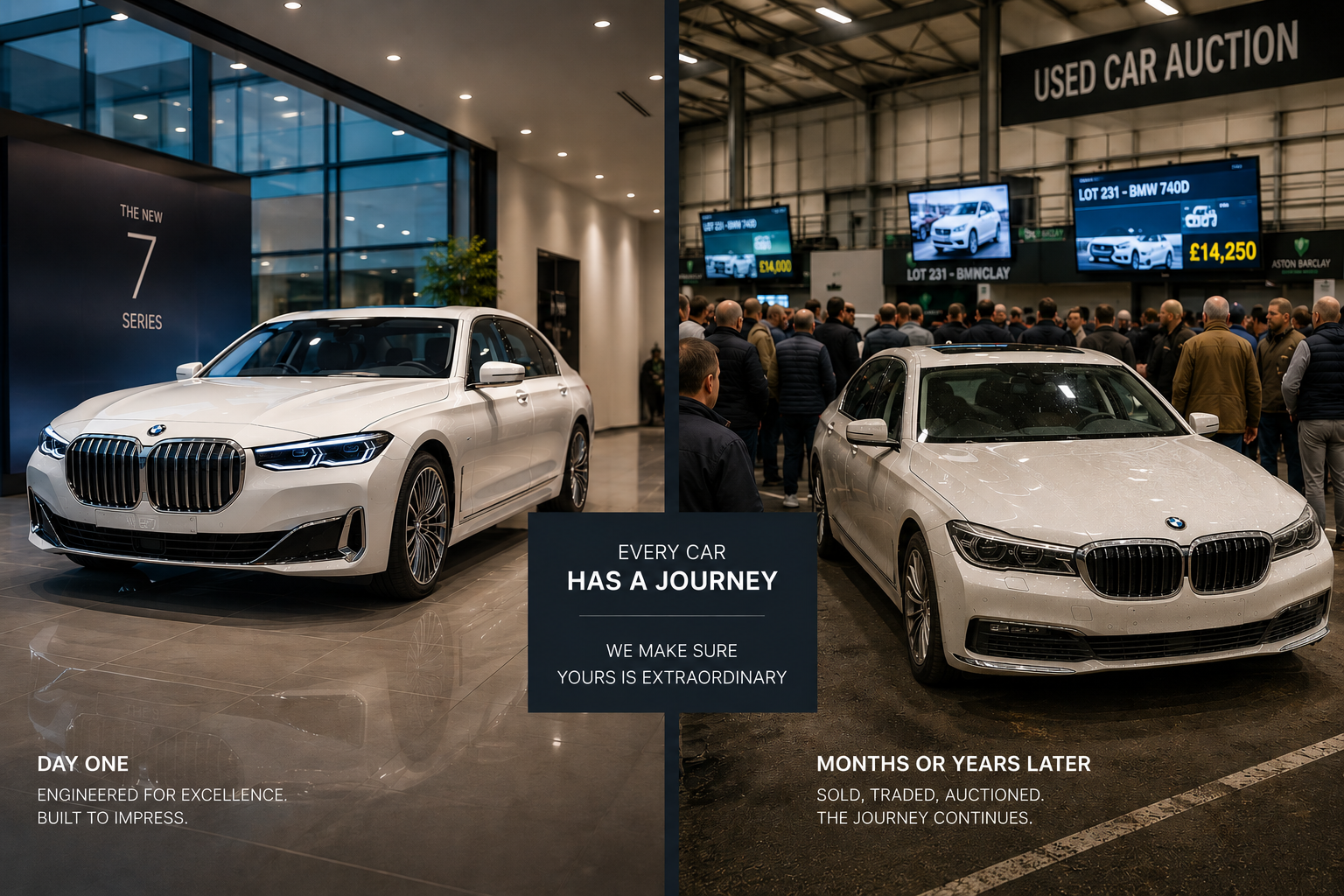
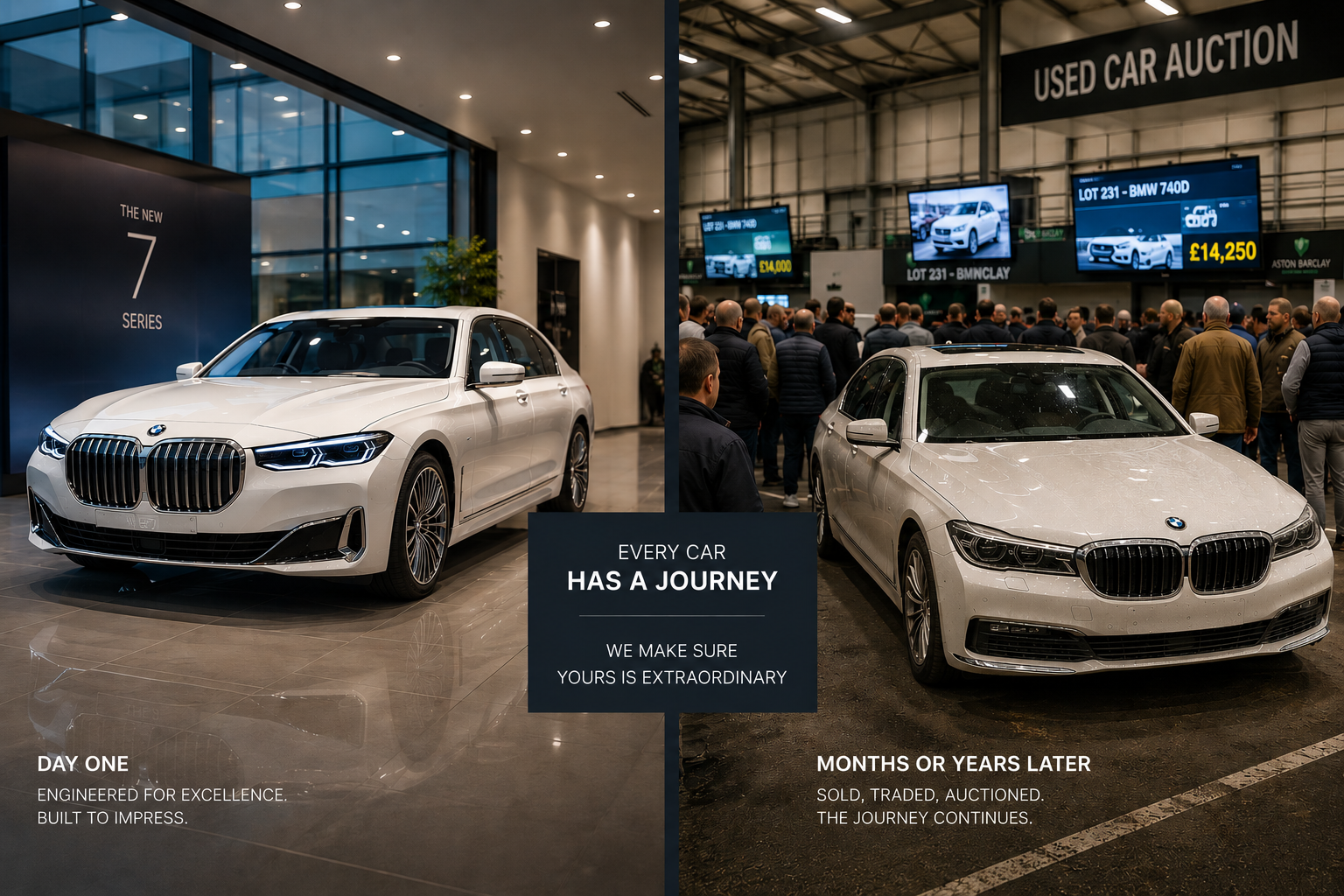
There's a saying in the car world that the most expensive moment of luxury car ownership isn't the purchase price — it's the drive home from the dealership. By the time the new car registration is registered on the DVLA system, a percentage of the money you just spent has already disappeared.
This is depreciation. And for luxury cars in the UK, it's the financial factor that most buyers underestimate, most enthusiasts ignore until they come to sell, and most hire operators quietly factor into every daily rate they charge. Understanding it properly changes how you think about buying, leasing, and — perhaps — hiring instead.
This guide explains the mechanics of UK luxury car depreciation, which cars lose value fastest, which ones genuinely hold it, and what it all means for your money.
What Is Car Depreciation and Why Does It Matter?
Depreciation is the loss in value a car experiences over time. It's the difference between what you paid for the car and what you can sell it for. It's invisible when you're driving the car and visible only when you try to move it on.
For most UK car buyers, depreciation is the single largest cost of car ownership — easily exceeding insurance, fuel, and servicing combined over a typical three to five-year ownership period. Yet it's the cost most commonly left out of budget calculations, because it doesn't require a monthly direct debit or an invoice. It just happens.
The UK average depreciation curve:
| Period | Approximate Value Lost |
|---|---|
| Year 1 | 15–35% of purchase price |
| Year 3 | 40–60% of purchase price |
| Year 5 | 55–70% of purchase price |
| Years 8–10 | ~80% of purchase price |
A car purchased new for £100,000 will typically be worth between £40,000 and £60,000 after three years. By year ten, the same car may be worth £20,000 or less — if it sells at all.
Why Luxury Cars Often Depreciate Faster Than Average
The financial logic of luxury car depreciation isn't complicated once you understand the dynamics at play.
1. High initial cost creates larger absolute losses
A £120,000 car losing 40% in three years loses £48,000. A £25,000 car losing 40% in three years loses £10,000. The percentage may be the same; the real-money impact is radically different.
2. Smaller used-car market
A BMW 1 Series has hundreds of thousands of potential buyers at any price point. A BMW 7 Series has a fraction of that. When fewer people can afford or want a car, the market sets a lower price. Supply and demand applies to depreciation as directly as it applies to anything else.
3. Technology obsolescence
Luxury cars are technology showcases — MBUX infotainment, augmented reality head-up displays, semi-autonomous driving systems. When a new model launches with significantly updated technology, the three-year-old version suddenly feels dated in a way that a three-year-old Volkswagen Golf doesn't. The luxury buyer expects cutting-edge; used luxury cars are, by definition, no longer that.
4. Running cost reality
Many buyers who can afford a new S-Class reassess when they discover the insurance, tyres, and servicing costs. The used luxury market narrows further.
5. Emissions and tax headwinds
High-emission luxury cars face escalating Vehicle Excise Duty (VED) rates and potential restrictions in Clean Air Zones. This accelerates depreciation for high-output petrol and diesel luxury models, particularly those registered between 2001 and 2017.
The Worst Depreciating Luxury Cars in the UK
Maserati Quattroporte — The Record Holder
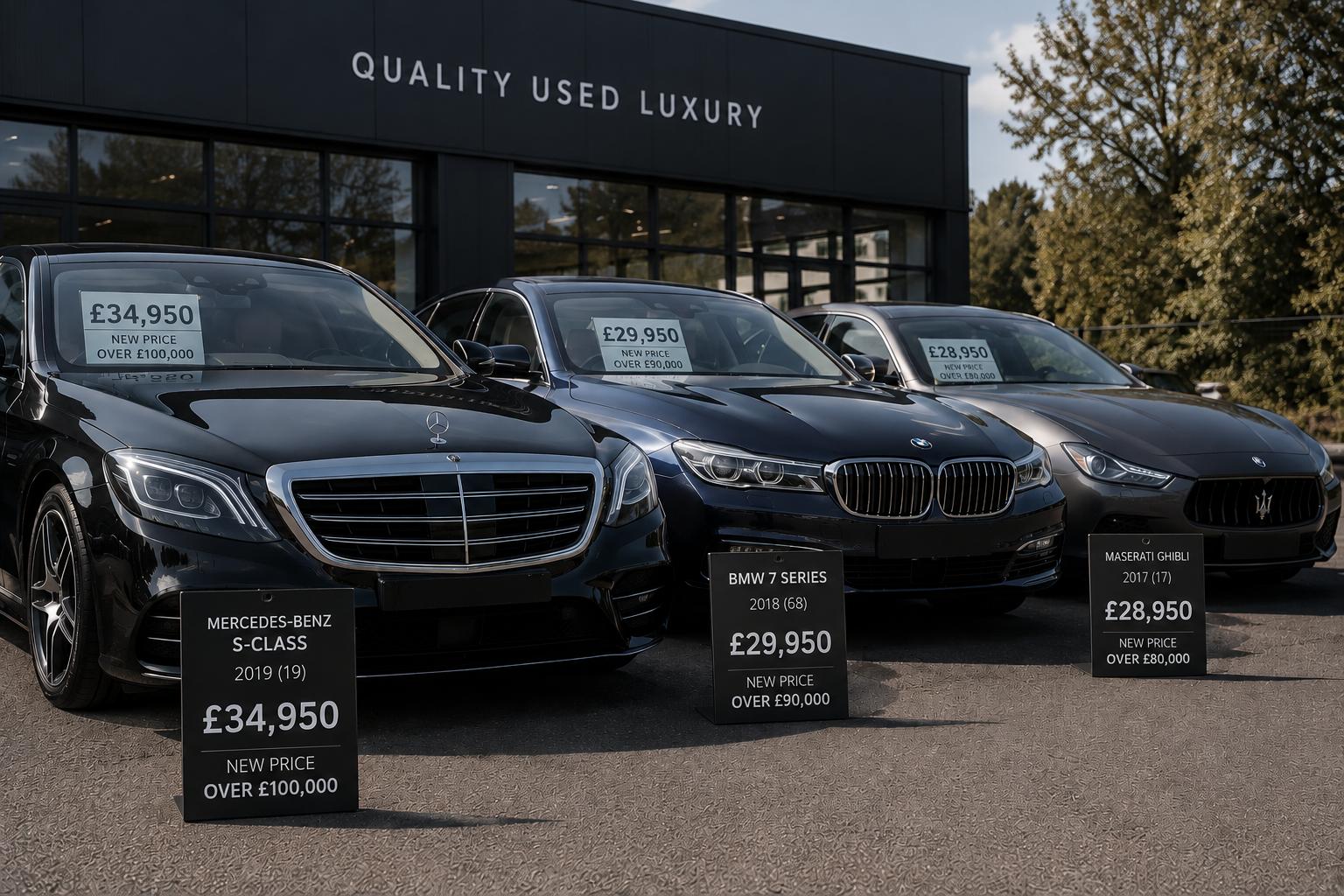
Consistently cited as one of the fastest depreciating cars in the UK market, the Maserati Quattroporte can lose more than 70% of its value within three years. A car purchased new for £110,000 may be worth £33,000 or less at the three-year mark.
The reasons are structural: Maserati has historically struggled with reliability reputation, limited dealer network coverage, and high running costs that deter used buyers. When the new-car buyer moves on after three years, there are relatively few people queuing to buy the used version at a price that reflects its premium origins.
BMW 7 Series
A £90,000 BMW 7 Series routinely trades at approximately £30,000 after three years — a loss of approximately 66% of its purchase price, or roughly £60,000 of value in three years.
The 7 Series is a superbly engineered, enormously capable car. Its depreciation isn't about quality — it's about the dynamics described above: a large, expensive saloon competing for a limited pool of used buyers, in a market where the same manufacturer makes the 5 Series at a fraction of the running cost.
Mercedes-Benz S-Class
The S-Class sits in a similar position to the 7 Series — top of the Mercedes range, flagship technology, extraordinary as a car. And, as a used purchase, subject to similarly steep depreciation. Three-year value retention of approximately 35–45% is typical, representing substantial losses in absolute pound terms.
The irony: the S-Class and 7 Series are both among the world's most sophisticated cars. Their depreciation is a function of market economics, not vehicle quality.
Other Notable Fast-Depreciators
| Model | New Price Approx. | 3-Year Retained Value Approx. |
|---|---|---|
| Maserati Quattroporte | £110,000 | ~£33,000 (30%) |
| BMW 7 Series | £90,000+ | ~£30,000 (33%) |
| Mercedes-Benz S-Class | £95,000+ | ~£35,000–£43,000 (37–45%) |
| Jaguar XF | £45,000+ | ~£18,000–£22,000 (40–49%) |
| Large luxury SUVs (some) | £80,000+ | Variable |
The Best-Holding Luxury Cars in the UK
Not all luxury cars depreciate badly. A cohort of vehicles — typically combining genuine rarity, strong demand, and robust brand reputation — consistently buck the trend.
Mercedes-Benz G-Class (G63 AMG)
The Mercedes G-Class is perhaps the strongest evidence that luxury car depreciation is not inevitable. Three-year retained value for the G63 AMG runs at approximately 68–70% of purchase price — extraordinary for a car costing £195,000 new.
The G-Class's value retention comes from a combination of genuine scarcity (production numbers are limited by manufacturing capacity at the Graz plant), iconic design that has remained essentially unchanged since 1979 and shows no signs of dating, and an aspirational status that extends well beyond the automotive world.
At £130,000 after three years, a G63 has lost approximately £65,000. That sounds significant — but measured against a BMW 7 Series losing £60,000 from a £90,000 base, the G-Class has lost proportionally far less and from a higher starting point.
Land Rover Defender 90
The Defender 90 delivers three-year retained value of approximately 69% — putting it in the elite tier of luxury vehicle value retention.
Defender values are driven by genuine demand exceeding supply (Land Rover has struggled to produce enough to meet market appetite since the model's relaunch), iconic British heritage that resonates globally, and a versatility that makes the car genuinely useful rather than purely aspirational.
Porsche 911 GT3
The Porsche 911 GT3 retains approximately 69% of its value after three years — a figure that reflects both the 911's iconic status and the specific rarity of GT variants.
Porsche GT cars are allocated rather than freely available — dealers hold waiting lists, not showroom stock. The result is that used GT3s, when they appear on the market, command prices that reflect scarcity rather than simply depreciation curves.

Lamborghini Urus
The Lamborghini Urus has established an exceptional retained value profile that outperforms virtually every other luxury SUV in the UK market. Three-year values in the region of 70% are achievable for well-maintained, correctly specified examples — remarkable for a vehicle that sells in significant volume.
The Urus's value retention reflects the strength of Lamborghini's brand equity, the car's uniqueness in the SUV market, and the intersection of luxury SUV demand with exotic brand desirability.
Brand-Level Depreciation: Who Performs Best?
Across the UK luxury car market, brands can be roughly tiered by their typical three-year retained value:
| Brand Tier | Example Brands | Typical 3-Year Retained Value |
|---|---|---|
| Elite retention | Porsche, Ferrari, Lamborghini | 55–75% |
| Strong retention | Mercedes G-Class, Land Rover Defender | 65–70% |
| Good retention | Bentley, Rolls-Royce (some models), Land Rover (some) | 48–58% |
| Average retention | BMW (5 Series, X5), Mercedes (C/E-Class) | 42–52% |
| Poor retention | BMW 7 Series, Mercedes S-Class, Maserati | 30–45% |
The brands with the strongest retained values share a common characteristic: they produce cars that people genuinely want, in quantities that don't fully satisfy demand, with brand identities that extend beyond car-buying demographics.
The Factors That Affect Your Car's Depreciation
Beyond brand and model, individual vehicle factors meaningfully affect the depreciation of any luxury car:
Mileage: The most direct factor. Every 1,000 miles above the UK average typically reduces residual value by approximately 0.5–1% of the remaining price. A luxury car at 20,000 miles per year depreciates considerably faster than one at 6,000.
Colour: For luxury and exotic cars, desirable colours (certain Porsches in Miami Blue or Guards Red, Lamborghinis in vivid Italian colours) command premiums on resale. Unusual, polarising, or unpopular choices accelerate depreciation.
Service history: Full, documented servicing from an approved main dealer or respected specialist is directly reflected in resale value. Gaps in service history reduce buyer confidence and price accordingly.
Number of previous owners: A single previous keeper is preferred for most used luxury buyers. Two or more owners accelerates depreciation on most models.
Optional equipment: For some cars, expensive optional equipment adds little to used-car value; for others (certain Porsche options, specific AMG packages), it meaningfully supports residuals.
Emissions and VED classification: High-emission vehicles face escalating tax costs that deter used buyers and accelerate depreciation — particularly relevant for large-engined luxury saloons.
Strategies to Minimise Luxury Car Depreciation
If you're buying a luxury car in the UK and want to minimise your depreciation exposure:
1. Buy nearly new (1–2 years old) The steepest depreciation occurs in the first 12–18 months of a new car's life. Buying a car that has absorbed this initial drop — typically 20–25% below new price — means you enter the ownership curve at a much more defensible point.
2. Choose a model with proven strong residuals The data is available. Porsche GT variants, G-Class, Defender 90, and Urus have track records. Choosing these over equivalent-price alternatives with poor residuals makes a significant financial difference.
3. Keep mileage below average Moderate annual mileage (6,000–8,000 miles per year rather than 15,000+) supports residual values for most luxury models.
4. Maintain a full, authenticated service history Every missed service or unauthorised workshop visit reduces your sale price. This is the most controllable depreciation factor available to any owner.
5. Specify correctly Understand which options add resale value and which don't. Premium paint (metallic, special order) typically adds to resale value; some electronic packages don't. Research before you configure.
6. Consider the model cycle position Buying a car in its final year before a replacement is announced accelerates depreciation. Buying a recently refreshed or newly launched model gives you more time before the technology gap opens.
How Depreciation Affects Finance and Leasing Costs
Depreciation is the engine that drives leasing costs — and understanding this helps explain why some luxury cars are expensive to lease and others are surprisingly accessible.
PCP finance: The monthly payment on a PCP deal is largely calculated by the difference between the car's purchase price and its guaranteed minimum future value (GMFV) — the predicted residual value at the end of the contract. Cars with strong residuals have lower monthly PCP payments because the depreciation gap is smaller.
Leasing (contract hire): The same logic applies even more directly. A Porsche 911 GT3 on a three-year lease has lower monthly payments relative to its list price than a BMW 7 Series of similar value, because the 911's residual value is predictably much higher.
The practical implication: If you want a large luxury saloon (S-Class, 7 Series) and are planning to finance it, the monthly payment reflects the car's steep depreciation. You're essentially paying for the value loss as you go — which is financially rational for a car you'll actually use, but expensive.
[Insert image: a finance calculation sheet beside a luxury car key — illustrating the connection between residual values and monthly costs]
Is It Better to Buy New, Nearly New, or Used?
The optimal buying strategy depends on how you weight different factors:
| Approach | Depreciation Position | Cost | Risk |
|---|---|---|---|
| New | Absorbs the steepest initial drop | Highest | Lowest (warranty) |
| Nearly new (1–2 years old) | Enters after worst year-1 drop | Medium-high | Low |
| 3–5 years old | After most steep depreciation | Medium | Moderate |
| 5+ years old | On the flatter curve | Lower | Higher (reliability) |
For pure depreciation minimisation, nearly new is the optimal position — you avoid the first-year cliff while still driving a modern car with warranty or extension options. For someone who must have the latest technology and specification, new remains the only option — with the depreciation cost factored in explicitly.
The Hire Alternative: Zero Depreciation Risk
There's an elegant side note to this entire discussion: if you hire rather than buy, depreciation is completely irrelevant to you.
The hire operator absorbs every pound of depreciation in the vehicles they own. Your daily hire rate reflects their calculation of the car's value loss over time — it's priced in. But you don't own the asset. You don't sit on a depreciating investment. You don't calculate residual values or time the market or worry about colour choices that might cost you £5,000 at resale.
You simply drive the car, return it, and move on — with none of the ownership complexity and none of the depreciation risk.
For occasional use, this is often the most financially intelligent relationship with extraordinary cars.
Final Thoughts: The Price of Prestige Is Not Just the Price Tag
Depreciation is the uncomfortable truth in luxury car ownership — the cost that doesn't show up on the monthly bank statement but accumulates silently in the gap between purchase price and eventual sale price.
The UK market has both extraordinary opportunities and extraordinary pitfalls in the luxury segment. A Maserati Quattroporte at three years is one of the most unfairly discounted cars in existence — you get a lot of car for the money if someone else absorbed the initial drop. A new BMW 7 Series is a financial commitment that extends well beyond the purchase price.
Understanding these dynamics doesn't mean you shouldn't buy. It means you should buy with your eyes open — knowing exactly what you're paying, what it's worth, and when.
Prefer the luxury experience without the depreciation calculation? Browse hundreds of hire partners and compare luxury car options across the UK with Autofusion — and drive the car you want, on your terms.