



Published 30 October 2026
Our methodology focuses on accuracy first.
All information is researched using manufacturer data, official industry guidance, and trusted automotive sources. Where relevant, content is cross-checked against real-world vehicle maintenance practices and common customer enquiries to ensure it is both practical and accurate. Our content is reviewed regularly and updated to reflect changes in regulations, industry standards, and best practices.
Monthly car hire gives you a car for weeks or months, with servicing and cover usually included and none of the multi-year commitment of a lease.
Life rarely runs to a neat three-year lease.
Your new car is stuck on a delivery ship until spring. You've landed a six-week project in Manchester. Your teenager's just passed their test and the family car is suddenly in high demand. Or you've moved back to the UK and don't want to tie yourself to a contract before you know where you're settling. In all these cases, you need a car now, for a while, but not forever.
That's exactly what long term car hire is for. It sits in the sweet spot between a weekend rental and a multi-year lease. And you can usually hand it back when life moves on.
In this guide, I'll walk you through how long term car hire in the UK works, how it compares with leasing, what's included, what to watch in the small print, and which cars make sense when you'll be living with them for a while.

What Is Long Term Car Hire?
Long term car hire means renting a car for an extended period, usually measured in weeks or months rather than days. You'll also see it called long-term car rental, monthly car hire or flexible car hire.
There's no single definition across the industry. Some partners start their long-term deals from 28 days, while others think in whole months or fixed terms. On Autofusion you can compare rolling monthly hire alongside fixed three, six and twelve month deals, plus subscription-style packages, in one search.
So the first rule is simple: check the minimum term, the maximum term and how the agreement renews.
How Long Can You Hire a Car For?
| Hire type | Typical length | Good for |
|---|---|---|
| One month car hire | Around 28 to 31 days | Gaps between cars, short projects |
| Three month car hire | Up to around 90 days | Longer contracts, extended stays |
| Six to twelve month car hire | 6 to 12 months | Relocations, long assignments, a year between cars |
Planning to keep a car for six months or more? Ask whether you're signing one fixed-term agreement or a rolling monthly hire that renews as you go. A fixed term often brings a lower monthly price, while rolling hire leaves you free to stop sooner.
28-Day Rental vs Calendar Month: Spot the Difference
Here's a sneaky detail. A "monthly" price can mean two different things:
- A 28-day period: you're billed every four weeks. Over a year, that's 13 billing periods, not 12.
- A calendar month: billed on the same date each month, regardless of length.
Neither is wrong, but they cost different amounts over time. A 28-day price might look lower than a calendar-month price, and then quietly add up to more over a long hire. Always ask for the exact dates and the total amount you'll pay.
Long Term Car Hire vs Leasing
This is the big comparison most people want. Both give you a car you don't own, but they work very differently.
| Long term car hire | Leasing | |
|---|---|---|
| Commitment | Weeks or months, often rolling | Usually two to four years |
| Upfront cost | Usually a deposit | Often an initial payment of several months |
| Ending early | Often possible, subject to terms | Usually expensive |
| Servicing and breakdown | Often included | Sometimes included, sometimes extra |
| Insurance | Usually included in some form | Usually arranged yourself |
| Changing car | Sometimes possible | Rarely |
| Monthly price | Usually higher | Usually lower |
So which wins? If you need flexibility, hire does. If you know you'll want the same car for years and can commit, leasing is usually cheaper per month. Subscription-style packages sit between the two: one monthly payment that usually bundles insurance, servicing and road tax, with a much shorter commitment than a lease. Compare what each package includes rather than going by its name.
What's Included in Long Term Car Hire?
Every quote should give you an itemised list. Here's what to look for, and what's often extra.
| Usually included | Often extra or optional |
|---|---|
| Use of the car for the agreed period | Additional drivers |
| A set mileage allowance | Excess reduction cover |
| Basic protection or insurance cover | Delivery and collection |
| Routine servicing and maintenance | Child seats and accessories |
| Breakdown cover | Excess mileage |
| Road tax | Fuel or charging |
Is Insurance Included?
Usually, some form of cover is. But having cover included doesn't mean you're off the hook if something goes wrong. You'll still have an excess, the amount you pay towards any damage or loss. There may also be exclusions, such as tyres, glass or the underside of the car, and rules about who else can drive.
Ask three questions: what's covered, what's the excess, and what isn't covered at all?
How Many Miles Are Included?
This is where long-term hire can catch people out. Most packages include a monthly mileage allowance, with a charge for every mile over it. Some providers publish allowances of around 2,000 or 2,500 miles a month on selected packages, but it varies a lot.
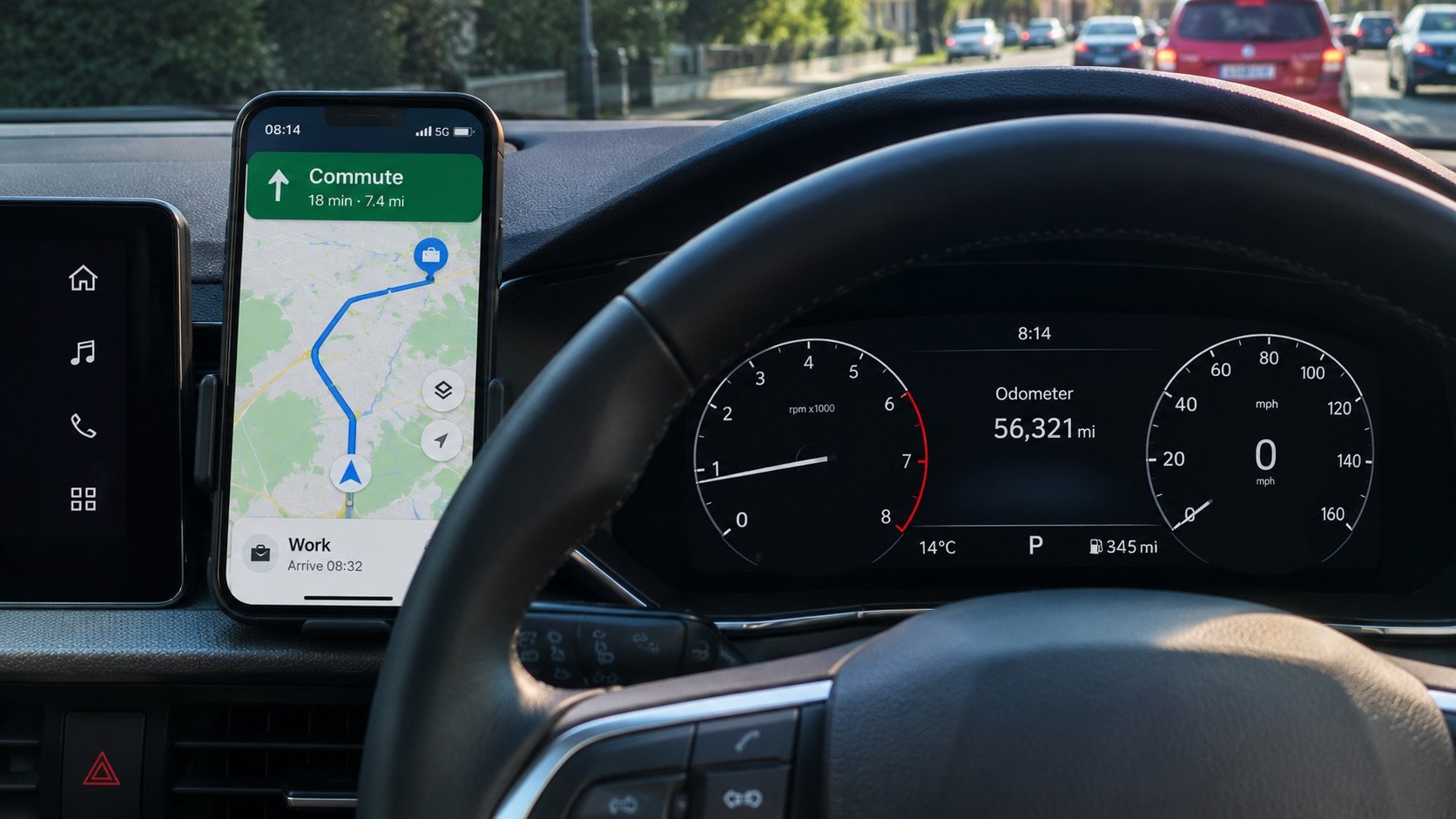
Unlimited mileage is available on some long-term deals, but treat it as a bonus rather than the norm. Work out your likely mileage honestly. A daily 40-mile round-trip commute is already around 900 miles a month before weekends.
Is Long Term Car Hire Cheaper Than Daily or Weekly Rental?
Often, but not always. Longer bookings usually come with a lower daily rate, but you need to compare like for like. Check:
- The same car category
- The same mileage allowance
- The same protection and excess
- Delivery and collection fees
- What happens if you return early
When you compare long-term prices, look at the total cost for the whole period, not just the headline monthly figure.
Deposits and Payment Cards
Most long-term rentals take a security deposit, held on your card and released after the car is returned. You'll usually need a card in the main driver's name.
Some providers accept debit cards for standard cars, but may insist on a credit card for premium cars, SUVs or 4x4s. Always check before you book.
What about no-deposit deals? A few exist, but read the terms carefully. "No deposit" can sometimes mean a higher monthly rate, a larger excess or stricter checks instead.
Flexibility: Extending, Swapping and Returning Early
This is where long-term hire really earns its keep. But flexibility comes with rules.
Can You Extend Your Rental?
Usually, yes. Most providers let you extend through an app, by phone or at a branch. Ask before your end date, because an extension may need approval and the rate or agreement might change. Don't just keep driving and hope.
Can You Change Cars During the Hire?
Some providers allow swaps, which is great if your needs change. Maybe a new baby arrives, or your project moves to the Highlands in winter. Check how swaps work, whether there's a fee, and how the price changes if you move up or down a category.
Can You Return the Car Early?
It depends. Flexible monthly car hire often allows early returns, and some products advertise no early-exit penalty at all. Others have a minimum commitment, a notice period or a rate recalculation, where your discount is reworked at a shorter-hire rate. Get this in writing before you sign.
Servicing, Faults and Breakdowns
When you have a car for months, it'll probably need some care. Most providers handle routine servicing, but you'll need to play your part:
- Report faults promptly, even small ones like a warning light.
- Do basic checks, such as tyre pressures, washer fluid and lights.
- Let the provider book servicing. Don't take it to a garage yourself without approval.
- Ask about replacement transport if the car is off the road for repairs.
Who Is Long Term Car Hire For?
Temporary Car Hire While Waiting for a New Car
This is one of the most common reasons. New cars can take months to arrive. A temporary hire keeps you moving without buying a stopgap you'll need to sell later.
Business Long Term Car Hire
Long-term business car hire suits:
- Temporary staff or contractors
- Project teams working away from base
- Visiting colleagues from overseas
- Gaps in a company fleet
Many providers offer business accounts with central billing. Check the driver rules, permitted business use and how invoices work.
Long Term Electric Car Hire
Thinking about an EV but not ready to commit? Long term electric car hire is a brilliant trial run. A month gives you time to learn how charging fits into real life. It works best if you have home or workplace charging. Relying only on public rapid chargers can get expensive. Ask about the return-charge rule too, since you'll usually need to hand it back with a similar battery level to the one you started with.
Long Term Luxury Car Hire
For senior staff, visiting executives or simply a long summer of driving something special, long term luxury car hire is an option. Expect stricter eligibility rules, a higher deposit and, often, a credit card requirement.
20 Cars and Rental Options to Consider for Long-Term Hire
When you're living with a car for weeks, comfort and running costs matter more than wow factor. Most rentals, from everyday cars to luxury saloons, are booked by category, so treat these as examples ("or similar").
| # | Car or option | Category | Best long-term use | Worth checking |
|---|---|---|---|---|
| 1 | Volkswagen Golf | Compact hatchback | Daily commuting, a dependable all-rounder | Manual or automatic |
| 2 | Toyota Corolla | Self-charging hybrid | High-mileage commuting | Hatchback or Touring Sports estate |
| 3 | Toyota Prius | Hybrid | Low running costs over months of use | Self-charging or plug-in version |
| 4 | Kia Ceed | Compact hatchback or estate | Commuters who carry kit or luggage | Sportswagon if you need the boot |
| 5 | Vauxhall Insignia | Large hatchback or estate | Regular motorway trips | Body style |
| 6 | Volkswagen Golf GTE | Plug-in hybrid | Drivers with home charging | Charging access at home or work |
| 7 | Kia Niro | Hybrid crossover | Smaller families, mixed driving | Hybrid, plug-in or electric version |
| 8 | Ford Puma | Compact SUV | Town driving, smaller households | Boot space |
| 9 | Hyundai Tucson | Family SUV | Family life, a replacement car | Hybrid or petrol |
| 10 | Kia Sportage | Family SUV | School runs and weekends away | Powertrain and transmission |
| 11 | Škoda Kodiaq | Seven-seat SUV | Larger families | Luggage with all seats up |
| 12 | Volkswagen Touran | Seven-seat MPV | Big families on longer stays | Seat layout |
| 13 | BMW 3 Series | Executive saloon | Corporate work, client visits | Saloon or Touring estate |
| 14 | Audi A6 | Large executive car | Senior staff, long trips | Mileage package |
| 15 | Volvo XC60 | Premium SUV | Executive family use | Plug-in or mild hybrid |
| 16 | Hyundai Kona Electric | Compact EV | Local commuting, a first EV trial | Battery size and range |
| 17 | Škoda Enyaq | Electric family SUV | Families with home charging | Range for your regular trips |
| 18 | BMW i5 | Executive EV | Business travel on electric | Return-charge rules |
| 19 | Range Rover Velar | Luxury SUV | A long summer of driving something special | Eligibility and deposit |
| 20 | BMW 7 Series | Luxury saloon | Executive assignments | Eligibility and deposit |
Choosing the Right Category
- Mostly commuting? A hybrid like the Toyota Corolla or Prius keeps costs down, and an automatic makes daily traffic far less tiring.
- Family life? A Tucson or Sportage gives you room for school bags and weekend trips, and a Škoda Kodiaq or Volkswagen Touran adds the extra seats. That's why SUVs are such a popular long-term choice.
- Lots of motorway miles? An Insignia or a 3 Series Touring is comfortable and roomy.
- Can charge at home? A plug-in hybrid or EV can cut running costs.
If you'll be driving in London, think about parking, the Ultra Low Emission Zone and the Congestion Charge before choosing a car. A small hybrid or EV can make city life easier, but check the current rules for your car.

Long Term Hire Through Autofusion
Autofusion puts these choices side by side. One search lets you compare rolling monthly hire, fixed three, six and twelve month deals and subscription-style packages from approved partners across the UK, many of them bundling insurance, servicing, breakdown cover and road tax into one monthly payment, with tiered mileage options to match how far you drive. Every car is checked by our team before it's listed, and you pay nothing on top of the listed price. If you're hiring for a business, several cars can sit on a single invoice, and corporate accounts can move to monthly billing. Deposits are taken by the partner when you collect the car, and our deposit guarantee means that if a partner neither releases it nor flags a problem within a week of you handing the car back, Autofusion pays it back to you.
Your Long Term Car Hire Checklist
Before you sign:
- Minimum and maximum term: what's the shortest and longest hire allowed?
- Billing period: 28 days or calendar month, and the total cost?
- Mileage: monthly allowance and excess-mile charge?
- Insurance: what's covered, what's the excess, what's excluded?
- Deposit and card: how much, and is a credit card needed?
- Flexibility: how do extensions, swaps and early returns work?
- Servicing: who books it, and what happens if the car breaks down?
- The car: is the model guaranteed, or "or similar"?
- Business Car Hire vs Leasing: Costs, VAT and Mileage: whether to hire or lease a company car.
- Daily or Long-Term Business Car Hire: Where the Break-Even Is: when long-term hire beats daily hire for a business.
- Can You Lease a Supercar? Leasing vs Hiring Compared: leasing or hiring a supercar.
Freedom With a Steering Wheel
Long term car hire is really about freedom. You get a car when you need it, for as long as you need it, without the years-long commitment of leasing or the hassle of buying and selling. Get clear on the mileage, the excess and the exit terms, and you'll have a car that fits your life rather than the other way round.
Looking for long term car hire in the UK? Compare cars and monthly prices across hundreds of rental partners with Autofusion.
Need a car for a month or more? Search Autofusion today and find flexible hire that fits your plans.