


Published 18 May 2026
Our methodology focuses on accuracy first.
All information is researched using manufacturer data, official industry guidance, and trusted automotive sources. Where relevant, content is cross-checked against real-world vehicle maintenance practices and common customer enquiries to ensure it is both practical and accurate. Our content is reviewed regularly and updated to reflect changes in regulations, industry standards, and best practices.
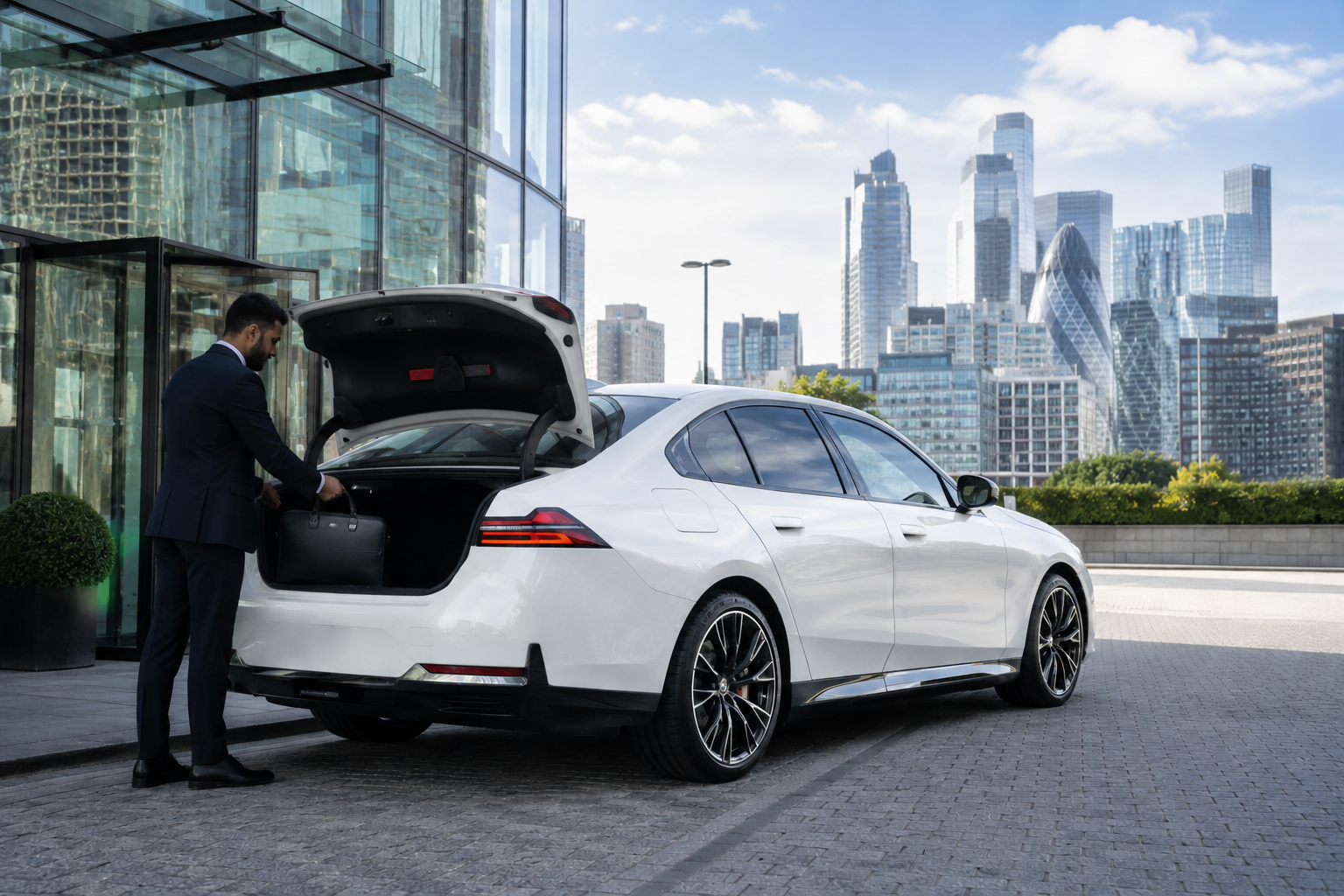
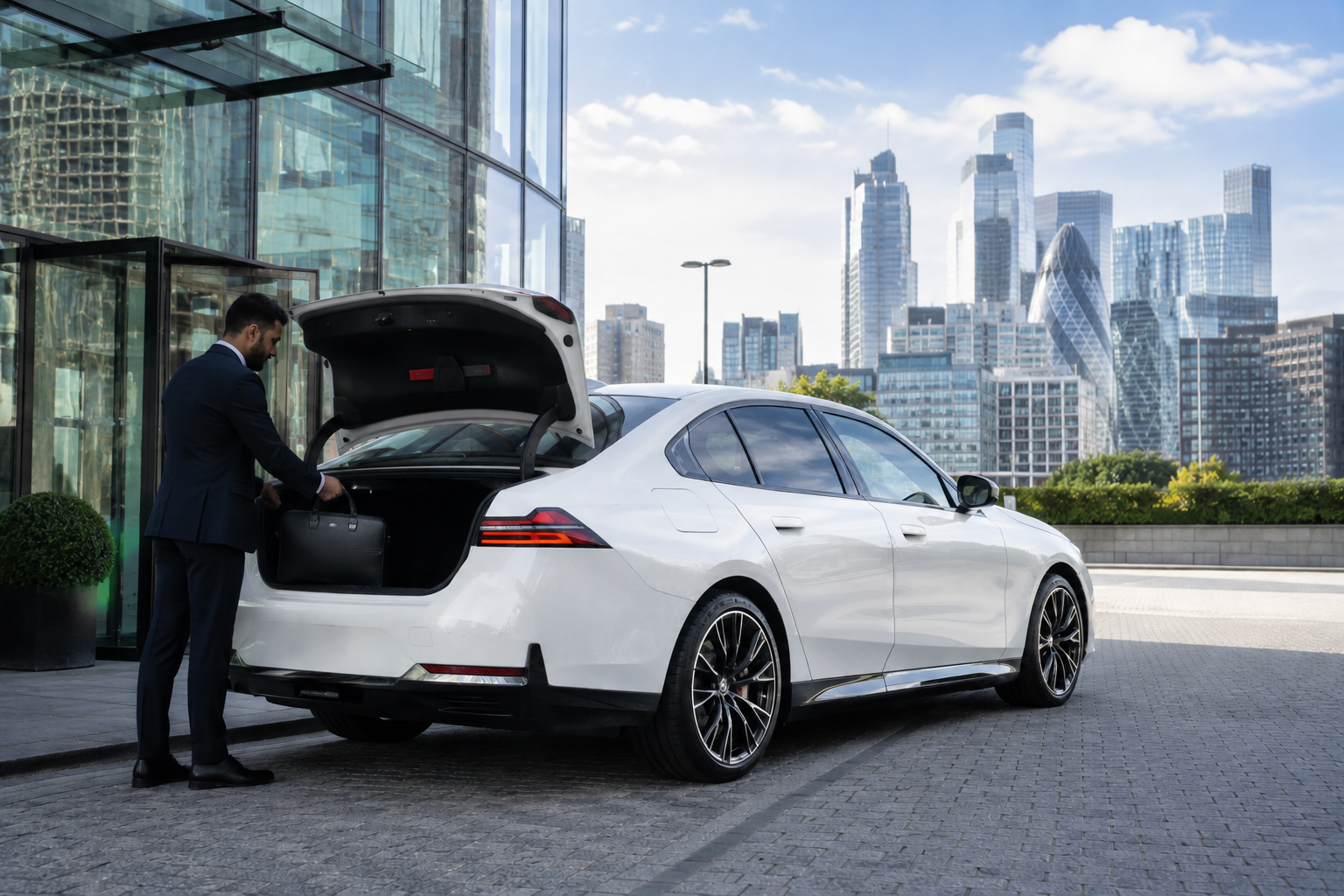
Business car hire is one of those decisions that looks simple on the surface and reveals layers of complexity the moment you start asking the right questions. Do you need a car for three days or three years? Do you want the flexibility to change your mind, or the certainty of a fixed monthly cost? Do your finance director and your tax advisor agree on what the most efficient approach actually is?
Most businesses — particularly smaller ones — default to whatever they've always done, or whatever the last person to handle this arrangement set up. Which is fine, until the moment you realise you've been paying over the odds for flexibility you didn't need, or you've locked yourself into a three-year contract for a role that lasted six months.
The UK business car hire market covers an impressive range of options: from daily hire for a single journey to multi-year Business Contract Hire arrangements that cover an entire company fleet. Understanding the structure of each, and knowing which fits your specific situation, is genuinely worth the time it takes.
This guide cuts through it.
The Main Options: A Clear Framework
Before comparing costs and vehicles, it helps to understand what each model actually is. The UK market uses several terms that sound interchangeable but represent meaningfully different products.
Daily/short-term hire — Standard car rental for days, weeks, or a few months. Flexible, no long-term commitment, generally priced per day. The default for occasional travel and short-term project needs.
Long-term rental / mini-lease — Hire of 28 days to 12 months, from providers like Enterprise and SIXT. Less expensive than daily rates over time, more flexible than a full lease, and available with premium vehicles. Bridges the gap between daily hire and a full contract.
Business Contract Hire (BCH) — A fixed-term lease, typically 24–60 months, where the finance provider retains ownership and you return the vehicle at the end. Fixed monthly payment, predictable costs, and significant tax advantages for VAT-registered businesses. The most common structure for company car fleets.

Daily Business Car Hire: When It Makes Sense
Daily hire is the right choice when flexibility is genuinely the priority. Think about these situations:
- A visiting client needs a car for two days
- A sales rep is covering a new territory for a week before the business commits to the route
- A project requires staff mobility for an unpredictable duration
- You need a premium car for a specific occasion — an important pitch, a client entertainment day
At the premium end, daily business hire gives access to vehicles that would be expensive to lease but occasionally necessary: Mercedes S-Class for a board-level airport run, a Range Rover for a client entertainment day, an executive V-Class for a group transfer. The flexibility to access these only when needed, without the cost of permanent availability, is real value.
The honest trade-off: daily hire rates are always higher per day than longer-term options. A premium Mercedes E-Class at £120–£180/day for a week costs significantly more than the same car on a monthly long-term rental. The flexibility premium is real, and if you're using a hire car regularly, you'll feel it.
Long-Term Business Car Rental: The Middle Ground
Long-term rental — sometimes called mini-lease — covers the 28-day-to-12-month range. It's designed specifically for situations where daily hire is too expensive but a full three-year lease is too inflexible.
This model suits:
- Project-based hires: a contractor placed on a six-month engagement who needs a vehicle for the duration
- Probationary period hires: a new employee who may or may not convert to a permanent company car
- Seasonal fleet expansion: businesses with predictable but temporary peaks in vehicle demand
- Bridge hires: the gap between returning a leased vehicle and the arrival of a new one
Enterprise, SIXT and similar providers run dedicated long-term rental programmes for businesses. Enterprise's model, for example, starts from 28 days, provides 24/7 support, and can cover a range of vehicles from standard business saloons to premium executive cars. SIXT's long-term business hire typically uses vehicles less than six months old — a meaningful quality point — and offers discounts of up to 15% for business accounts.
The vehicles available at this tier are genuine premium options: BMW 3 and 5 Series, Mercedes C and E-Class, Audi A4 and A6, Range Rover Sport. Not economy rentals dressed up as business cars.
Business Contract Hire: The Fleet Standard
Business Contract Hire is how most UK companies manage their car fleet, and for good reason. Here's what it is and why it dominates.
How it works: The finance provider (not you) owns the vehicle. You agree a term (typically 24–48 months), an annual mileage, and a fixed monthly rental. At the end of the contract, you return the car, pay any excess mileage charges, and start again with a new vehicle.
What you don't deal with: depreciation, residual value risk, disposal, the effort of selling a used car, or the headache of negotiating a trade-in. The vehicle appears, you drive it for the agreed period, it disappears. Clean.
The tax argument for VAT-registered businesses is particularly compelling:
- 50% of the VAT on car rental payments is reclaimable (rising to 100% if the car is used exclusively for business)
- 100% of the VAT on maintenance packages is reclaimable
- The vehicle remains off the balance sheet — attractive for businesses managing debt ratios or presenting accounts to investors
- Electric and low-CO₂ vehicles under 50g/km can attract 100% first-year allowances in certain structures, and Benefit-in-Kind (BIK) tax for employees is significantly lower on EVs
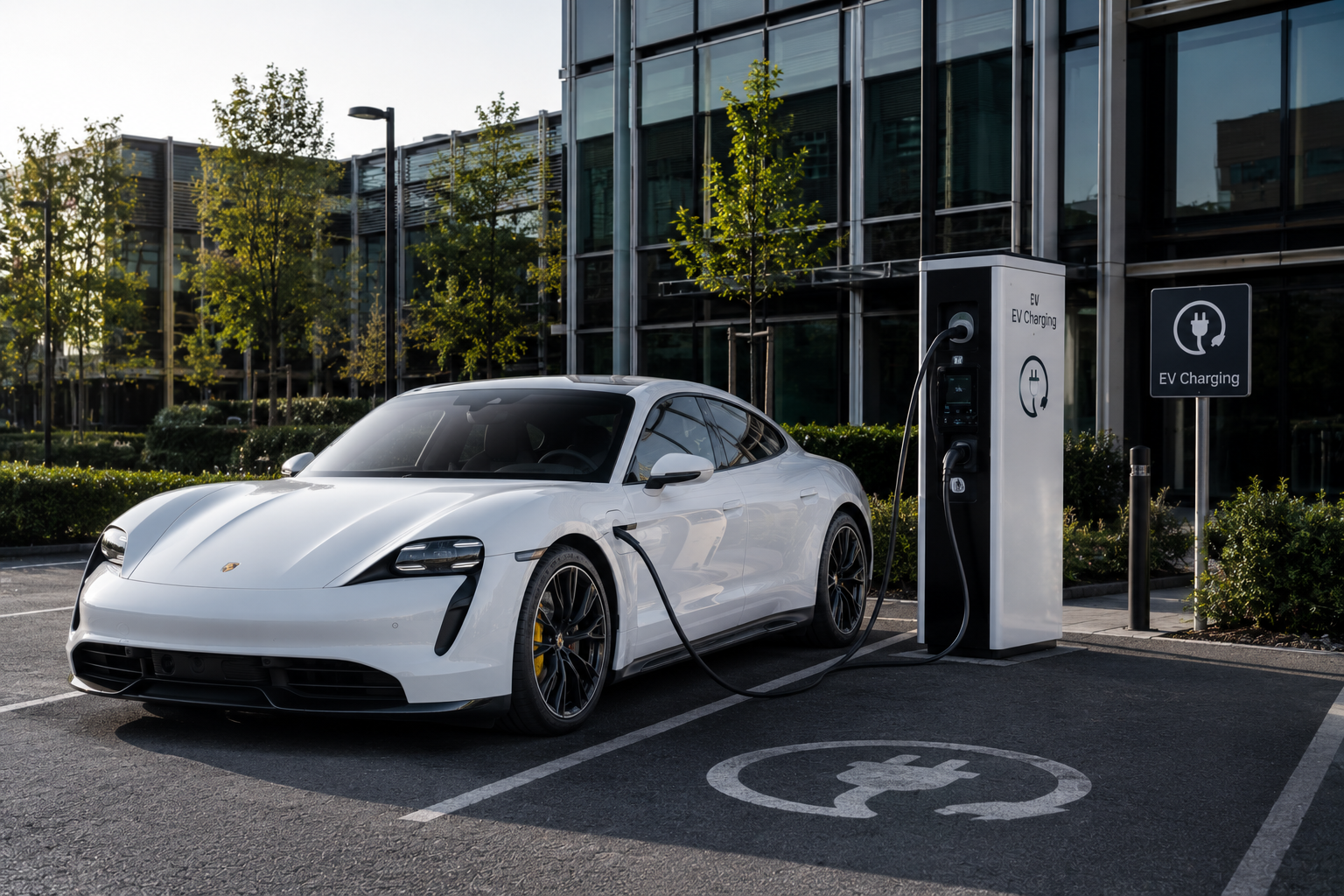
This is why electric and plug-in hybrid vehicles have become so dominant in business contract hire. The Porsche Taycan, Tesla Model 3, and Mercedes C300e appear regularly on "best business lease" lists — not because companies have suddenly become environmentally passionate, but because the tax maths makes them substantially cheaper in total cost than their CO₂ figures would suggest for traditional combustion vehicles.
Head-to-Head: Daily vs Long-Term vs Contract Hire
| Factor | Daily Hire | Long-Term Rental (28d–12m) | Business Contract Hire (24–60m) |
|---|---|---|---|
| Typical cost | Highest per day | Mid-range | Lowest per day (over term) |
| Flexibility | Maximum | High | Low — early termination fees apply |
| Commitment | None | Minimal | Fixed-term agreement |
| Vehicle age | Variable | Usually under 6 months | Brand new at start |
| Tax efficiency | Standard | Standard | Significant VAT and tax benefits |
| Balance sheet | Off (operating expense) | Off (operating expense) | Off balance sheet |
| Best for | Occasional, unpredictable needs | Projects, 3–12 month needs | Stable, long-term fleet requirements |
| Who uses it | Any business | SMEs, project-based | Limited companies, sole traders, any |
| VAT reclaimable | 50% (car) | 50% (car) | 50% (car), 100% (maintenance) |
The Mileage Question: Getting This Right
Mileage is where people trip up in both long-term rental and contract hire — and the stakes are higher in contract hire because the excess mileage charges compound over a multi-year term.
For contract hire, you set your annual mileage band upfront (typically 5,000–30,000 miles per year). Lower mileage = lower monthly rental. Excess mileage at the end of the contract is charged per mile — usually a few pence, but it adds up over tens of thousands of miles.
The practical advice: be honest about usage. Slightly overestimating your mileage upfront is cheaper than significantly underestimating it and paying excess charges at the end. If your business usage is genuinely unpredictable, a flexible long-term rental is more appropriate than a fixed contract.
For long-term rental, mileage is usually agreed per month or included within defined bands. Again, excess is charged, but the shorter commitment means less exposure if your usage changes.
Best Vehicles for Long-Term Business Car Hire in the UK
The vehicle selection depends on your purpose — business saloon for daily driving, SUV for client entertainment, EV for tax efficiency:
| Vehicle | Ideal For | Approx. BCH Monthly (24m) | Why It Works |
|---|---|---|---|
| BMW 3 Series 330e | Daily business driving, low BIK | £350–£550/month | Low CO₂, sporty, practical |
| Mercedes C-Class C300e | Executive travel, client facing | £400–£600/month | Plug-in, premium, impressive |
| Tesla Model 3 | Long-distance, EV tax benefits | £400–£600/month | 0% BIK for employees, low running cost |
| BMW 5 Series | Senior management, longer trips | £550–£750/month | Excellent all-rounder, premium |
| Porsche Taycan | Senior exec, flagship image | £900–£1,300/month | Exceptional BIK position, aspirational |
| Range Rover Sport | Client entertainment, image | £700–£1,000/month | Presence, comfort, versatility |
| Audi A6 | Corporate, understated quality | £500–£700/month | Refined, discreet, dependable |
| Mercedes E-Class | Executive saloon, chauffeur | £500–£700/month | S-Class quality at E-Class cost |
| Mercedes V-Class | Group transport, sales teams | £600–£850/month | Groups of 5–7 with luggage |
Monthly rates approximate and vary by initial rental (deposit), mileage band, maintenance inclusion, and market conditions. Always confirm current rates directly.
Who Can Use Business Contract Hire?
This is a question that catches some sole traders and freelancers off guard. Business Contract Hire is not exclusively for limited companies.
Eligible business structures include:
- Limited companies (most common)
- Sole traders
- Partnerships and LLPs
- Charities and non-profits
The qualification process involves a credit check — the finance provider needs to be confident you can meet the monthly payments. For smaller businesses and sole traders, a clean credit history and evidence of regular income are the key requirements.
If you're a freelance consultant using a car heavily for client visits, business contract hire is genuinely accessible and potentially significantly cheaper than buying or using your personal car and claiming mileage.
Early Termination: The Risk That Catches People Out
If there's one thing to understand clearly about Business Contract Hire before signing, it's this: leaving early costs money.
Contract hire is a fixed-term agreement. If your business needs change — a major client is lost, a team is restructured, the employee the car was for leaves — ending the contract early triggers an Early Termination fee. This can be significant, typically representing a proportion of the remaining payments.
For this reason, BCH works best when vehicle needs are stable and predictable. If your business has regular turnover of staff or frequent structural changes, the flexibility of long-term rental is worth the higher per-day cost.
The Electric Opportunity in Long-Term Business Hire
The shift to electric vehicles has made long-term business hire materially more interesting from a financial perspective. For company car drivers, the Benefit-in-Kind (BIK) tax on a fully electric vehicle is 2% of the vehicle's list price per year — compared with 25–37% for a typical petrol or diesel car. For a senior employee in the higher tax bracket, this difference alone can be worth thousands of pounds annually.
For the business, EVs under 50g/km CO₂ can attract enhanced capital allowances in certain ownership structures, and maintenance costs over a BCH term are generally lower due to fewer service requirements.
The Porsche Taycan, Tesla Model 3, and BMW i4 have become popular business lease choices specifically because this tax position makes them more affordable in total cost than their list prices suggest. If you haven't modelled the BIK position on an EV against your current fleet, it's worth the ten minutes it takes.
How to Choose: The Decision Framework
Choose daily hire if:
- Your need is genuinely occasional (fewer than 10 days per month)
- You need premium vehicles sometimes but can't justify the ongoing cost
- Flexibility is the absolute priority and cost per day is secondary
Choose long-term rental (28 days to 12 months) if:
- Your need is project-based, temporary, or genuinely uncertain in duration
- You're filling a gap between vehicles
- You want the economics of longer-term hire without a multi-year commitment
Choose Business Contract Hire if:
- Your vehicle needs are stable and predictable for 2+ years
- You're VAT-registered and want to maximise tax efficiency
- You want fixed monthly costs for budgeting purposes
- You want a new vehicle at the end of the term without dealing with disposal
Business car hire in the UK is not a one-size-fits-all market. The right answer depends entirely on your usage pattern, your financial structure, your appetite for commitment, and how long you actually need the vehicle. Get those variables right and the savings — in cost, in tax, and in management time — can be substantial.
Looking to compare business car hire and luxury vehicle options across the UK? Autofusion lets you browse and compare prestige and luxury car hire across hundreds of rental partners — so you can find the right vehicle, at the right price, for the right term. Explore business car hire across the UK with Autofusion today.