


Published 25 May 2026
Our methodology focuses on accuracy first.
All information is researched using manufacturer data, official industry guidance, and trusted automotive sources. Where relevant, content is cross-checked against real-world vehicle maintenance practices and common customer enquiries to ensure it is both practical and accurate. Our content is reviewed regularly and updated to reflect changes in regulations, industry standards, and best practices.
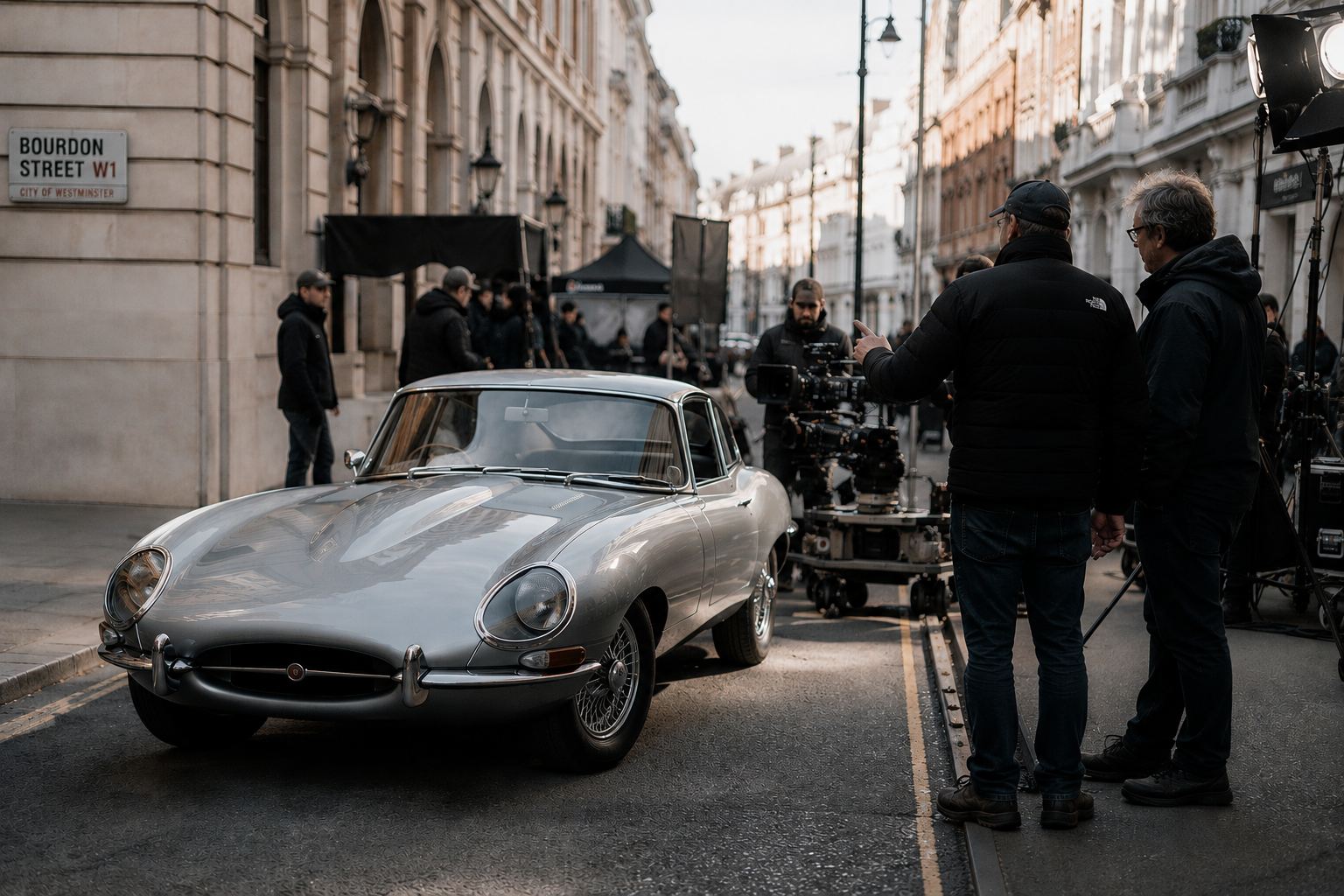
Every car you see in a film or television production arrived on set through a process that most viewers never think about. The vintage Jaguar in the period drama. The battered London taxi in the thriller. The Lamborghini in the music video. The Range Rover Autobiography that the lead character climbs out of in the commercial. Each one was sourced, vetted, transported, insured, and positioned — often with less than a week's notice — by a specialist in a corner of the hire market that operates very differently from any other.
Film production car hire in the UK covers two quite different needs that productions navigate simultaneously. Picture cars — the vehicles that appear on screen and serve a creative purpose in the story or campaign. And production vehicles — the unit cars, minibuses, and MPVs that move cast, crew, principals, and equipment between locations. Both matter. Both require specialists. And both involve considerations that standard car rental companies are completely unprepared for.
This guide covers the full picture: how each type works, where to find the right providers, what productions need to supply, and what to expect on costs and timelines.
Picture Cars vs Production Vehicles: The Distinction That Matters
Before sourcing anything, it helps to be clear on the difference, because the providers, the processes, and the considerations are completely distinct.
Picture cars are on-screen vehicles — they appear in frame and carry creative meaning. A hero car is the central vehicle the story or campaign uses. Background cars dress a scene without taking focus. Both need to look right for the period, the setting, and the brief, and both need to be in immaculate condition unless the script specifically requires otherwise.
Production vehicles serve the crew. Unit cars are luxury cars or minibuses that transport principals — lead actors, directors, showrunners — between hotel and set. MPVs and minibuses move supporting cast and crew. Vans carry equipment. None of these appear on screen, but they're essential to the day running.
Most productions use different suppliers for each. A picture car platform might supply the hero Aston Martin and the period taxis dressing the background. A dedicated film unit car company supplies the chauffeur-driven S-Classes and seven-seat MPVs that keep the production moving.
Picture Cars: Sourcing On-Screen Vehicles
How the Market Works
The UK picture car market operates primarily through two models: specialist agencies that maintain curated fleets of production-ready vehicles, and owner-vehicle platforms where individual car owners register their vehicles for film and TV work.
The owner-vehicle model is worth understanding. Platforms like Stars on Wheels operate as booking platforms — you browse available vehicles, make contact, and the contract for the vehicle and handler is with the independent owner. This means a genuinely wide range of vehicles is accessible, including niche period cars and unusual props that no single agency could maintain in a standing fleet.
Star Car Hire operates similarly, with an owner network supplying everything from classic British vehicles to American muscle cars, trucks, and motorcycles. They explicitly invite owners to register vehicles for paid film and TV work — which is how productions access a 1962 Bentley or a specific model of police car that existed only for three years in the 1970s.
What productions need to provide when enquiring:
- Vehicle type, era, and any specific make/model requirements
- Shoot date(s) and call times
- Location(s) — specific addresses and access details
- Static vs moving use (this significantly affects pricing and insurance)
- Any stunt requirements or unusual usage
- Whether a handler/driver is required on set
This last point matters significantly. Most picture car hires for film and TV are non-self-drive — the vehicle comes with a handler who positions and moves it. This protects rare and valuable vehicles, maintains their condition across a shoot day, and ensures someone on set actually knows how the car works. For classic or high-value modern vehicles, a professional handler is standard.
On-Screen Vehicle Categories
Period classics and vintage vehicles — The backbone of period drama, historical advertising, and any production set before approximately 1990. The UK has an active classic car community, and the picture car market taps into it. Rolls-Royce Silver Shadows, Jaguar E-Types, 1960s Ford Mustangs, Austin Allegros, vintage taxis — all accessible through specialist platforms.
Classic Rolls-Royce and Daimler vehicles are specifically marketed for film, TV, and period media use by several UK providers, including Morse Cars, whose classic Silver Shadow and Daimler V8 models are cited as distinctively styled options for period scenes and luxury productions.
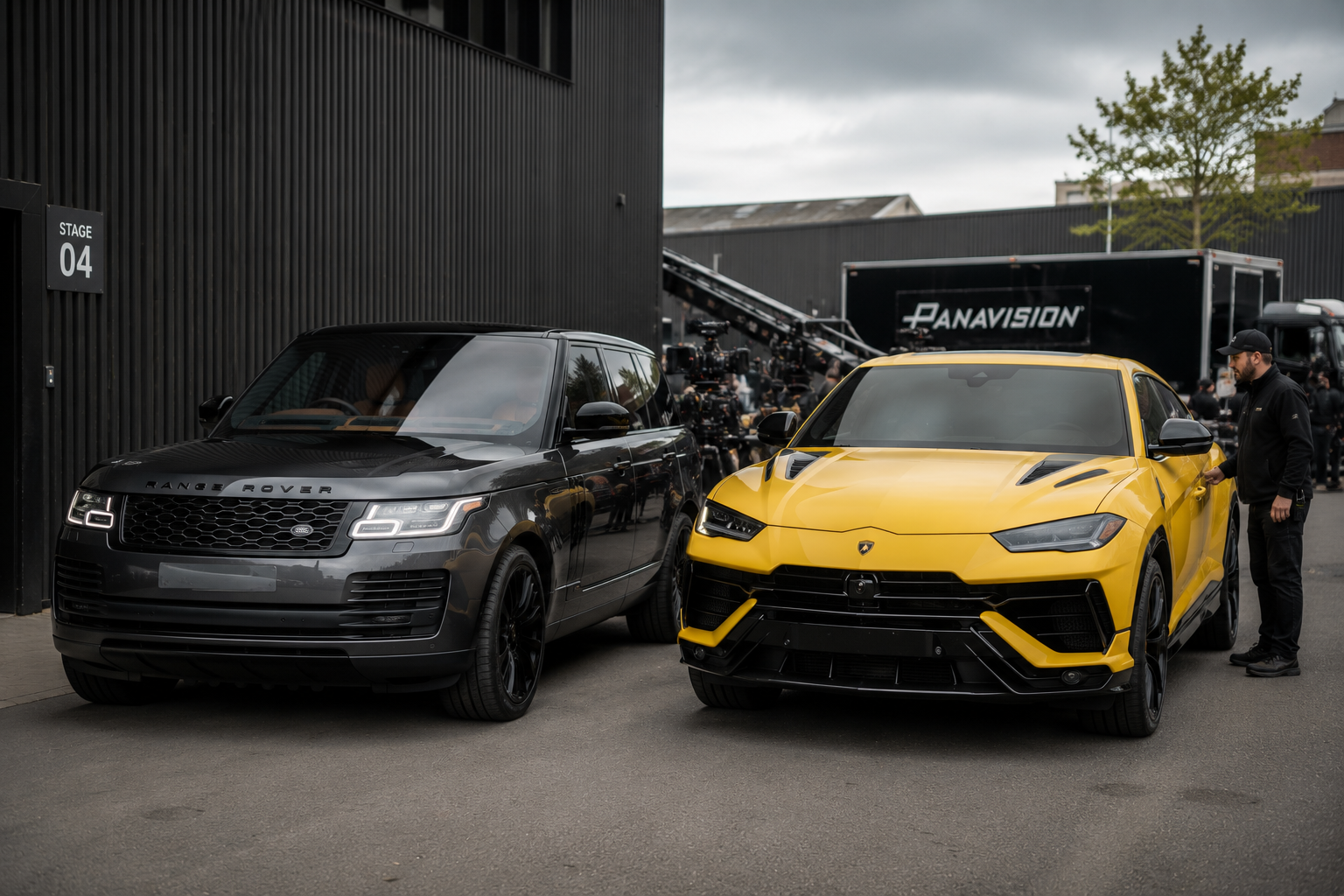
Modern hero cars and supercars — For contemporary drama, commercials, music videos, and premium advertising, the modern hero car tier covers everything from executive saloons to hypercars. Royal Rentals lists specific film and TV hire options including the Range Rover Autobiography, Audi R8 Spyder, Lamborghini Urus SE, and Porsche 911 Carrera 4 — all of which feature regularly in high-end UK commercial and streaming production.
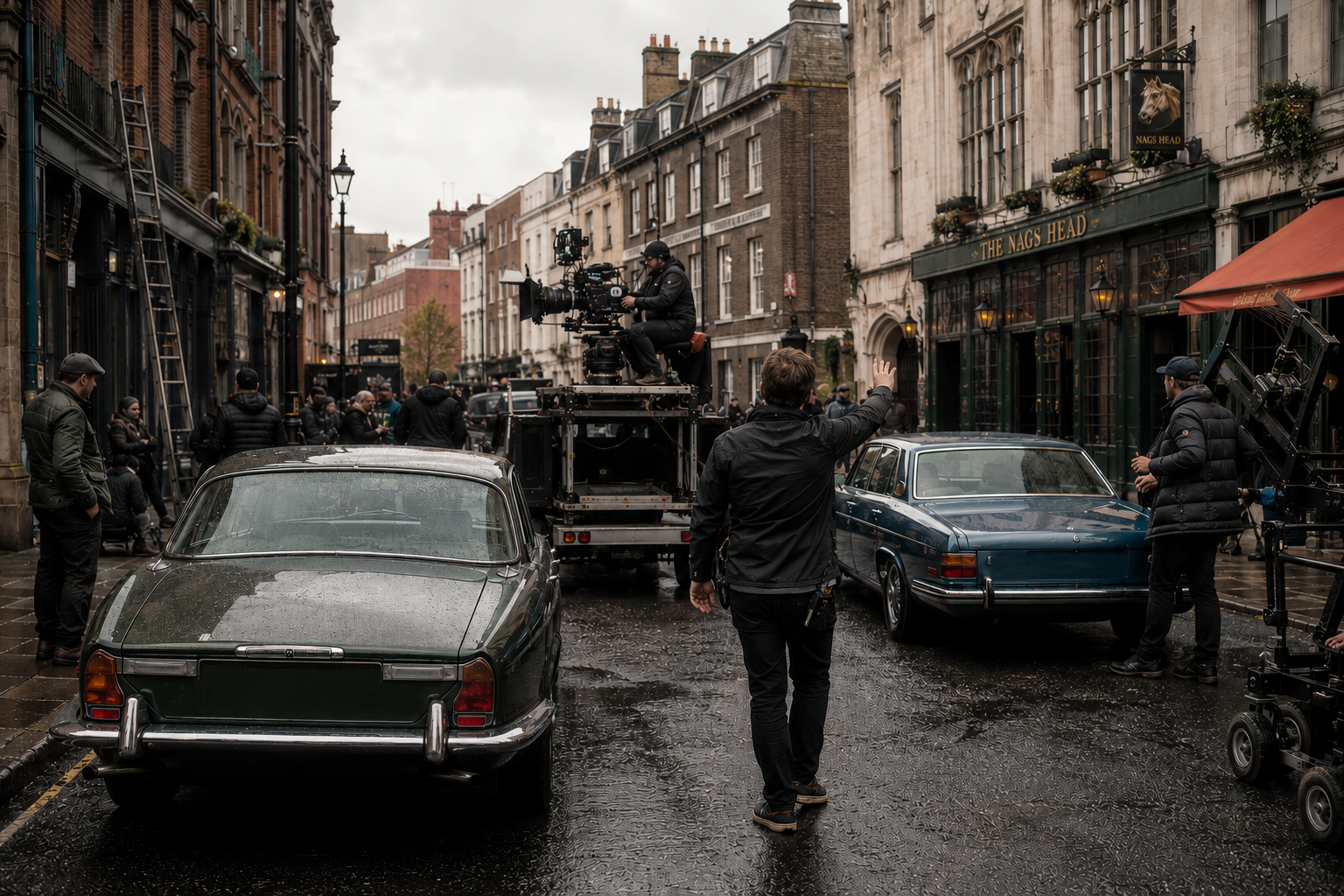
Background and dressing vehicles — Period cars in the right condition that fill a scene without becoming the focus. For a busy 1960s London street in a period drama, you might need eight vehicles of the right era, all road-legal, all mobile, all matching the colour palette the production designer has specified. This kind of brief is the daily work of picture car coordinators and specialist agencies.
Unusual and prop vehicles — Police cars from specific eras, ambulances, taxis from defined decades, military vehicles, trucks, buses. Star Car Hire's owner network includes a notably wide range of vehicles that fall outside the standard categories, which is where productions turn when the brief is genuinely specific.
Production Vehicles: Unit Cars and Crew Transport
Separate from anything that appears on screen, every UK film and TV production needs a logistical vehicle fleet to function.
Unit Cars for Principals
Lead actors, directors, and senior crew typically travel to and from set in chauffeur-driven luxury cars — usually Mercedes S-Class, Range Rover, or BMW 7 Series. These are the unit cars, and specialist companies focus specifically on this market.
iChauffeur, based near Twickenham and Shepperton studios, provides exactly this service — describing their unit cars as "safe, stylish and reliable location vehicles" for principals and lead actors, specifically positioned for London-area productions where most major studio facilities are concentrated.
The requirements for unit cars are different from standard chauffeur hire. Drivers need familiarity with production schedules, the ability to be flexible around call sheets, discretion around talent, and often very early starts. A 4am unit pickup for a dawn shoot is not unusual. Providers who specialise in film and TV unit cars understand these requirements; standard chauffeur companies often don't.
Crew Transport: MPVs and Minibuses
For moving supporting cast, crew departments, and equipment between base and location, MPVs and minibuses are the workhorses of production logistics. Seven-seater people carriers for smaller departments; larger minibuses for full unit moves.
Express Rent a Car specifically offers MPV hire in London for film production, with seven-seat vehicles available for crew transport — a service positioned specifically at the production market rather than standard hire.
For larger productions with multiple departments moving simultaneously across London or to location, coordinating multiple MPVs under a single production vehicle department is standard practice. The production vehicle manager or transport coordinator typically handles this, working with a combination of dedicated film fleet companies and general hire firms.
Commercial Vehicles and Equipment Transport
Vans, trucks, and specialist vehicles for equipment transport sit at the practical end of the production vehicle fleet. Arnold Clark Rental runs a dedicated film and television vehicle reservation department with over twenty years' experience, providing cars and commercial vehicles for production logistics across the UK.
Insurance, Tax and On-Set Responsibilities
Insurance for film and TV vehicle hire is more complex than standard hire, and understanding this upfront prevents problems on the day.
For picture cars: Vehicle owners must maintain road-legal tax, MOT, and insurance for the vehicle. Production companies typically provide additional coverage for the specific job — covering on-set use, any movement within the location, and any particular risks associated with the production. Stunt work, car chases, and sequences involving damage require separate specialist insurance and are outside the scope of standard picture car hire.
Stars on Wheels' terms make clear that productions are responsible for ensuring shoot locations are safe and legal, that vehicles and their owners are treated with appropriate care, and that any costs such as congestion charges or tolls arising from the shoot are covered by the production.
For production vehicles (unit cars, crew transport): Standard chauffeur insurance applies, usually with the hire company's policy covering the hire period. Production-specific riders may be needed for longer engagements.
The practical guidance: clarify insurance responsibilities in your initial enquiry, not on the morning of the shoot. Experienced picture car providers are used to these conversations and will tell you what they need from the production's insurance department.
Timeline and Notice: How Much Lead Time Do You Need?
The honest answer from anyone working in this market is: as much as possible, but less than you might expect.
Classic car forum discussions note that film and TV bookings often arrive with two weeks or less notice, sometimes only a few days. The picture car market has adapted to this reality — platforms like Stars on Wheels are structured for fast response, and owner networks can mobilise quickly when a specific brief comes in.
That said:
- Specific period vehicles — the 1963 Austin Healey Sprite in British Racing Green, the particular taxi model for a specific decade — need more time. The rarer the brief, the earlier you need to search
- Large vehicle packages — ten or more cars for a single shoot — require logistics planning that benefits from two to four weeks minimum
- Stunt vehicles or unusual modifications — safe preparation takes time and cannot be rushed
- Unit car fleets for long-running productions — setting up a standing arrangement with a unit car provider benefits from being done before production begins, not during
The default advice: contact providers as soon as the script or brief clarifies what vehicles are needed. Even if the shoot is three weeks away, that conversation costs nothing and saves significant stress.
Costs: What to Budget for Film Production Car Hire
Pricing in this market is highly variable, because the range of vehicles and services is enormous. Here's a realistic framework:
| Vehicle / Service | Approximate Day Rate | Notes |
|---|---|---|
| Background/dressing vehicles (period) | £150–£400/day | Includes handler, transport to location |
| Classic hero car (Rolls-Royce, Jaguar, vintage) | £400–£800/day | Handler essential, transport extra |
| Modern hero supercar (Lamborghini, Audi R8) | £600–£1,500/day | Handler, insurance confirmation needed |
| Unit car (S-Class, Range Rover, chauffeur-driven) | £300–£600/day | Driver included, production terms |
| MPV / minibus (crew transport) | £150–£350/day | 7–16 seat capacity |
| Period taxi or specialist vehicle | £300–£700/day | Depends on rarity and condition |
| Multiple background car package | POA | Volume discounts often available |
All rates approximate. Transport, preparation, and handler time typically quoted separately. Always obtain itemised production quotes.
The production budget reality: Picture car costs for a single commercial or music video are often a relatively small line in the overall production budget, but they can become significant quickly on period dramas or productions requiring large fleets. Getting quotes early, being specific about the brief, and using established picture car agencies tends to produce better value than ad-hoc sourcing.
What Film and TV Productions Need to Know Before Booking
A brief checklist for production coordinators and transport managers:
- ✅ Is this a hero car, background car, or production/unit vehicle? (Different suppliers, different processes)
- ✅ Is the vehicle needed static or moving — and does your production insurance cover both?
- ✅ Does the script involve any stunts, impacts, or unusual usage? (Separate specialist consultation required)
- ✅ Is a handler/driver included in the quote, or supplied separately?
- ✅ What are the call times, wrap times, and turnaround requirements?
- ✅ What location(s) will the vehicle be used at — and are there access or permit considerations?
- ✅ Has the production department confirmed insurance coverage for the specific vehicle and usage?
- ✅ For period productions: has the vehicle been confirmed as the correct year and specification?
The UK film and television production industry runs on experienced specialists who've been solving these logistical puzzles for years. Picture car agencies know how to source a 1974 Volvo P1800 in three days. Unit car companies know what it means when the director is running on Actor Time and the call sheet just shifted two hours. The market has the expertise — productions that tap into it early get better vehicles, better logistics, and fewer surprises on the day.
Looking for luxury and exotic car hire for film productions, brand campaigns, or photoshoots across the UK? Autofusion lets you compare prestige and luxury car hire across hundreds of partners nationwide. Explore car hire for film and TV production with Autofusion today.