


Published 2 August 2026
Our methodology focuses on accuracy first.
All information is researched using manufacturer data, official industry guidance, and trusted automotive sources. Where relevant, content is cross-checked against real-world vehicle maintenance practices and common customer enquiries to ensure it is both practical and accurate. Our content is reviewed regularly and updated to reflect changes in regulations, industry standards, and best practices.
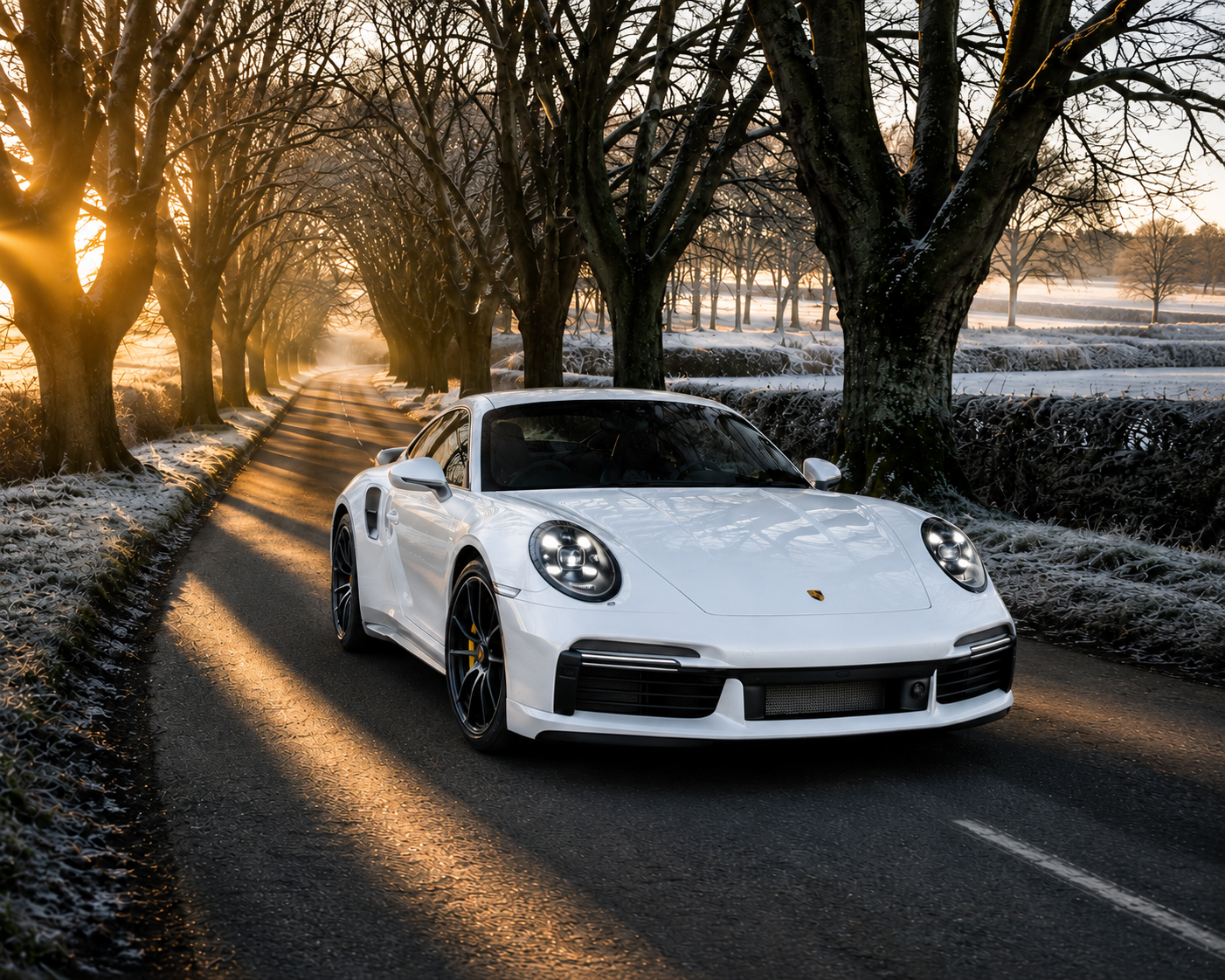
Everyone wants to hire a supercar in summer. This is understandable. The sun is out, the roads are warm, and the convertible experience is genuinely worth planning around. But here's the thing about everyone wanting to do the same thing at the same time: it means higher prices, worse availability, and minimum three-day weekend booking requirements that force your hand.
Winter supercar hire in the UK is the contrarian argument, and it's a genuinely compelling one.
From November to April, the dynamics of the UK supercar hire market shift significantly in your favour. Rates drop by 15–20% compared with peak summer pricing. Availability improves dramatically — the convertibles and Spyders that were booked solid in July are sitting in preparation bays waiting for enquiries. Long-term hires become feasible in a way that peak-season demand never permits. And the roads — quiet, cold, often beautifully lit in low winter sun — are, in the right conditions, among the most rewarding driving experiences the UK offers.
There are, of course, a few things worth knowing about winter supercar hire that don't apply in summer. The most important of which is: which cars you should actually be driving.
Why Winter Actually Makes Sense for Supercar Hire
Let's start with the economics, because they're more favourable than most people assume.
Pricing: Winter rates for supercar hire in the UK are typically 15–20% lower than equivalent summer rates. On a car costing £1,000/day in July, that's £150–£200 per day back in your budget. On a weekend hire, that's a meaningful saving — or the difference between the car you wanted and the one you settled for.
Availability: This is arguably the bigger advantage. During peak season (April–October), the best cars — particularly convertibles — are reserved weeks or months in advance. In winter, you can often book a week or two ahead and have your first choice. For spontaneous planners or those who've been considering a hire for a while without quite getting around to it, winter removes the "I've missed my window" problem.
Flexibility: Several major providers note that long-term hires are more feasible from November to April than in peak months. If you've considered having a supercar for a full month — for an extended project, as a try-before-you-lease experience, or simply because you want to — winter is when that conversation becomes possible.
Minimum hire periods: The strict Friday-to-Monday weekend minimum that applies in summer becomes more negotiable in winter. Mid-week single-day hires are more available, and providers are generally more flexible on duration when demand is lower.
The Winter Car Question: What You Should Actually Hire
This is the most practically important section of any winter supercar guide, and most guides fudge it. The honest answer is that not all supercars are equal in cold, wet, or slippery conditions — and choosing the wrong car in winter isn't just uncomfortable, it's genuinely unwise.
The AWD Supercar Tier: The Smart Winter Choice
All-wheel-drive supercars are the correct choice for winter UK conditions. They provide the performance and experience you're booking for, while the AWD system manages the reduced grip margins of cold, damp, or lightly salted roads.
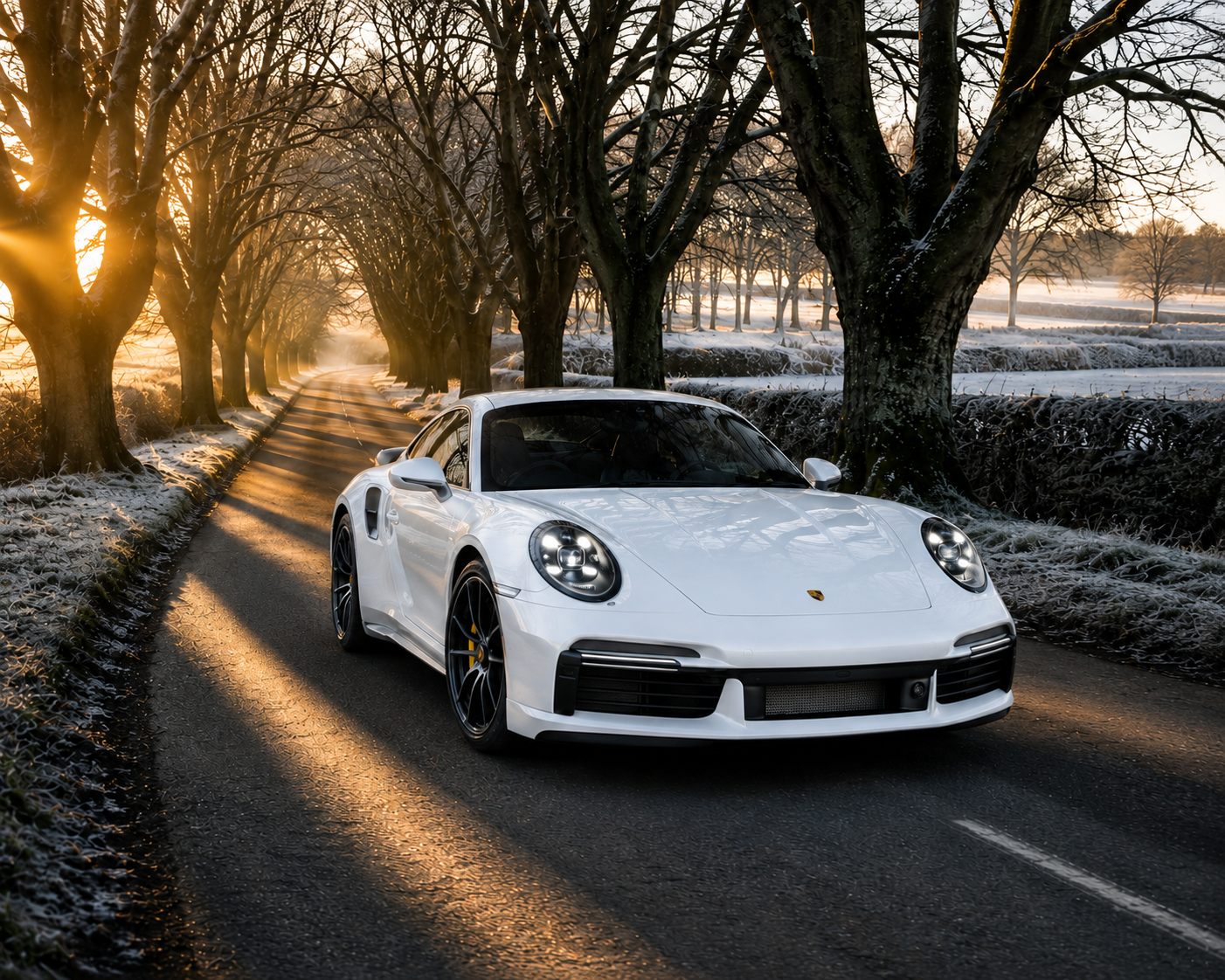
Porsche 911 Turbo S — Arguably the most usable supercar in any weather, full stop. The rear-engine layout combined with AWD gives it a traction characteristic that's genuinely reassuring on cold roads. The 650bhp is managed in a way that feels progressive rather than alarming. On a dry winter road, the 911 Turbo S is extraordinary; on a damp one, it's still deeply impressive. For drivers who want the full supercar experience in winter without any significant concessions to the season, this is the right car.
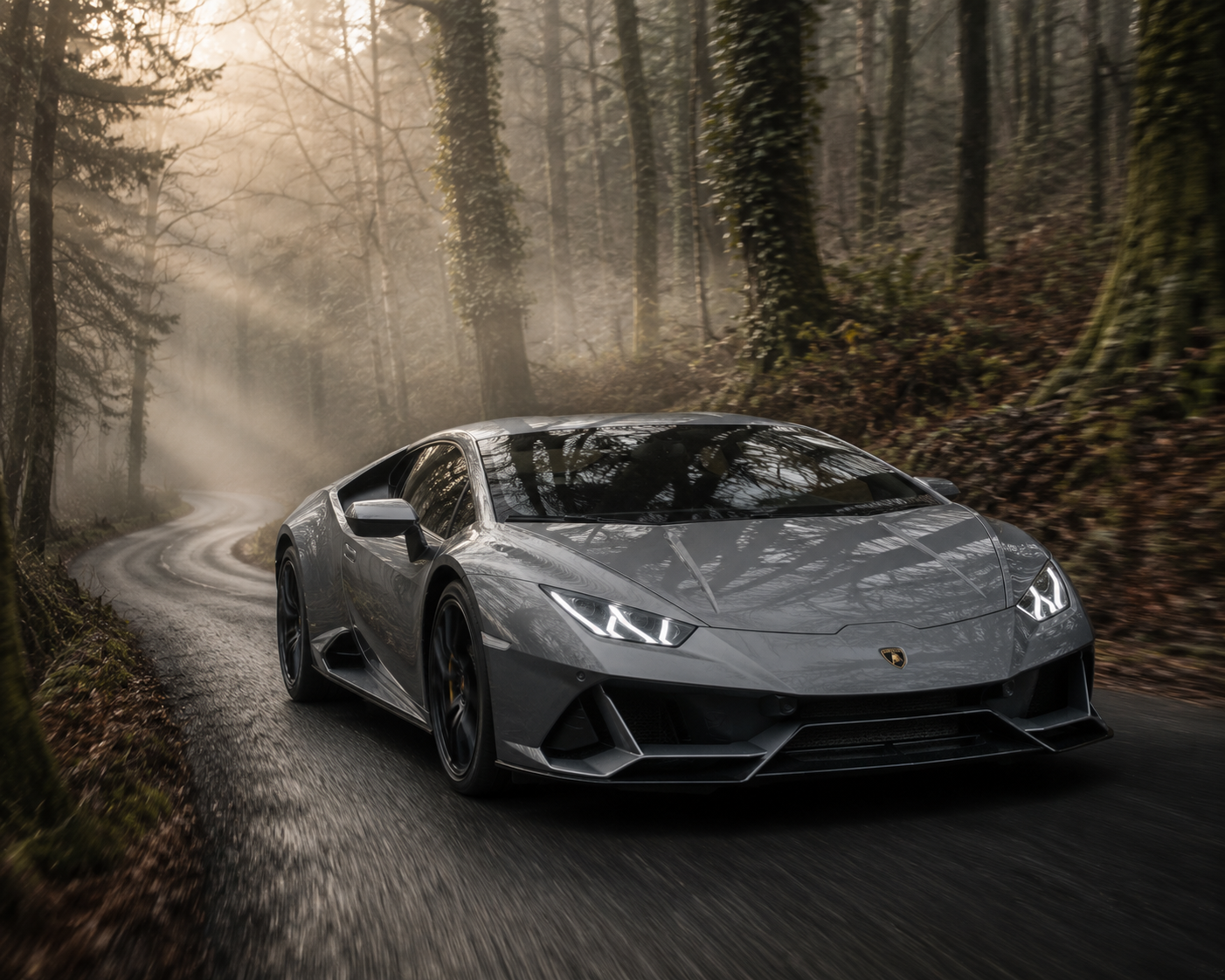
Lamborghini Huracán (EVO AWD) — The all-wheel-drive Huracán variants — rather than the rear-wheel-drive STO or EVO RWD — are well-suited to winter driving. The AWD system is sophisticated, and the car's lower centre of gravity actually works in its favour on cold roads by keeping it planted. The V10 sound, the visual drama, and the Lamborghini character are all fully present; you just have an AWD system working quietly and effectively underneath.
Bentley Continental GT — For anyone who wants winter supercar driving to also be comfortable, the Continental GT is the definitive answer. AWD, powerful, heated everything, a cabin that creates its own microclimate regardless of what's happening outside. The GT is sometimes described as "the car for all seasons" and winter is when that description earns its weight. A winter road trip to a country house hotel in a Bentley Continental GT is one of the great British experiences available to anyone with a reasonable budget and the presence of mind to book it.
The 4x4 Tier: When Conditions Dictate Practicality
Sometimes the conditions — snow in higher ground, ice in more exposed areas, heavy rain on rural roads — suggest that a luxury performance SUV is the better call than a supercar. These are not compromises. Several of these vehicles are genuinely extraordinary to drive.
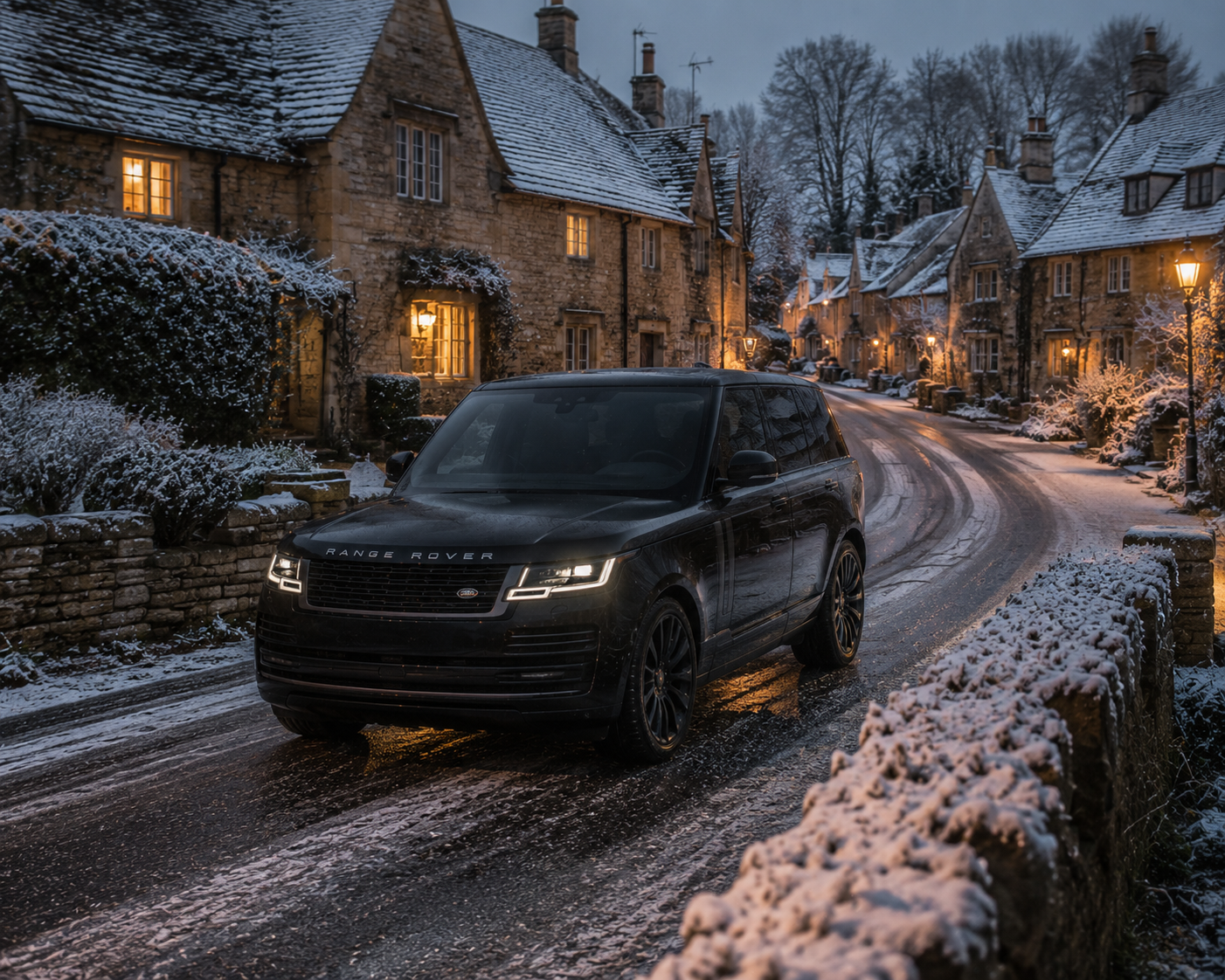
Range Rover Sport / Vogue — The Range Rover is the great British all-weather vehicle. Winter doesn't diminish it; in some ways it's at its best in cold weather, the air suspension managing rough surfaces with particular composure and the cabin providing a warmth and refinement that is specifically welcome in January. The Sport variant adds a more dynamic character; the Vogue is the serene, senior version.
Mercedes-AMG G63 — The G63 in winter is a specific kind of wonderful. The combination of serious off-road capability, a supercharged V8, and a cabin that is far more luxurious than the boxy exterior suggests makes it a genuinely unusual experience. It's also the car that looks most at home against a winter backdrop — the vertical windscreen and high roofline suit low winter light in a way that a low-slung Italian supercar cannot.
Bentley Bentayga — The Bentley SUV argument in winter is straightforward: extraordinary performance, extreme all-weather capability, and a level of cabin luxury that makes a cold day feel like a specific kind of self-indulgence. The Bentayga W12 produces 626bhp and hits 62mph in 3.9 seconds, which is the kind of figure that makes the word "practical" feel slightly inadequate.
Winter Supercar and 4x4 Hire: At a Glance
| Car | AWD? | Winter Suitability | Winter Daily Rate (Approx.) |
|---|---|---|---|
| Porsche 911 Turbo S | ✅ | Excellent | £600–£900 |
| Lamborghini Huracán EVO AWD | ✅ | Very good | £800–£1,200 |
| Bentley Continental GT | ✅ | Excellent | £600–£900 |
| Ferrari 488 / F8 (RWD) | ❌ | Use with caution in cold/wet | £850–£1,300 |
| Range Rover Sport | ✅ | Outstanding | £200–£380 |
| Range Rover Vogue | ✅ | Outstanding | £250–£450 |
| Mercedes-AMG G63 | ✅ | Excellent | £600–£900 |
| Bentley Bentayga | ✅ | Excellent | £600–£900 |
| McLaren 720S (RWD) | ❌ | Expert drivers only in cold/wet | £900–£1,300 |
Winter rates approximate, typically 15–20% below peak summer pricing.
Winter Driving Tips: How to Get the Most From Your Hire
Hiring a supercar in winter is straightforward if you follow a few clear principles. These aren't warnings — they're the difference between an good day and a great one.
Tyres matter enormously. Cold road surfaces significantly reduce the grip available from standard performance tyres. Ask your hire provider whether the vehicle is fitted with winter or all-season tyres rather than summer compounds. Most professional hire companies maintain their fleets appropriately for the season, but it's worth confirming.
Cold tyres need warming. The first few miles of any supercar hire in cold weather should be driven with restraint. Performance tyres below operating temperature provide significantly less grip than warm ones. Build the heat in gradually.
Respect the power delivery. In cold or damp conditions, even AWD supercars can be caught out by aggressive throttle inputs at the wrong moment. The car's electronics will manage most situations, but they're not infallible. Drive with a little more margin than you would in summer.
Plan your route around the conditions. Higher ground, exposed moorland roads, and north-facing routes are more likely to be affected by frost, ice, or snow. UK winter driving is generally manageable on main roads and lower-lying routes; plan accordingly rather than hoping the high pass will be clear.
Warm the engine before driving hard. Modern supercars have sophisticated thermal management, but allowing the oil temperature to build before using the full performance envelope extends the life of the car and gives you a better experience.
Winter Occasions That Are Genuinely Perfect for Supercar Hire
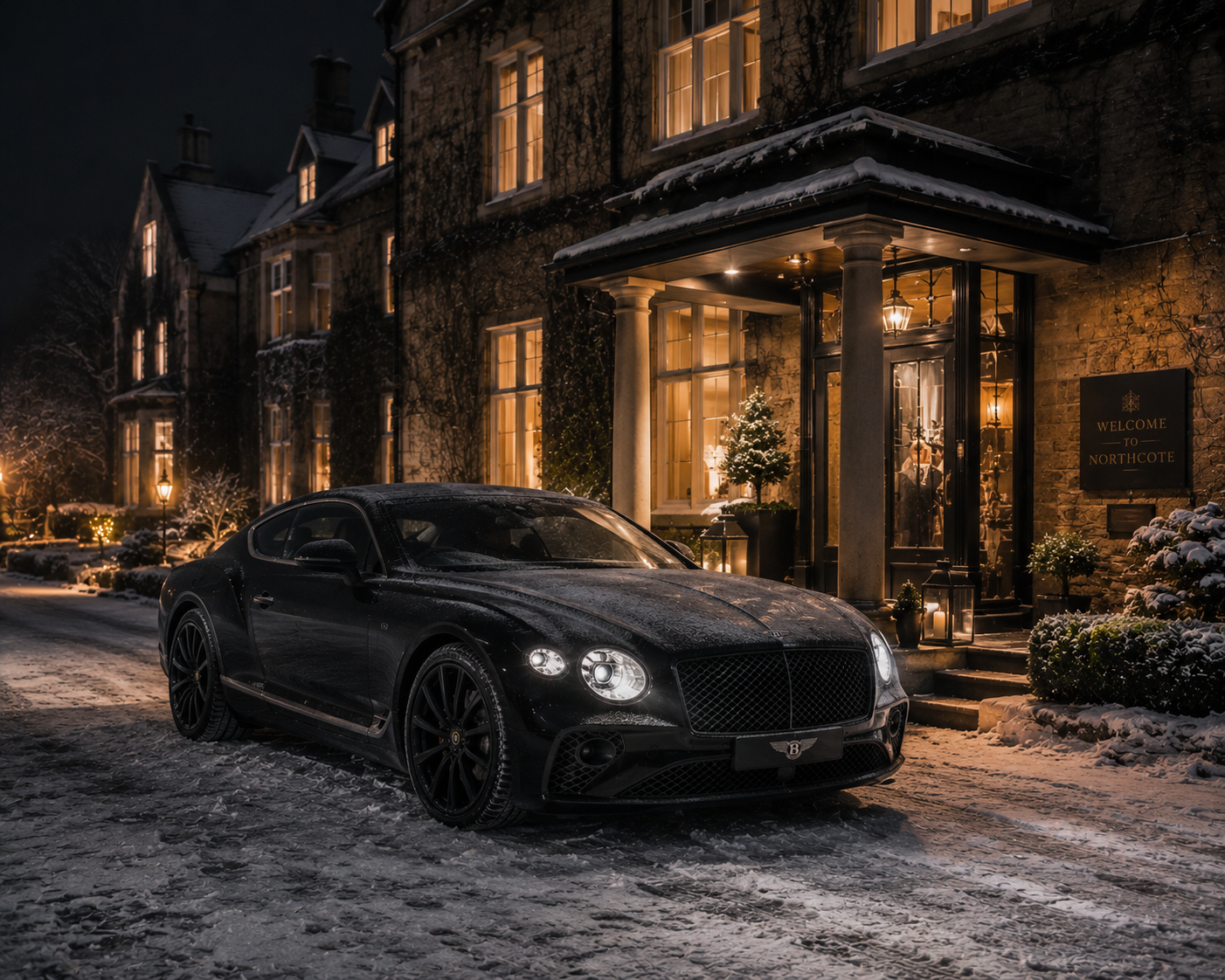
New Year and Christmas events — The festive period generates occasions that call for genuine prestige transport. A Bentley Continental GT for a New Year's Eve dinner at a country house. A Porsche 911 Turbo for driving to the family gathering in something that generates conversation. Winter holidays have a theatrical quality that a great car enhances.
Valentine's Day — Possibly the single best occasion for an AWD luxury supercar hire. A Porsche 911 Turbo S or Bentley GT, a country hotel booking, and a clear but cold February day — this is a combination that delivers memorably.
Winter road trips — The UK in winter has a specific beauty that summer crowds often obscure. The Cotswolds villages in frost. The Yorkshire Dales under low cloud. Edinburgh in December. A Bentley GT or Range Rover Sport on these routes creates a completely different experience from the same drive in summer — quieter, more atmospheric, and distinctly your own.
Business travel and corporate entertaining — Winter is corporate event season, and AWD executive supercars and luxury SUVs are consistently in demand for client entertainment and incentive programmes. The G63 or Bentayga at a winter corporate event communicates something specific and effective.
Long-Term Winter Supercar Hire: The Off-Peak Opportunity
This is genuinely available in a way that peak season cannot match. If you've been considering a long-term supercar hire — two weeks, a month, or longer — the window between November and April is when it becomes most feasible.
Providers who note that long-term hires are "more likely from November to April" are reflecting real availability patterns. The fleet isn't tied up in three-day weekend bookings. There's room to accommodate longer arrangements. And the rates reflect the reduced competition for the cars.
For anyone considering a supercar as a try-before-you-lease extended test, or simply wanting a winter of genuinely memorable driving, this is the conversation to have with a provider now rather than waiting for summer.
Winter supercar hire in the UK is genuinely undervalued — better rates, better availability, and, on the right car and the right road, driving experiences that summer's busier, warmer version simply cannot replicate. The key is knowing which car to choose and how to drive it well.
Ready to find the right supercar for a UK winter hire? Autofusion lets you compare luxury and exotic car hire — including AWD supercars and premium 4x4s — across hundreds of rental partners nationwide. Browse winter supercar hire across the UK with Autofusion today.