


Published 20 May 2026
Our methodology focuses on accuracy first.
All information is researched using manufacturer data, official industry guidance, and trusted automotive sources. Where relevant, content is cross-checked against real-world vehicle maintenance practices and common customer enquiries to ensure it is both practical and accurate. Our content is reviewed regularly and updated to reflect changes in regulations, industry standards, and best practices.
There's a conversation that's been happening in supercar circles for the last five years, and it's getting louder. The conversation goes roughly like this: can an electric car actually be a supercar? And the answer, which has been arriving with increasing force from engineers, test drivers, and people who've actually floored one, is: yes. Not just "yes, technically." Yes in the way that matters — acceleration that makes you reassess your relationship with physics, handling that rewards a skilled driver, and a presence on the road that turns heads with the same assurance as any Italian combustion machine.
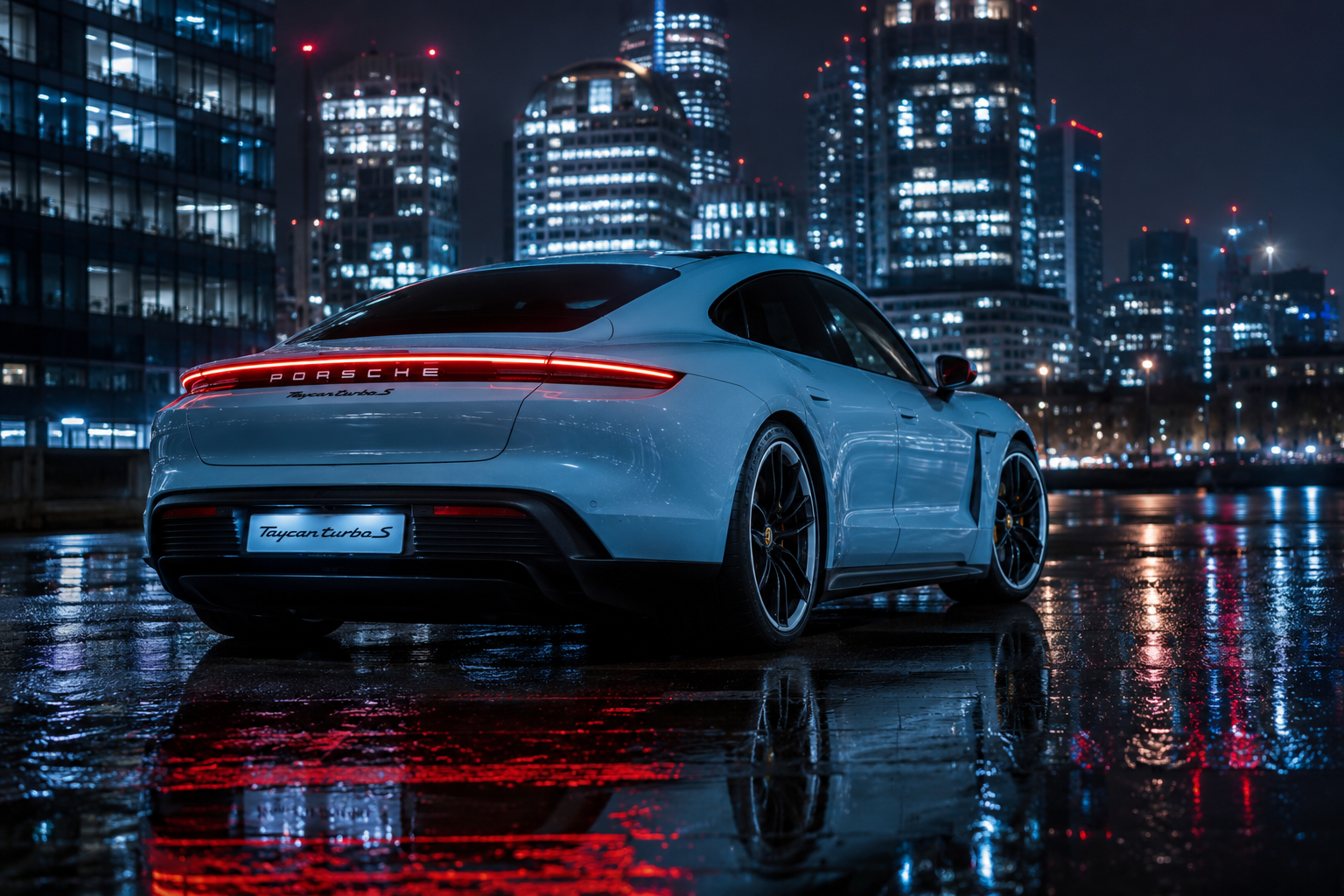
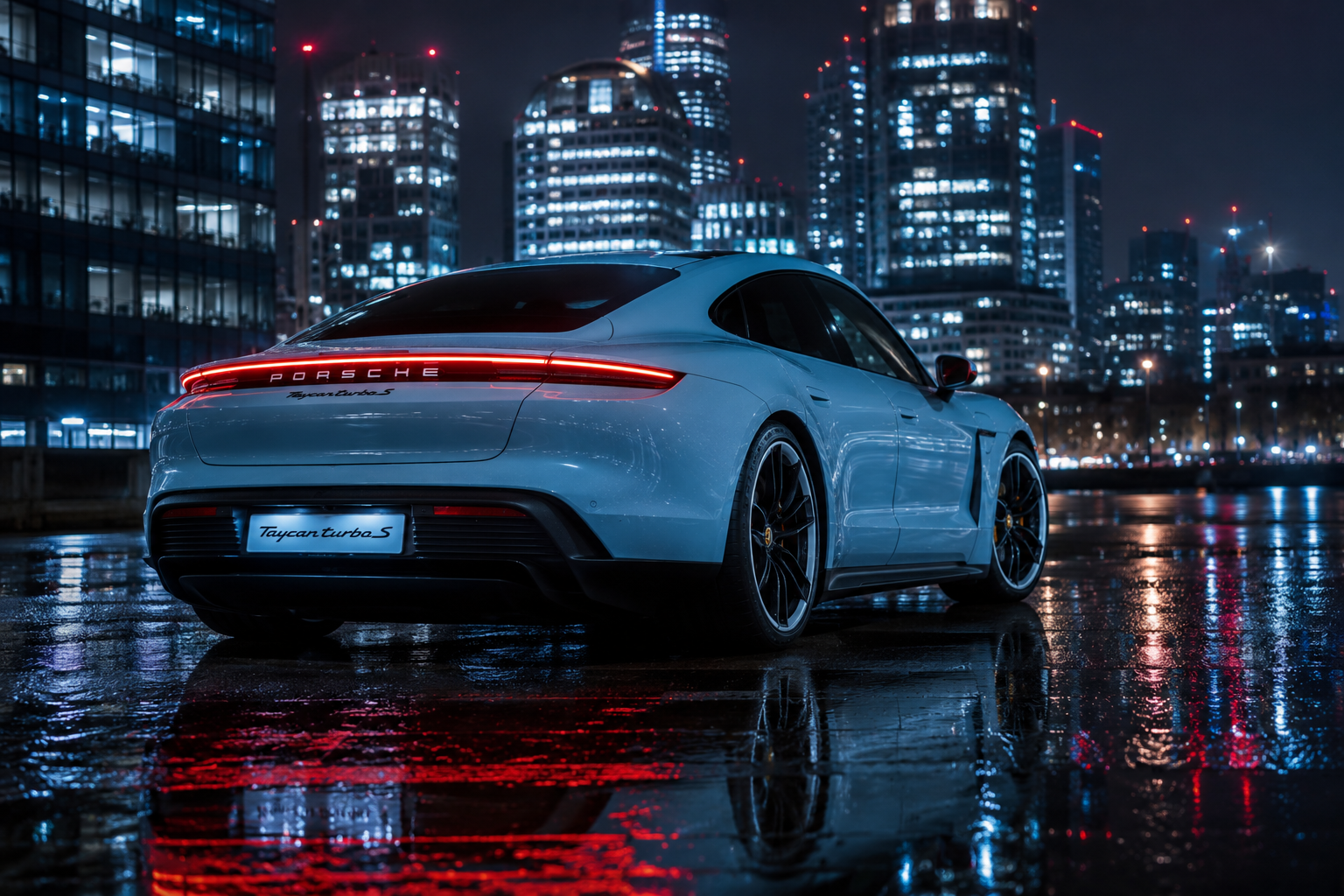
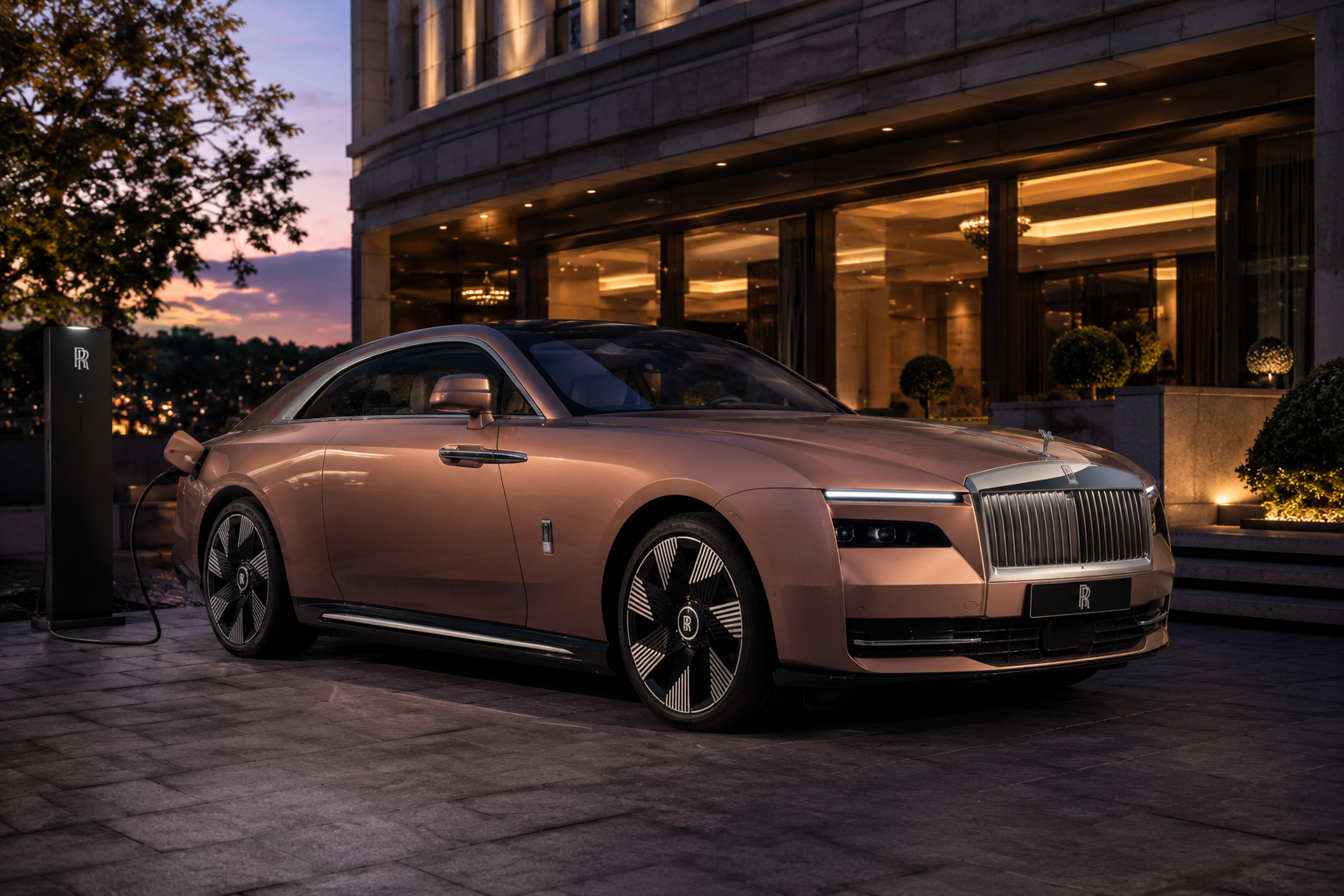
The Porsche Taycan Turbo S does 0–62mph in 2.8 seconds. The Rolls-Royce Spectre — an all-electric luxury grand tourer — produces 585bhp and costs upwards of £340,000. The Rimac Nevera, available for experience drives through specialist providers, produces over 1,800bhp. These are not compromises or novelties. They are, by any legitimate measure, supercars.
And they're now available to hire in the UK.
Electric supercar hire is an emerging market — currently smaller than the combustion equivalent, but growing quickly as the vehicles improve, fleets expand, and the UK charging infrastructure matures. This guide covers what's currently available, how EV hire works differently from petrol hire, what to expect on range and charging, and whether the electric supercar experience actually delivers.
What Counts as an "Electric Supercar" for Hire Right Now?
The category is genuinely broad at this point, and it helps to understand the tiers:
Performance EVs (supercar-adjacent):
- Porsche Taycan Turbo S — the electric benchmark for performance and driver engagement, 750bhp, 0–62 in 2.8 seconds, four seats
- Tesla Model S Performance/Plaid — extraordinary straight-line performance (2.1 seconds in Plaid spec), approximately 330 miles of range, a very different kind of supercar character from the Taycan
- Audi RS e-tron GT — four-door, AWD, 646bhp, a proper grand tourer that sits alongside the Taycan in character
Ultra-luxury electric:
- Rolls-Royce Spectre — 585bhp, 0–62 in 4.1 seconds, four seats, pure electric, and the most expensive regularly available electric hire car in the UK market at around £2,500/day
- BMW i7 — the flagship electric saloon tier, available through several prestige hire providers
Performance electric SUVs:
- Tesla Model X — falcon-wing doors, strong performance, a genuinely unusual vehicle that delivers supercar-adjacent acceleration in SUV form
- BMW iX — premium electric SUV with impressive performance in the M60 variant
- Jaguar I-PACE — more conventional in character but well-regarded for its handling dynamics
Entry-tier performance EVs:
- Tesla Model 3 Performance — available from some EV hire providers as an accessible introduction to electric performance hire
- Porsche Taycan 4S — the standard Taycan without Turbo S extremes, still genuinely impressive
How Electric Supercar Hire Differs from Petrol Hire
Most of the hire process is identical to standard supercar hire. Licence requirements, age requirements, security deposits, and insurance terms are broadly the same. But there are EV-specific considerations that anyone hiring an electric supercar should understand before they take the keys.
The Charging Policy (The New "Fuel Policy")
In a petrol hire car, the fuel policy is simple: pick it up full, return it full. EV hire introduces the concept of a state-of-charge policy instead.
Most professional EV hire providers aim to supply vehicles at approximately 80% charge (fast charging to 100% is slower and harder on batteries, so 80% is the practical maximum for most scenarios). You'll typically be asked to return the vehicle at or above a specified charge level — often 20–50% — or pay a recharge fee.
When you pick up the car, confirm the state of charge with the hire company and document it. This is the equivalent of walking around a petrol car noting scratches — it protects you against disputes on return.
Range: The Honest Numbers
EV ranges vary significantly depending on driving style, temperature, and motorway speeds. Here are realistic figures for the main hire-relevant models:
| Model | Quoted WLTP Range | Realistic Range (Mixed Driving) |
|---|---|---|
| Porsche Taycan Turbo S | ~280 miles | ~200–230 miles |
| Tesla Model S Performance | ~330 miles | ~260–300 miles |
| Rolls-Royce Spectre | ~260 miles | ~200–230 miles |
| BMW iX M60 | ~270 miles | ~210–250 miles |
| Audi RS e-tron GT | ~270 miles | ~200–230 miles |
| Tesla Model 3 Performance | ~315 miles | ~250–280 miles |
Realistic range figures assume mixed driving including some motorway use. Cold weather reduces range by 15–25% in winter conditions.
For most hire scenarios — a weekend road trip, a day hire, a hotel-based experience — these ranges are entirely manageable. The key is planning your route to include rapid charging stops if you're covering more than 200 miles in a day.
Charging: What You Need to Know
Fast DC public charging (available at motorway service areas and many dedicated EV charging hubs) can add 80% charge in approximately 30–40 minutes for most of the vehicles above. This is the equivalent of a longer fuel stop but not dramatically so on a long journey.
For hotel stays and overnight hire, destination AC charging (typically Type 2, slower but fine overnight) is available at most premium hotels and many public car parks. A full overnight charge from 20% typically takes 8–12 hours depending on the car and charger power.
Cables: Confirm what's included with the hire. Most premium EV hire providers supply a Type 2 cable for AC charging; rapid DC charging uses the CCS connector built into the car. Most modern electric supercars are equipped for both.
The Electric Supercar Hire Experience: What's Different
Here's the honest assessment of how an electric supercar hire differs experientially from a Ferrari or Lamborghini:
What's genuinely better:
- Acceleration — instant torque from zero means the initial surge of acceleration in a Taycan Turbo S or Tesla Plaid is faster and more overwhelming than most combustion supercars. There's no rev-build, no anticipation — you ask for it and it happens, immediately and entirely
- Refinement — no gear changes, no engine noise management, no vibration through the drivetrain. Electric supercars are eerily smooth in a way that rewards a different kind of driving appreciation
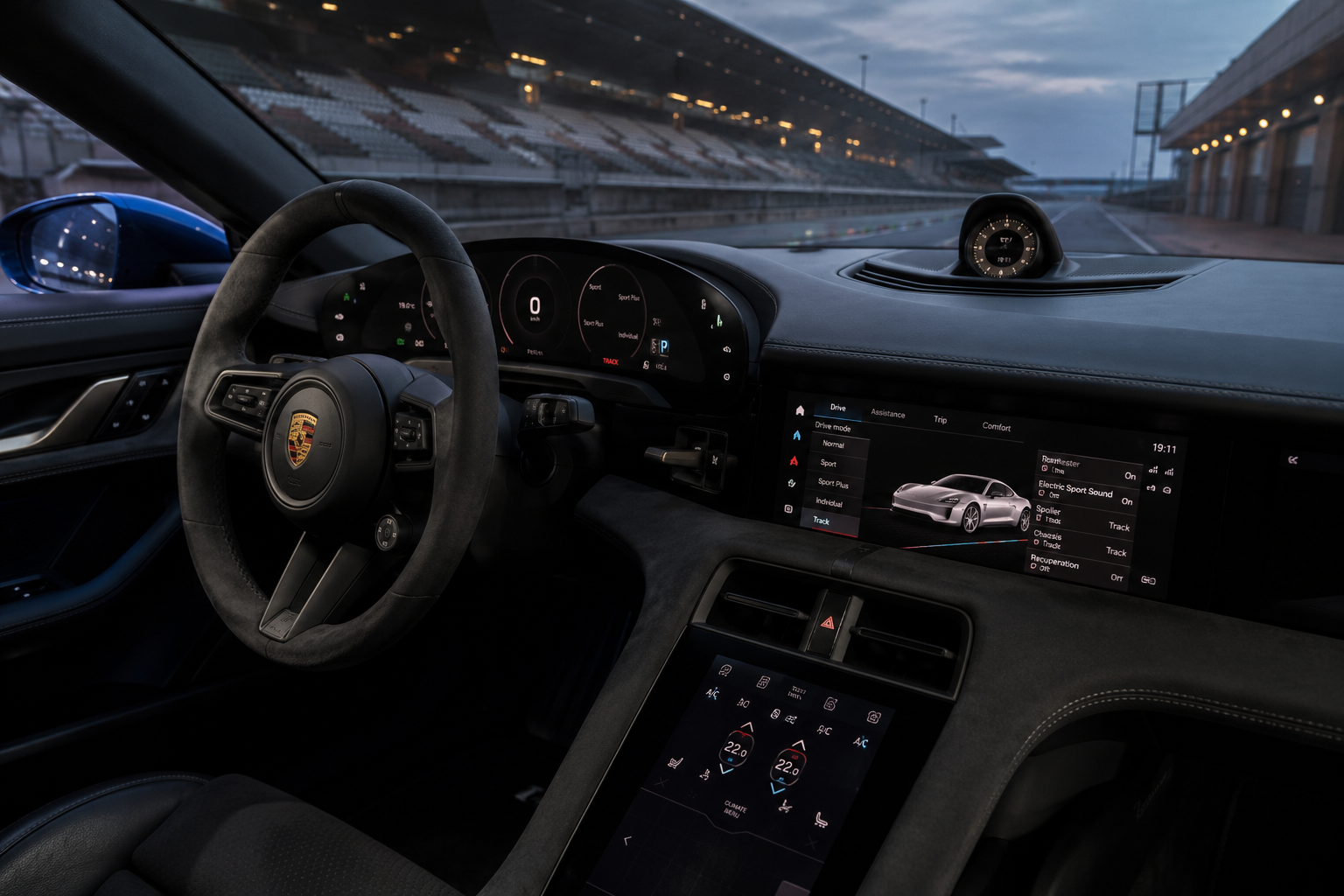
- Technology — the interface, the connectivity, the software integration in cars like the Taycan and Tesla are genuinely ahead of most combustion competitors
- Range anxiety (less than you think) — for hire scenarios where you're not covering 400 miles in a day, the range is almost never a practical problem
What's different (not worse, but different):
- The sound — electric supercars don't have the acoustic drama of a V10 Lamborghini or a V8 Ferrari. The Taycan has a designed synthetic sound; the Tesla is largely silent. This is not worse — it's a different relationship with the vehicle. But if the engine note is part of what you're seeking, an EV hire won't provide it
- The refuelling ritual — stopping to charge rather than fuel is a different cadence. Rapid charging is fast enough not to be a significant inconvenience on most hire routes, but it requires slightly more advance planning than locating a petrol station
- The character — electric supercars don't have the mechanical drama and visceral feedback of their combustion equivalents. The Taycan handles beautifully, but it communicates differently. For some drivers this is a revelation; for others it's an absence
Electric Supercar Hire Prices in the UK
The premium EV hire market is priced comparably to — and in some cases above — equivalent combustion supercars:
| Model | Daily Rate (Approx.) | Weekend Rate (Approx.) | Security Deposit |
|---|---|---|---|
| Tesla Model 3 Performance | £200–£350/day | £400–£650 | £1,000–£2,000 |
| Tesla Model S Performance | £350–£600/day | £650–£1,100 | £2,000–£3,500 |
| BMW iX M60 | £300–£500/day | £550–£900 | £1,500–£3,000 |
| Porsche Taycan 4S | £500–£750/day | £900–£1,400 | £2,500–£4,000 |
| Porsche Taycan Turbo S | £700–£1,100/day | £1,300–£2,000 | £3,000–£5,000 |
| Rolls-Royce Spectre | ~£2,500/day | ~£6,000 | £5,000+ |
Rates approximate and vary by provider, season and mileage allowance. Always confirm directly.
On running costs: One of the genuine advantages of electric supercar hire is the per-mile energy cost. Charging a Tesla Model S from 20% to 80% on a rapid public charger costs approximately £15–£25 at current UK public charging rates. The equivalent range in a petrol Ferrari would cost £50–£80+ in fuel. Over a weekend hire, the saving is meaningful.
Who Is Electric Supercar Hire For?
The electric supercar hire market currently serves a few distinct audiences:
The sustainability-conscious hirer — People who want the performance and prestige experience without the combustion emissions. Corporate clients with sustainability commitments. Individuals who simply feel better about driving electric.
The technology enthusiast — Drivers who are as interested in experiencing the engineering of a Taycan or a Spectre as they are in the driving. These cars are genuinely remarkable technical achievements, and for a certain type of driver, the software and systems are as interesting as the chassis.
The "try before you commit" buyer — Premium EVs are the most rapidly evolving class of vehicle on earth. Hiring a Taycan Turbo S before committing to a three-year lease is sensible due diligence, and an extended hire reveals things about a car that a dealer test drive cannot.
The forward-looking hirer — Some people simply want to experience where the car industry is going, rather than where it has been.
The Future of the Market: What's Coming
The electric supercar hire market in the UK will expand significantly over the next several years. Several developments are already underway:
New models arriving: Lamborghini's first hybrid (the Revuelto) and upcoming fully electric models, Ferrari's SF90 hybrid and planned full EVs, McLaren's electrification programme — the traditional supercar manufacturers are moving quickly toward electrification, and their hire fleets will follow.
Charging infrastructure improving: The UK rapid charging network is expanding significantly. For hire scenarios, the practical range anxiety of 2022 is already meaningfully reduced, and the trajectory continues.
Electric-specific hire products: As fleets grow, expect dedicated electric supercar hire packages — weekend drives designed around rapid charging stops, routes mapped for EV-specific considerations, hire companies offering charging guidance as part of the service.
Price convergence: As production scales and battery costs fall, the premium over combustion equivalents will reduce. Electric supercar hire will become increasingly accessible.
The electric supercar is not the future of the supercar. It is, increasingly, the present — and the hire market is reflecting that. Whether you're motivated by performance, sustainability, technology, or simple curiosity about what this new generation of vehicles actually feels like to drive, electric supercar hire in the UK is a genuinely worthwhile experience.
It's different from the combustion equivalent. Different isn't less.
Ready to explore electric supercar hire in the UK? Autofusion lets you compare luxury and exotic car hire — including performance EVs and electric luxury vehicles — across hundreds of rental partners nationwide. Find your perfect electric supercar hire with Autofusion today.